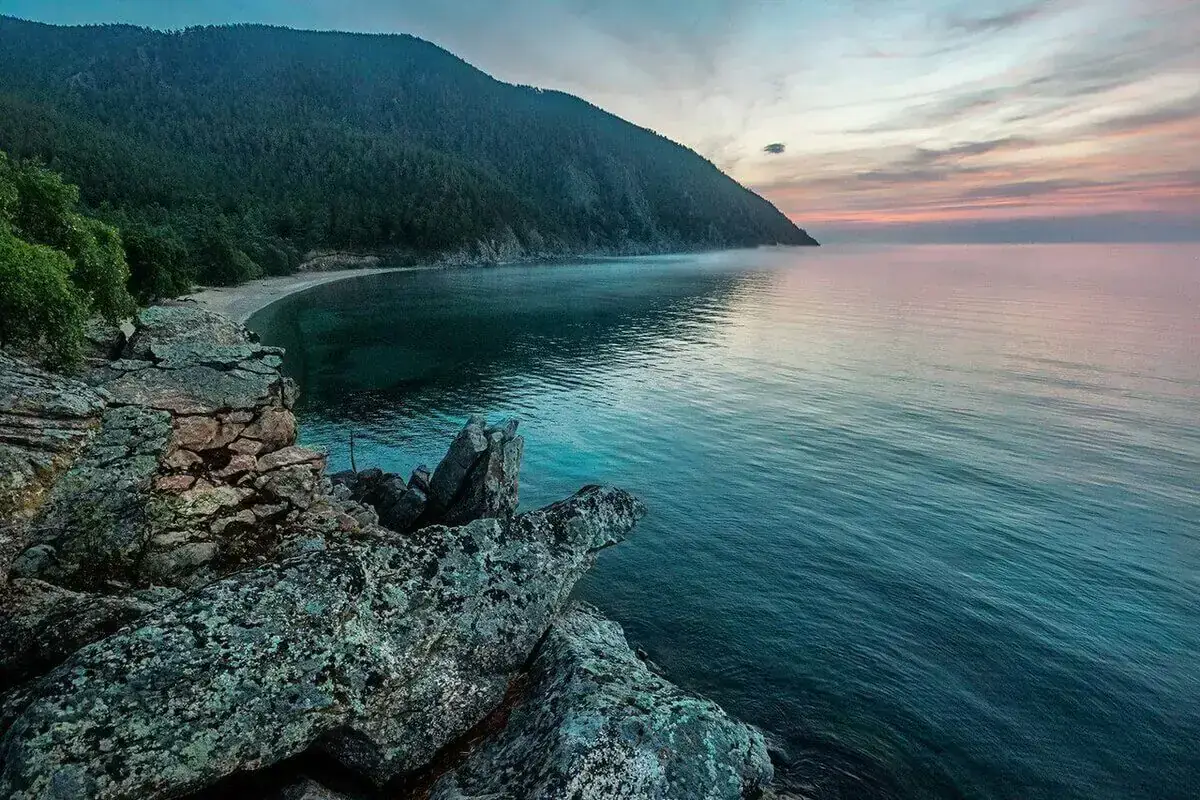
A World of Its Own
Baikal is a living laboratory. Of the thousands of plant and animal species recorded here, around two-thirds live nowhere else on earth — among them the transparent freshwater shrimp that keep the water famously clear, and the nerpa, the world’s only exclusively freshwater seal. Its remoteness and singularity have drawn scientific expeditions for centuries, from the first written descriptions in the seventeenth century to modern manned submersible dives to its floor.

Things to Do, Season by Season
The lake is spectacular in every season. In winter it freezes into a sheet of astonishingly clear ice, and visitors come for ice-skating, snowmobiling, dog-sledding and ice fishing. In summer it opens up for hiking, horse riding, kayaking and boat trips across impossibly blue water. The spiritual heart of Baikal is Olkhon, the largest island, sacred to the local Buryat people and a magnet for travellers; trips range from a two-day trek on Olkhon to longer expeditions along the wilder northern and southern shores.

Getting There — the Honest Part
As of 2026 there are no direct flights to Russia from North America, the United Kingdom or most of the European Union; travellers connect through hubs such as Istanbul, Dubai or Doha and then fly on domestically, usually via Moscow. A consular tourist visa must be arranged in advance — the eVisa is not open to US, UK, Canadian, Australian or New Zealand passport holders — and foreign Visa, Mastercard and Amex cards do not work inside the country, so you travel on cash. Several Western governments, including the United States and the United Kingdom, currently advise against travel to Russia; check your own government’s guidance before making firm plans.
FAQ
Why is Lake Baikal so special?
It is the world’s oldest and deepest lake, holds about a fifth of the earth’s unfrozen fresh water, and is home to hundreds of species — including the Baikal seal — found nowhere else.
When is the best time to visit?
Summer (roughly June to September) for hiking and boat trips; late winter for the extraordinary clear ice and winter sports. Spring and late autumn are quieter and more changeable.
What is the nearest airport?
Irkutsk (IKT) is the usual gateway, with the lake and Olkhon Island reached by road from there. See the note above on reaching Russia from the West in 2026.