

Toronto is Canada’s primary commercial gateway, and its size means booking flights here rewards a clear grasp of the geography. The city has two airports in completely different places, and picking the wrong runway — or ignoring the rail link — can drop you into some of the worst highway traffic in North America. Here’s how to plan the arrival.
Pearson vs Billy Bishop: the runway breakdown
Your flight lands at one of two airports, depending on your airline and origin.
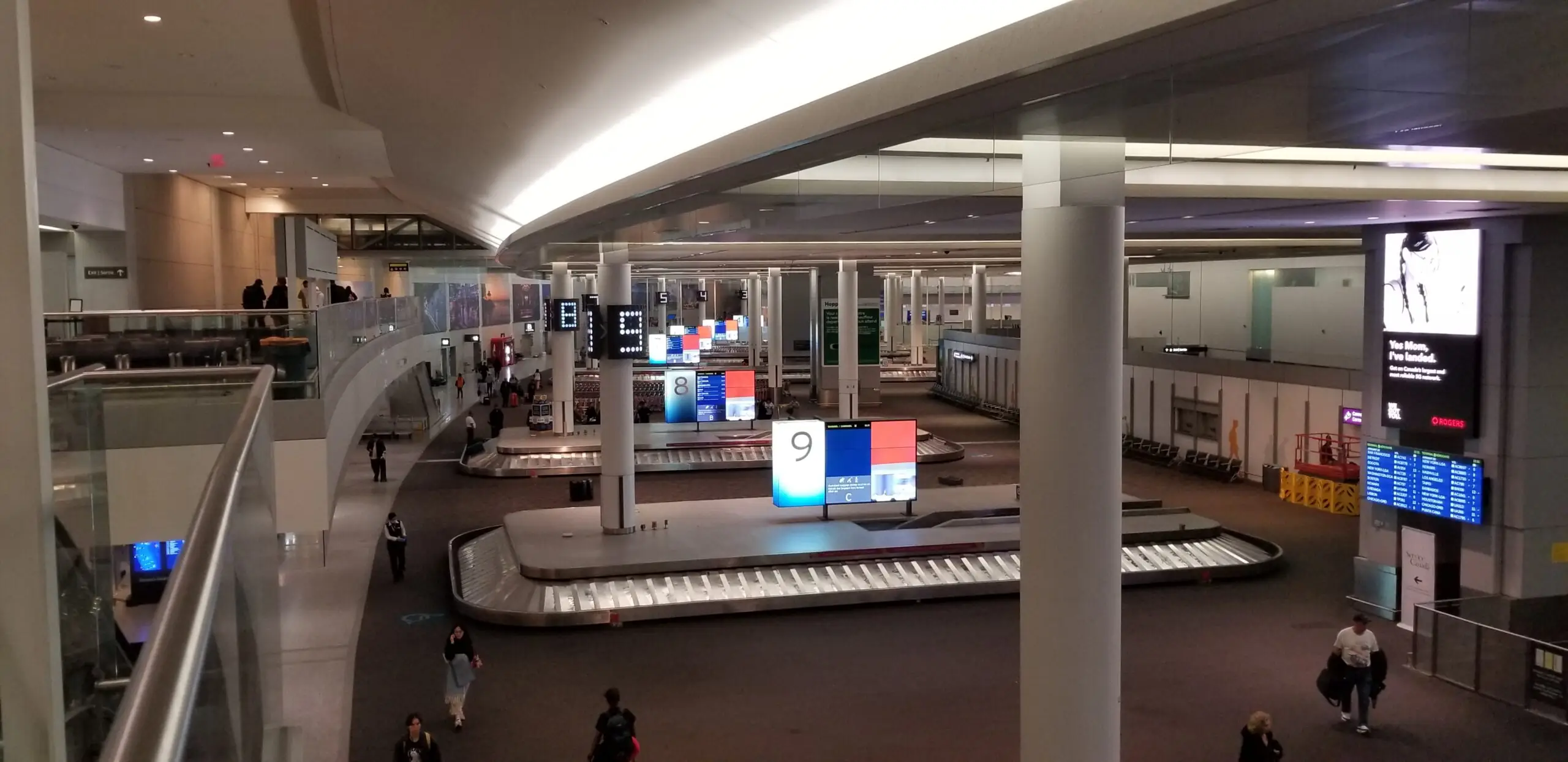
- Toronto Pearson International (YYZ). About fifteen miles north-west of downtown, this is the big international hub. Flying long-haul from Europe, the UK or across the Pacific, you’ll land here. Most major international airlines use YYZ — the most options, but a large airport with long terminal walks.
- Billy Bishop Toronto City (YTZ). On an island right at the edge of the downtown harbour — a regional gem, used mostly by Porter and Air Canada’s regional service for short-haul (eastern Canada and the north-eastern US). You reach the mainland by a free pedestrian tunnel (with moving walkways) or a free ferry that crosses the channel in about ninety seconds.
If you’re flying from Chicago, New York or Montreal and have the option to land at Billy Bishop, take it. Step off the plane, walk through the tunnel, and you’re downtown — no highway transfer at all.
Booking windows and Toronto’s extreme seasons
Airlines price Toronto routes around big weather swings.
- Summer peak (June–August). The busiest, priciest window — warm weather, packed lakeside patios, peak tourism.
- Deep winter (January–February). The cheapest time to fly. Toronto winters are bitterly cold with heavy snow and temperatures well below freezing — but if you don’t mind the ice, the fares are the year’s lowest.
- The shoulders (May and September). The sweet spot: pleasant walking weather, the summer crowds gone, moderate fares.
For the best deals, book international routes three to four months out and domestic hops one to two months out, and compare midweek departures (Tuesday or Wednesday almost always beat the weekend).
Getting downtown: the train vs the traffic
Getting from the airport into the centre is a choice between reliability and highway gridlock.
From Pearson (YYZ)
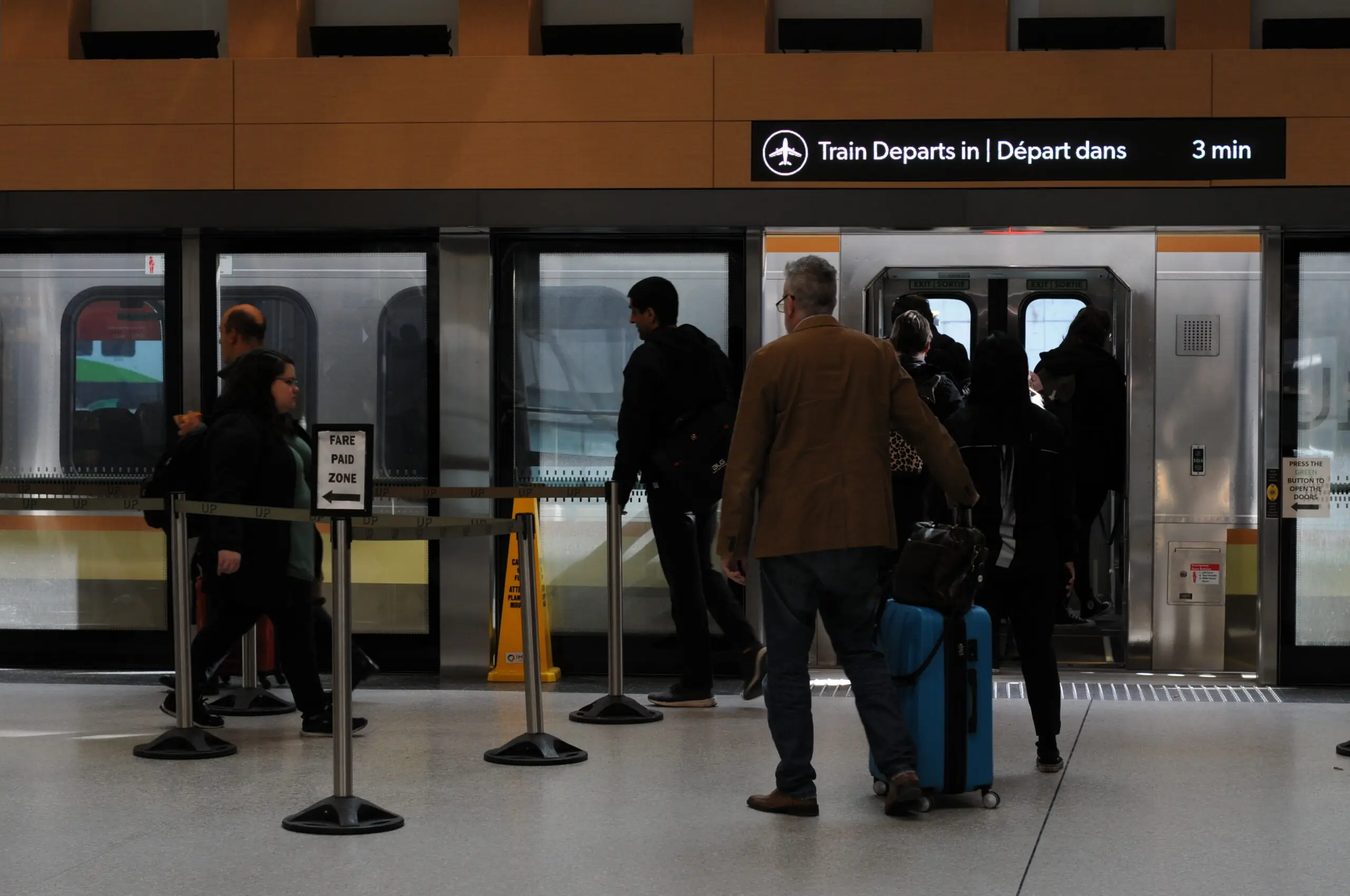
- The Union Pearson (UP) Express. The only transfer that really makes sense. It leaves Terminal 1 every fifteen minutes and reaches Union Station downtown in about twenty-five — clean, free Wi-Fi, and it skips the highway entirely. Buy at the terminal kiosks or tap a contactless card at the platform gates.
- Taxis and ride-share. Flat rates to downtown zones, but in rush hour (early afternoon to mid-evening) the drive can easily top an hour. Take the train.
From Billy Bishop (YTZ)
- The free shuttle (or your feet). A free shuttle bus runs between the mainland ferry terminal and Union Station every fifteen minutes — or just walk into the centre in about twenty.
Nonstop vs one-stop
From Europe or the UK, nonstop flights to Toronto carry a premium. A one-stop routing can save money — common connecting hubs are Montreal, Reykjavík or Dublin.
If you go one-stop, mind the buffer: leave at least ninety minutes at the transit airport. Book separate tickets (a self-transfer) and a delay on the first flight means the second airline cancels your seat and you buy a new one. Keep the whole journey on a single itinerary where you can.
On the budget transatlantic options, watch the unbundled fare: the base price won’t include a checked bag, seat selection or meals. Add those back before you compare it to a legacy carrier’s standard ticket.
Navigating the winter grid
Visit in winter and you’ll want to understand the local infrastructure to stay warm.
- The TTC. The transit network of subways, streetcars and buses. Tap a contactless card to pay, and transfers within a two-hour window are free.
- The PATH. Toronto’s vast underground pedestrian network — well over a dozen miles of shops, restaurants and subway links beneath downtown. In January you can cross the core without ever putting on a coat.
Visa and entry basics
Most visa-exempt air travellers (including citizens of the UK, the EU, Australia and New Zealand) must get an approved Electronic Travel Authorization (eTA) before boarding a flight to Canada. US citizens are exempt. The eTA is linked to your passport and generally valid for up to five years, but rules change, so check current requirements before booking.
FAQ
Which Toronto airport should I fly into?
Pearson (YYZ) is the default for long-haul international and offers the most airline choice. Billy Bishop (YTZ) is hugely convenient for regional and short-haul flights from Canada and the US, since it sits right by downtown.
How do I get from Pearson to downtown?
Take the UP Express. It runs every fifteen minutes from Terminal 1, reaches Union Station in about twenty-five, and skips the city’s notorious highway traffic.
When is the cheapest time to fly to Toronto?
The deepest discounts come in the cold of January and February. For pleasant weather with moderate fares, target the shoulder months of May and September.
Do I need a visa or eTA for Canada?
Most Western air travellers don’t need a traditional visa for a short tourist stay, but must apply online for an eTA before the flight. US citizens don’t need an eTA. Always verify current requirements before you travel.
Images: Martin St-Amant (S23678) / CC BY-SA 3.0; Silver Dovelet / CC BY-SA 4.0; Milan Suvajac / CC BY-SA 4.0. Source: Wikimedia Commons.
Read also
- Nashville: Your Ultimate Guide to the Music City
- Indianapolis Unveiled: A Tourist’s Ultimate Guide to Culture and Adventure
- Cheap flights to New York: JFK vs Newark vs LaGuardia, when to book, and getting into Manhattan


