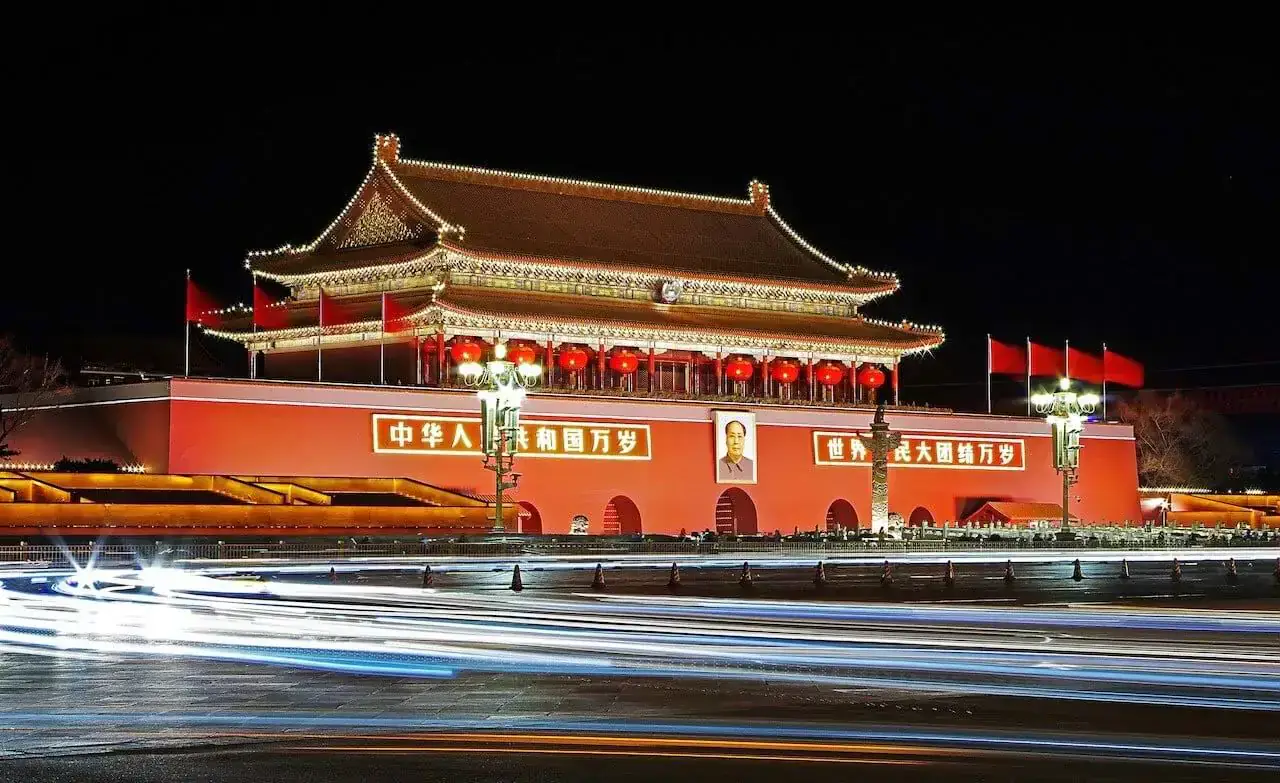
The Many Names of Beijing
The name *Beijing* simply means “Northern Capital.” But over the centuries the city has been known by other names too: it was *Ji* and *Yanjing* in ancient times, *Dadu* under the Mongol Yuan dynasty, and *Shuntian Fu* — the “prefecture of obedience to heaven” — as the administrative seat under the Ming and Qing emperors. In classical writing it is still poetically called *Jingcheng*, “the capital,” and for part of the 20th century it was renamed *Beiping*, “Northern Peace,” before reverting to Beijing in 1949.
A City Shaped by Geography
Beijing sits on a plain protected by mountains to the north and west and opening toward the sea to the southeast. That natural shelter — combined with fertile soil and ancient trade routes — is one reason a great capital grew here. The climate is monsoonal: hot, humid, rainy summers and cold, dry, sunny winters, with sharp winds blowing down from the north.
The Great Wall
Just north of the city runs the most famous stretch of the Great Wall of China. Contrary to older estimates, the wall is vast: the best-preserved Ming-dynasty sections alone run for around 8,850 km, and all the walls built across the dynasties total more than 20,000 km. The sections near Beijing — Badaling, Mutianyu and the wilder Jinshanling — are the most visited in the world.
The Imperial City Today
Beijing remains the political and cultural heart of China, and its historic sights are unmatched: the vast Forbidden City, the sacred Temple of Heaven, the Summer Palace and its lake, and the sweep of Tiananmen Square all lie within the modern metropolis. Together with the Great Wall on its doorstep, they make Beijing one of the most rewarding cities on earth to visit.
FAQ
What does “Beijing” mean?
It means “Northern Capital.” The city has also been called Yanjing, Dadu, Shuntian Fu and Beiping at various points in its long history.
How many days do you need in Beijing?
Three to four days covers the Forbidden City, the Temple of Heaven, the Summer Palace and a day trip to the Great Wall.
What is the nearest airport?
Beijing Capital International (PEK) and the newer Beijing Daxing (PKX) both serve the city.


