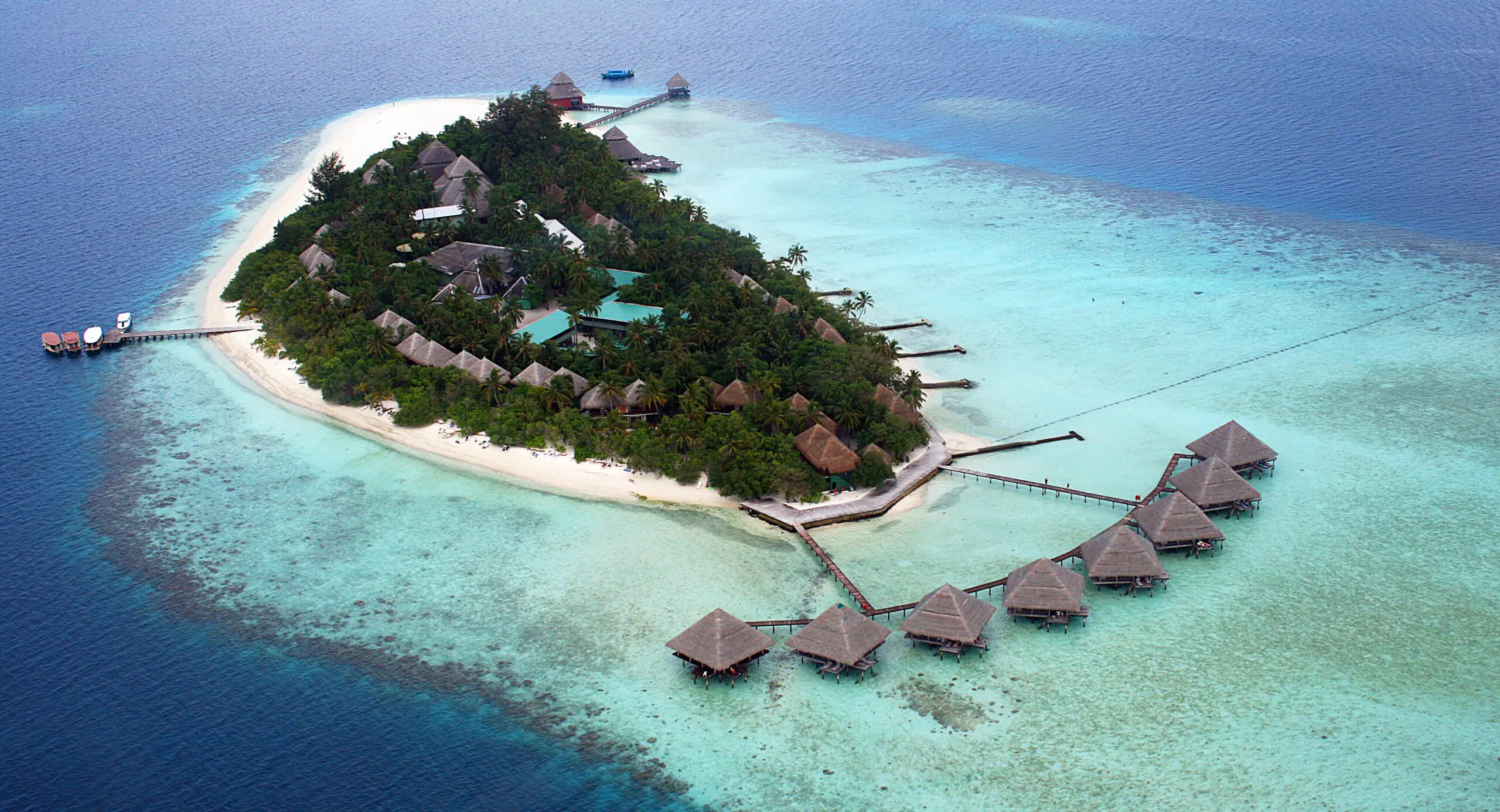

Landing at Velana International Airport (MLE) is only the first step of a trip to the Maldives. Unlike standard destinations where you grab a cab or hop on a train to your hotel, onward travel here requires specific coordination. If you do not plan your arrival time to match your resort’s transfer options, you can easily end up with unexpected hotel bills and lost travel days.
Landing is Only Half the Journey
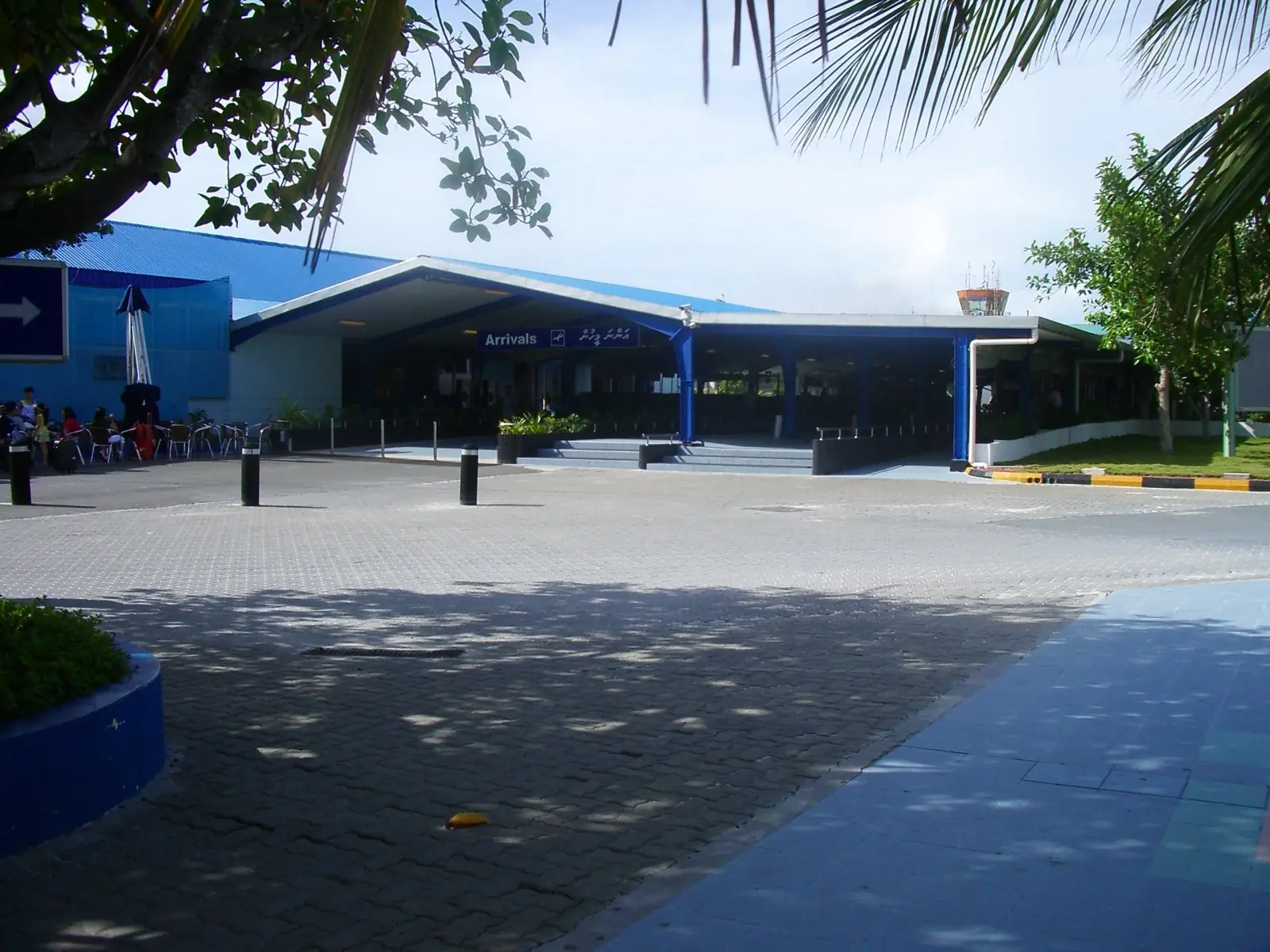
Velana International Airport (MLE) sits on the island of Hulhulé, adjacent to the capital city of Malé. The airport is connected to Malé and the residential island of Hulhumalé via the Sinamalé Bridge.
Most travelers arrive on flights routing through major hubs in the Middle East—such as Doha, Dubai, or Abu Dhabi—or through Asian transit points like Singapore or Colombo.
Once you touch down, the real logistics begin. Because Maldives resorts are scattered across hundreds of individual islands, you cannot arrange your own transportation at the arrivals hall. Your resort must coordinate and book your onward transfer, which will fall into one of three categories:
- Speedboat: Used for resorts located in the North and South Malé Atolls. This is the simplest transfer option, running twenty-four hours a day and taking anywhere from fifteen to sixty minutes.
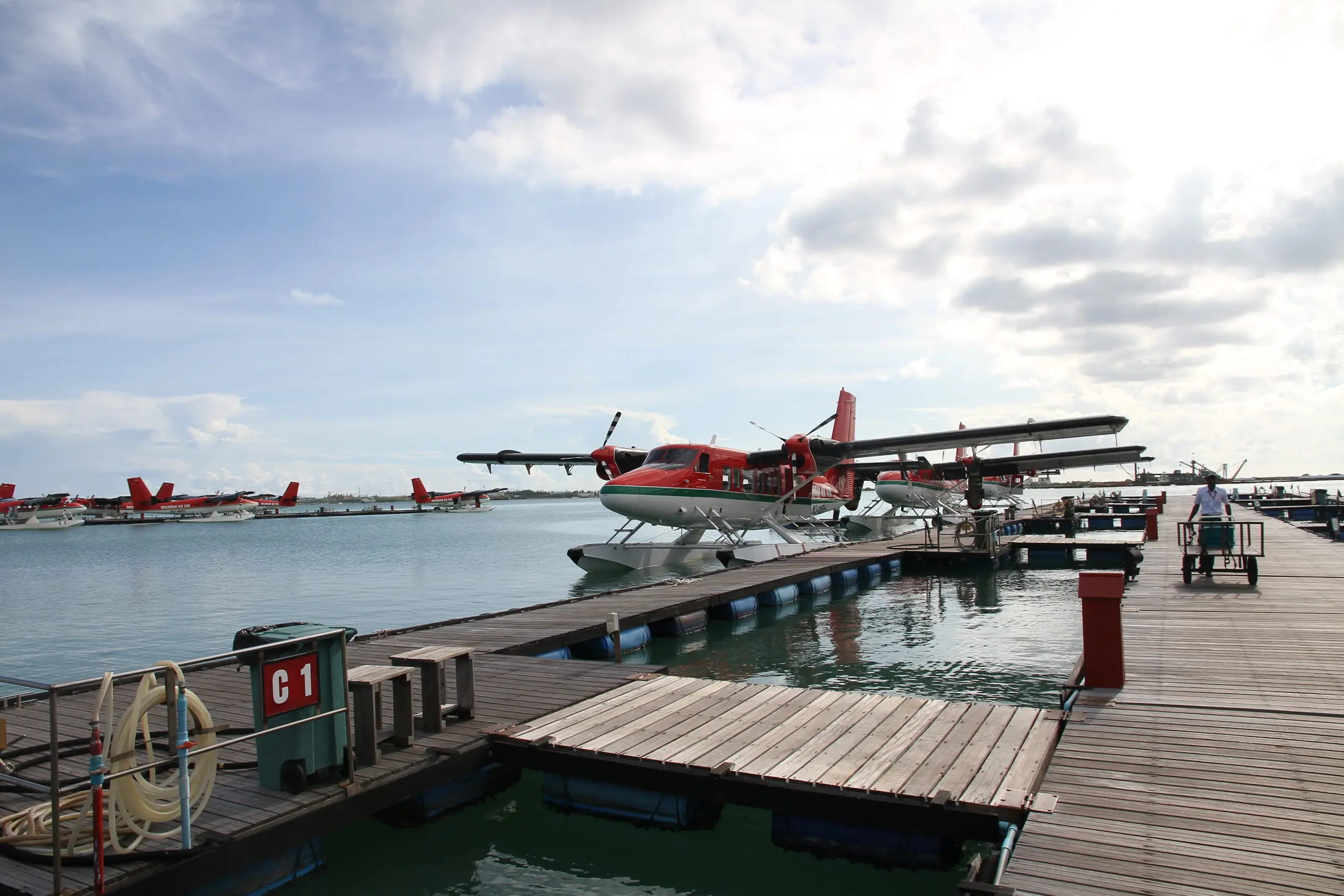
- Seaplane: Required for resorts in intermediate atolls. The seaplane docks are located at a dedicated terminal next to the main airport.
- Domestic Flight and Speedboat: Used for distant atolls, combining a flight on a regional turboprop to a local airstrip with a speedboat transfer to the resort.
Resort transfers are bundled and billed directly by your property. They are often one of the most significant expenses of the trip, so check the transfer rates before you finalize your resort booking.
The Daylight Seaplane Trap
If your resort requires a seaplane transfer, you must pay close attention to your flight arrival window.
Seaplane operators—such as Trans Maldivian Airways and Manta Air—operate under Visual Flight Rules, meaning they only fly during daylight hours, typically between 6:00 AM and 4:00 PM.
If your international flight lands after 3:30 PM, you will not have enough time to clear customs, retrieve your bags, check in at the seaplane terminal, and board before the final departures. If this happens, your resort will reschedule your transfer for the following morning, and you will need to book an overnight stay in Hulhumalé or Malé. To avoid this, select international flights that arrive in Malé during the morning or early afternoon.
Luggage Limits on Seaplanes
Another logistical hurdle is baggage weight. Long-haul international tickets often allow generous baggage limits, but seaplanes operate under strict weight constraints.
The standard baggage allowance on Maldivian seaplanes is twenty kilograms for checked luggage and five kilograms for hand luggage. Any weight beyond this is subject to excess baggage fees. Furthermore, if the seaplane is at its weight limit, operators may bump excess bags to a later flight, meaning your luggage might not arrive at the resort until hours after you do. Pack light and carry essentials in your hand luggage.
Monsoon Seasons and Fare Timing
The weather in the Maldives is dictated by two monsoon seasons, which directly influence flight pricing:
- Northeast Monsoon (December through April): This is the dry season, offering clear skies, minimal rain, and calm seas. This is the peak travel window, resulting in the highest flight fares and resort rates.
- Southwest Monsoon (May through November): This is the wet season, characterized by higher humidity, stronger winds, and regular rain showers. Flight fares are typically at their lowest during these months. While storms can cause rough seas and occasionally delay speedboat or seaplane transfers, the rain often comes in short downpours rather than all-day washouts.
Visa Rules and the Online Form
The Maldives grants a free 30-day visa on arrival to all nationalities. Your passport must be valid for at least one month (though six months is recommended for airline boarding), and you may be asked to show proof of a prepaid hotel booking and an onward ticket.
Additionally, all travelers must submit the online IMUGA Traveller Declaration form within ninety-six hours of arrival, and again within ninety-six hours before departure. This is a mandatory digital form checked at immigration. Check current requirements before you travel.
FAQ
How do I get from Malé airport to my resort?
Your resort arranges and books the onward transfer — you don’t book it yourself at arrivals. Depending on the distance, that’s a speedboat (nearby atolls), a seaplane (intermediate atolls), or a domestic flight plus a speedboat (distant atolls). It’s bundled into your booking and billed by the resort.
Do seaplanes fly at night in the Maldives?
No. Seaplanes fly under visual flight rules, in daylight only — roughly 6:00 AM to 4:00 PM. If your international flight lands in the evening, your transfer moves to the next morning and you’ll overnight near the airport in Hulhumalé or Male. Aim for a morning or early-afternoon arrival.
Do I need a visa for the Maldives?
All nationalities get a free 30-day visa on arrival. You’ll also need to submit the online IMUGA Traveller Declaration shortly before you arrive (and again before departure), and you may be asked for proof of a hotel booking and an onward ticket. Check current requirements before you travel.
When are flights to the Maldives cheapest?
Fares are lowest in the south-west monsoon (roughly May to November), the wetter season. The dry north-east monsoon (December to April) is peak season, with the highest flight and resort prices.
Images: Dr. Ondřej Havelka (cestovatel) / CC BY-SA 4.0; No machine-readable author provided. Jolle~commonswiki assumed (based on copyright claims). / CC BY-SA 3.0; 7777777kz / CC BY 3.0. Source: Wikimedia Commons.
Read also
- Historic Building in Istanbul: Traces of Three Empires and a Republic
- Tourist Thailand: my travels and discoveries
- Cheap flights to Singapore: Changi, the stopover trick, and getting into the city

