
Nice Côte d’Azur Airport (NCE) is one of the busiest airports in France and the main gateway to the Côte d’Azur. Because of that volume, NCE is served by a wide range of budget and full-service carriers, which keeps cheap flights to Nice competitive. But the real secret to a good Riviera trip is not just the ticket price — it is realising that the coast is built for trains, not rental cars.
Bypassing the Hustle: Tram Line 2
NCE sits right on the coast at the western edge of the city, and that closeness makes the transfer simple.
- Tram Line 2 (T2): This modern line departs directly from both Terminal 1 and Terminal 2 (linked by a free shuttle) and runs on a dedicated track to the central Jean Médecin and Port Lympia stops in about thirty minutes. It is faster and cheaper than any taxi.
- Taxis and rideshares: Taxis run on fixed airport-to-centre rates, but they are exposed to the road congestion that builds on summer weekends.

The Riviera by Rail: Skip the Rental Car
Many first-timers assume they need a rental car to explore the French Riviera. In reality a car is mostly a liability on the coast: traffic on the narrow corniche roads is slow, parking is scarce and expensive, and the historic village centres are largely pedestrian-only.
Instead, the region is stitched together by the TER coastal railway — cheap, frequent, and scenic. Base yourself in Nice and the train turns the whole coast into easy day trips:
- Eastbound: From Nice-Ville the train runs to Villefranche-sur-Mer, Èze-sur-Mer, Monaco (about twenty minutes), Menton, and across the Italian border to Ventimiglia.
- Westbound: Head west for the sandy beaches of Antibes and Cannes.
In most of these towns the station is within walking distance of the old centre and the beach, which makes the rail line the most efficient way to get around.

Navigating Nice
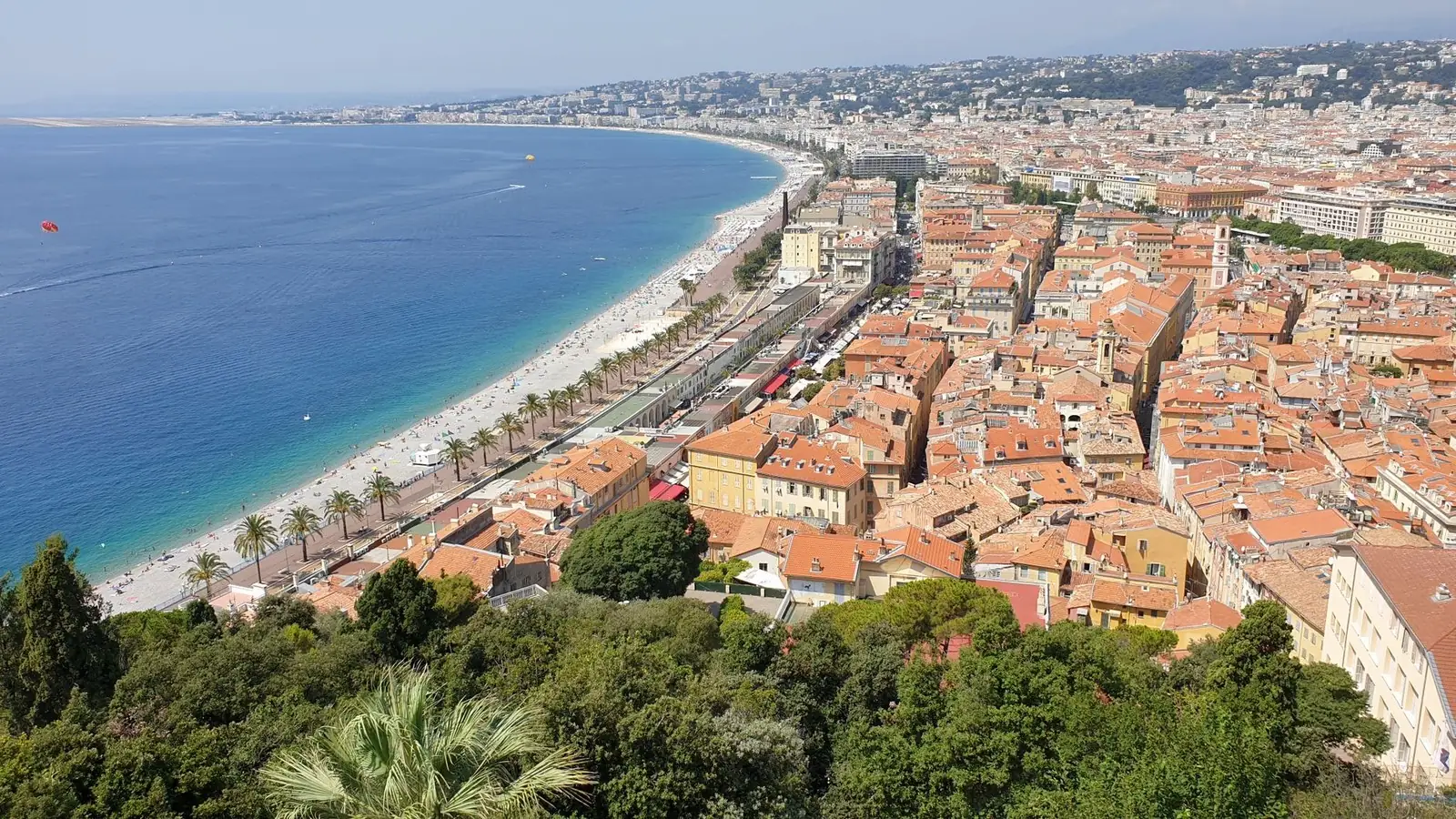
Nice itself is very walkable. The historic core, Vieux Nice (the old town), is a maze of narrow pedestrian alleys full of markets and cafés. North of it sits the newer grid, built around the tram lines and shopping avenues. You can orient yourself easily off the Promenade des Anglais, which runs for kilometers along the pebble beaches of the Baie des Anges.
Nice as Your Base
Nice is the most practical base for the Côte d’Azur. It has the widest choice of budget accommodation and dining, and it is the hub for both the airport tram and the TER coastal train. Staying in smaller towns like Villefranche or Monaco is charming, but it means commuting back and forth and is generally pricier.
Weather and Fare Seasons
The Riviera has a classic Mediterranean climate — hot, sunny summers and mild, rainy winters:
- High season: July and August bring the heaviest crowds, the warmest weather, and the priciest flights. Big spring events — the Cannes Film Festival and the Monaco Grand Prix in May — also spike fares.
- Shoulder season: May, June and September give the best balance of warm weather, lower prices, and manageable crowds.
- Winter: Flights are generally cheapest, though many beachside places close for the season.
Entry Requirements
France is a member of the EU and the Schengen Area. Visitors from the US, UK, Canada, and Australia enter visa-free for tourist stays of up to 90 days within any 180-day period. The EU’s electronic pre-travel authorization system (ETIAS) is expected to start later in 2026 but is not yet in force. Entry rules can change; verify current requirements before booking.
FAQ
How do I get from Nice Airport into the city?
The most efficient option is Tram Line 2, which departs from both terminals and reaches the centre in about thirty minutes. Taxis and rideshares are available too, but they are subject to road traffic and cost much more.
Do I need a car on the French Riviera?
No. A rental car is generally a liability given the heavy coastal traffic, scarce parking, and pedestrian-only zones. The TER coastal train is frequent, cheap, and links all the major towns.
How do I get to Monaco or Cannes from Nice?
The TER coastal train runs regularly from Nice-Ville station. It takes about twenty minutes to Monaco and about forty minutes to Cannes, with stations close to the sights.
When are flights to Nice cheapest?
Flights are generally cheapest in the off-season winter months, while the best balance of weather and price falls in the shoulder months of May and September.


