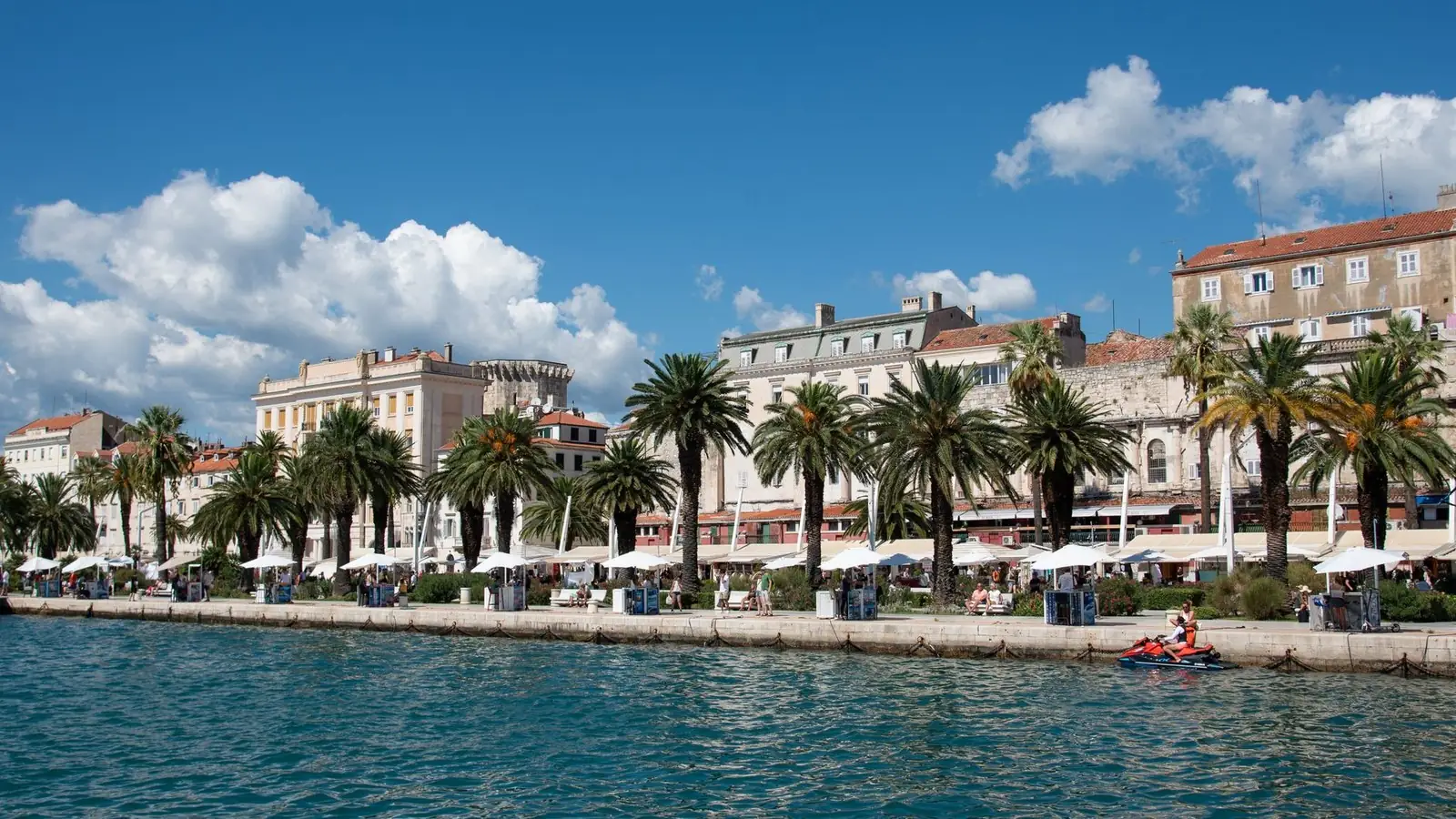

Split Airport (SPU) is the main gateway to the central Dalmatian coast. In summer it is served by a wall of seasonal budget carriers and European charters, which makes cheap flights into the region easy to find. But because Split works mostly as a transfer hub for travelers heading out to Hvar, Brač, Vis, or Šolta, coordinating your arrival with the local boat schedules is the part that actually matters.
Airport to Harbor: The Arrival Transit
SPU sits about twenty-five kilometers northwest of Split, near the historic town of Trogir. The good news: once you reach central Split, getting from the road to the sea is simple, because the main bus station, the train station and the ferry port all sit right next to each other along the harbor. To make the transfer you have three main options:
- Airport shuttle bus: The most convenient choice. Regulated shuttles leave shortly after major arrivals and run straight to the main bus station by the harbor, in about thirty to forty minutes.
- Public bus line 37: The cheaper option. It runs between Split and Trogir, stopping on the main road outside the terminal — cheaper than the shuttle, but slower, with many local stops.
- Taxis and rideshares: Readily available outside arrivals. Faster and easier for groups, but subject to heavy highway congestion on peak summer weekends.
The Ferry Wrinkle: Catamarans vs. Car Ferries
Two very different kinds of vessel run out of Split harbor, and the difference is the whole game:
- Fast passenger catamarans: Run by companies like Jadrolinija and Kapetan Luka (Krilo), these high-speed boats carry foot passengers only. They are the quick way to Hvar, Bol, and Vis, but capacity is limited, and in peak summer they regularly sell out days ahead — so book online in advance.
- Slower car ferries: Big vessels carrying vehicles and passengers. Slower and cheaper than the catamarans, and rarely sold out for foot passengers — though vehicle spots can mean long queues.
Catamaran schedules are heavily seasonal. In the winter shoulder months, sailings are cut right back, which means a flight landing after mid-afternoon can leave you stranded on the mainland overnight.

The Car Question: Mainland vs. Islands
Whether to rent a car depends entirely on your plan:
- Island travel: If you are spending your time on Hvar, Brač, or Vis, a car is usually a liability. The islands have narrow roads and limited parking, and taking a vehicle on the ferry adds real cost and waiting. You are better off on passenger catamarans and local island buses.
- Mainland travel: A car earns its keep if you plan to explore the mainland — the coastal highway, or national parks like Krka and Plitvice.
Choosing Your Base
If your flight times do not line up with the boats, plan to base yourself in Split’s Old Town, which sits inside the walls of Diocletian’s Palace. Staying here keeps you within walking distance of the harbor, so it is easy to catch an early-morning boat to the islands.

Weather and Fare Seasons
Split has a classic Mediterranean climate — hot, dry summers and mild winters:
- High season: June to August. The weather is ideal for swimming, but flights and rooms are priciest and the ferry port is heavily crowded.
- Shoulder season: May and September bring warm weather, fewer crowds, and cheaper flights — though evening catamaran options start to thin out.
- Off-peak: Winter is the cheapest window for flights, but the coastal tourist machinery mostly shuts down and boat schedules are minimal.
Entry Requirements
Croatia is a member of the EU, the eurozone, and the Schengen Area (all since 2023). Visitors from the US, UK, Canada, and Australia enter visa-free for tourist stays of up to 90 days within any 180-day period. The EU’s electronic pre-travel authorization system (ETIAS) is legislated and expected to start later in 2026, but is not yet in force. Entry rules can change; verify current requirements before booking.
FAQ
How do I get from Split Airport into the city?
The official airport shuttle bus is the most direct option, running straight to the harbor bus station. You can also take public bus line 37 for a cheaper but slower trip, or use a taxi or rideshare.
How do I get from Split to the islands?
Passenger catamarans and car ferries leave regularly from Split harbor for Hvar, Brač, Vis, and Šolta. The high-speed catamarans are faster, but book tickets online in advance during summer.
Catamaran or car ferry?
Catamarans are faster and carry foot passengers only, which suits quick island hops. Car ferries are slower and cheaper, take vehicles, and are far less likely to sell out.
Should I rent a car?
Only if you plan to explore the mainland. If you are staying mostly on the islands, a car is unnecessary, expensive to carry on ferries, and hard to park in the historic villages.


