

Tokyo is a top-tier destination, and because it’s served by two major airports, where you land is a real logistical decision. A cheap ticket into the wrong airport can cost you hours of transit and eat the saving in train fares — or worse, taxi fares. If you want to plan your entry into Japan like an operations analyst, here’s how to sort the options.
Narita vs Haneda: the location gap
Tokyo’s two airports are a choice between distance and convenience.
- Narita (NRT). Out in Chiba Prefecture, roughly forty miles east of central Tokyo, and historically the main international hub. Because it’s far out, fares into Narita are often cheaper than Haneda — but factor in the transfer: expect at least an hour on a fast train into the city centre.
- Haneda (HND). Right on Tokyo Bay, under ten miles from the centre. Once mostly domestic, it now handles a huge volume of international traffic. Land at Haneda and you can be in Shibuya or Ginza within about thirty minutes of stepping onto a local train.
If the Haneda fare is only a little higher than Narita, book Haneda. The saving in transit time and train fares almost always covers the difference.
The booking window: cherry blossoms and holiday surges
Japan fares follow very predictable demand spikes.
- Peak season. Late March through April is cherry-blossom season; November is the autumn-foliage peak. The busiest and priciest times to fly.
- Domestic surges. Golden Week (late April into early May) and Obon (mid-August) are major domestic holidays — millions travel within the country, hotels fill and regional transport prices spike.
- Off-peak. The cheapest fares are usually January and February (skip the New Year holidays), or the hot, humid heart of summer.
The best time to book a long-haul flight to Tokyo is four to six months out. Watch the trend, and if you see a drop in that window, lock it in.
Navigating the airport rail connections
Japan’s rail system is clean and efficient, but the map looks like a bowl of coloured noodles. Each airport has two competing rail operators.
From Narita (NRT)
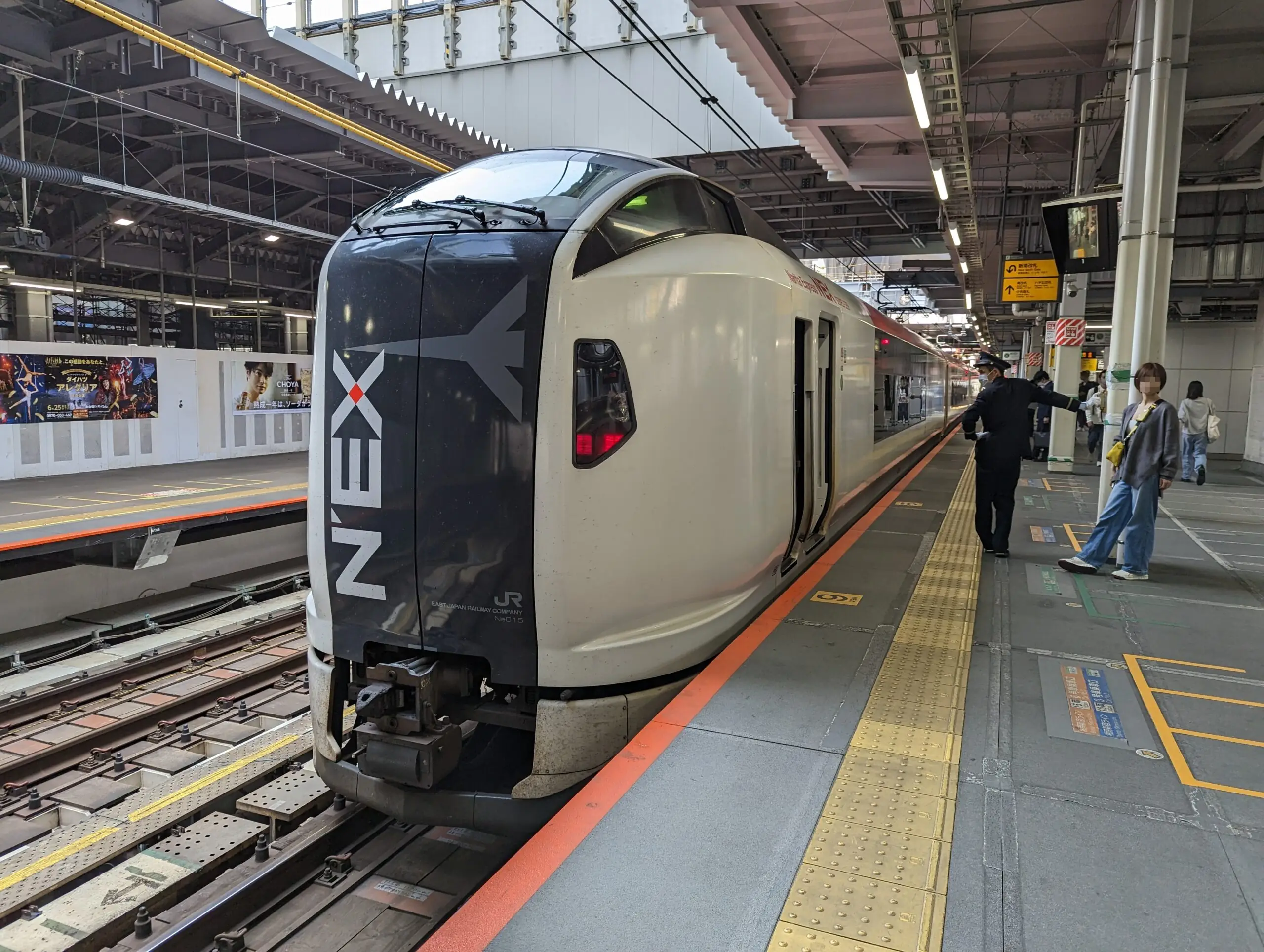
- JR Narita Express (N’EX). The direct JR option — comfortable, with dedicated luggage racks, running straight to Tokyo Station, Shinjuku and Shibuya. About an hour.
- Keisei Skyliner. A private line to Ueno in northern Tokyo. Slightly faster than the N’EX, but you’ll transfer to a subway or the Yamanote loop if your hotel is in a western hub like Shinjuku.
From Haneda (HND)
- Tokyo Monorail. A scenic run to Hamamatsucho, where you connect to the JR Yamanote line. Under twenty minutes.
- Keikyu line. A commuter train onto the Asakusa subway line, or south to Shinagawa. Cheap and fast.
Two rail rules that save you grief:
- Get a Suica or Pasmo IC card first (you can load one into your phone’s wallet in advance). They work on nearly all trains and buses and save you fighting with paper-ticket machines.
- Mind the clock. Tokyo trains don’t run 24 hours — the last trains from both airports leave around midnight. Land late and miss the connection, and you’re waiting for the first morning train or paying for a very costly taxi.

The JR Pass reality check
A common mistake is buying the Japan Rail (JR) Pass by default. It offers unlimited travel on JR lines, including the shinkansen (bullet trains) — which sounds like a no-brainer.
After a steep price increase, the math has changed. If you’re staying in Tokyo with maybe one quick round trip to Kyoto, the pass usually isn’t worth it — you’re better off buying individual tickets as you go. Before you buy a pass online, list your actual route and compare it against point-to-point fares.
Nonstop vs one-stop
Nonstop flights from the West Coast or Europe to Tokyo are fast but carry a premium. A one-stop routing — typically via Seoul, Taipei or a mainland-China hub — can save you a fair bit.
If you go one-stop, check the transit time: a tight connection under ninety minutes at a busy hub is a gamble, because a delay on the first leg means you miss the second. And avoid separate tickets on different airlines unless you build in an overnight — miss a self-transfer and the second airline just cancels you.
Visa and entry basics
Most Western passport holders (US, UK, Canada, Australia, EU) can enter Japan visa-free for tourism for up to ninety days. To speed up arrival, pre-register on the official Visit Japan Web portal before you fly — it generates QR codes for immigration and customs so you scan straight through. Your passport should be valid for the duration of your stay, but rules change, so check the current requirements before booking.
FAQ
Narita or Haneda — which is better?
Haneda is much closer to the centre and gives you a faster, cheaper transfer. Narita is far out but often has cheaper flights. Book Haneda unless the Narita fare saving is big enough to cover the extra time and train cost.
When should I book flights to Tokyo?
Four to six months out. The priciest windows are cherry-blossom season (late March–April) and the autumn-foliage peak (November); the cheapest fares tend to fall in January and February.
How do I get from the airport into the city?
From Narita, take the JR Narita Express to the central hubs or the Keisei Skyliner to Ueno. From Haneda, take the Tokyo Monorail to Hamamatsucho or the Keikyu line to Shinagawa. Sort a digital Suica or Pasmo card first.
Is the JR Pass worth it?
Only if you’re doing serious long-distance travel on the bullet trains. After the recent price rise, a single Tokyo–Kyoto round trip isn’t enough to make it pay. Do the math before you buy.
Images: David Kernan / CC BY 4.0; Syced / CC0; Basile Morin / CC BY-SA 4.0. Source: Wikimedia Commons.
Read also
- Rental housing in Goa for every taste
- Interesting facts about Yokohama
- Thailand Temple of a Million Bottles


