

The Logic of the Old Quarter
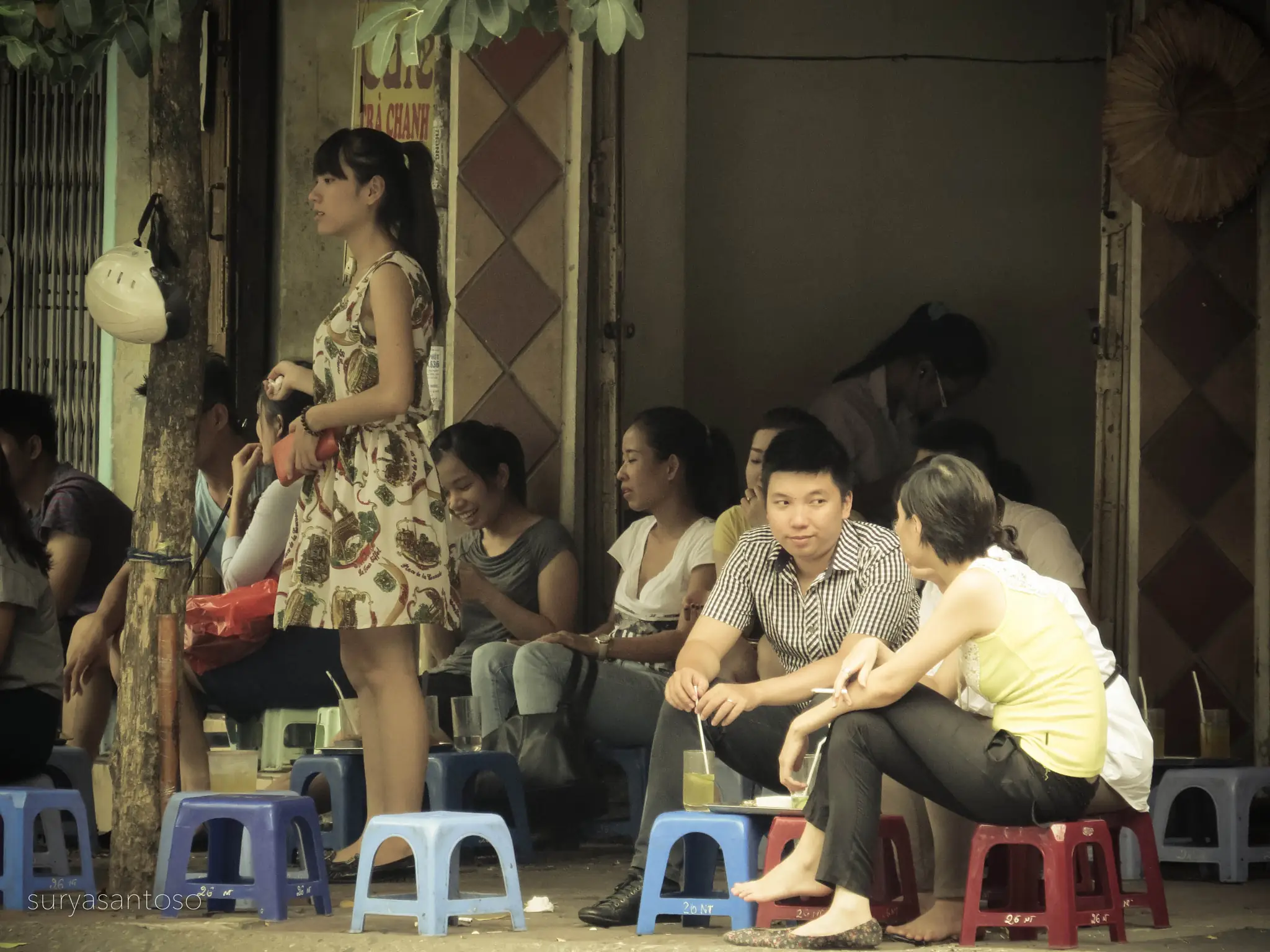
That order is most visible in the architecture and layout of the Old Quarter itself. Historically, this area was defined by its “36 streets,” each serving as a guild dedicated to a single trade—silk, tin, paper, or silver. While the trades have evolved, that communal structure remains. The buildings here are famous “tube houses,” built astonishingly narrow at the front to avoid historical street taxes, but stretching back incredibly far, hiding courtyards, altars, and generations of families behind a single facade.
The French Layer and the American War
Laid directly over this ancient structure is the heavy, unmistakable imprint of French colonial rule. The grand, tree-lined boulevards, the imposing Opera House, and the decaying yellow villas offer a striking architectural contrast. It is a beautiful aesthetic, but it is important to view it with a clear, unsentimental eye rather than pure nostalgia; this was an architecture built to impose authority over Vietnamese life, not to blend with it.
The city’s more recent history requires a similar clarity. The conflict that much of the West knows as the Vietnam War is known here as the American War. The city carries the scars and the memory of those years quietly. Sites like the Hoa Lo Prison address it, but Hanoi does not turn its trauma into a spectacle for visitors. Similarly, the Ho Chi Minh Mausoleum is a site of immense, solemn national importance; it must be visited with strict respect and appropriate dress.
Culture, Food, and Turtles
For a deeper sense of the city’s roots, visit the Temple of Literature, Vietnam’s first university founded in 1070, or take in a water puppetry show, an art form born centuries ago in the flooded rice paddies of the Red River Delta.
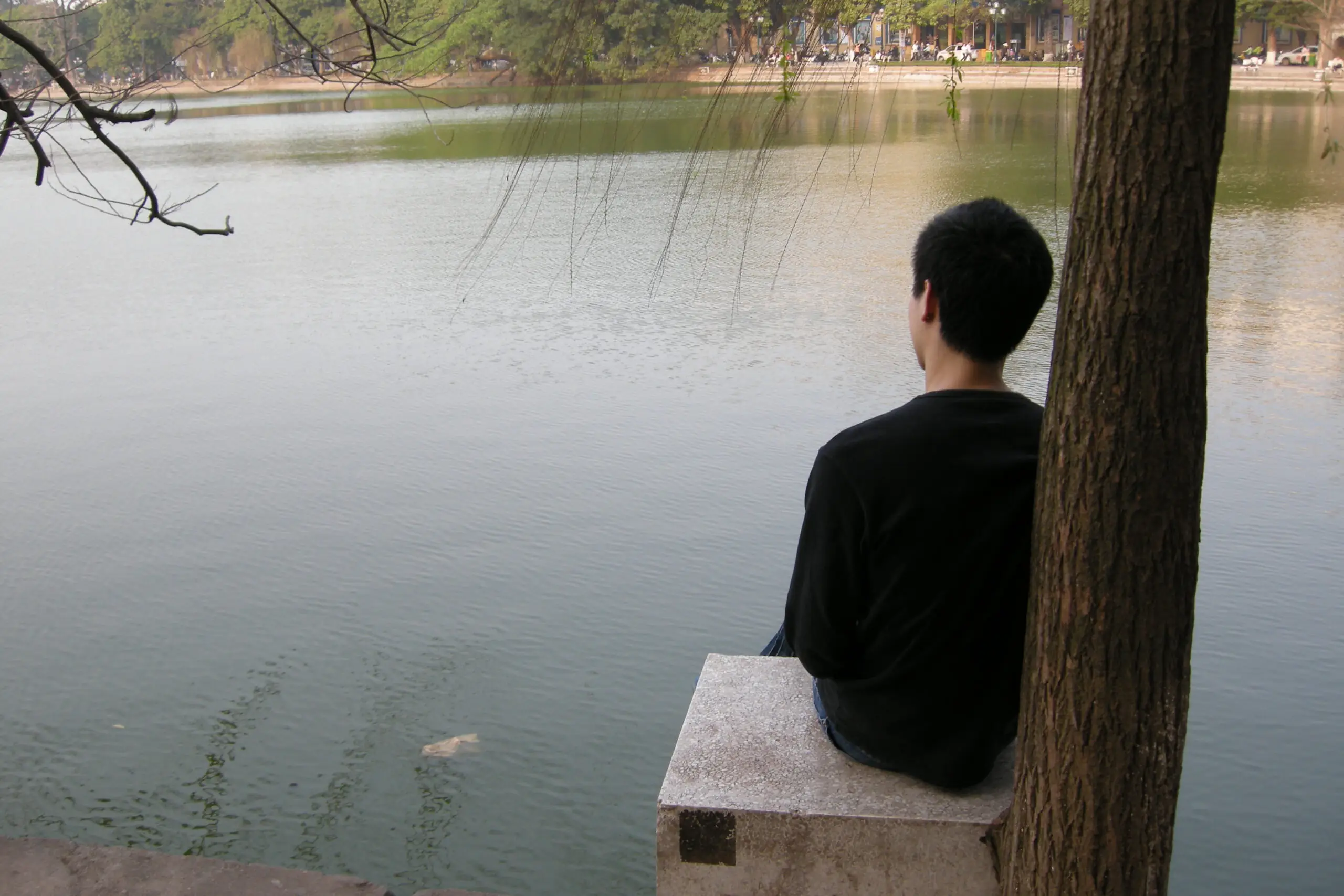
At the geographical heart of the city lies Hoan Kiem Lake. Local folklore claims that a golden turtle emerged from these waters to reclaim a magical sword from Emperor Lê Lợi after he defeated the Ming dynasty. It is a lovely legend, but the everyday reality of the lake is just as compelling: at dawn, its banks are filled with locals practising tai chi before crossing the iconic red bridge to the Ngoc Son Temple.
Hanoi’s true dining room is out on the pavement. This is the northern home of phở, which is traditionally simpler and clearer here than in the south. You must also try bún chả (grilled pork and noodles); while the spot made famous by Barack Obama and Anthony Bourdain is excellent, it is by no means the only great bowl in town. The French-Vietnamese hybrid bánh mì is a daily staple, and cà phê trứng (egg coffee) is a rich, genuine Hanoi invention born out of a historical milk shortage.
My own sharpest memory of Hanoi was the moment I finally learned how to cross the road. You do not wait for a gap in the motorbikes, because a gap will never come. Instead, you step off the pavement and walk at a slow, entirely predictable, unwavering pace. You do not stop, and you do not run. If you trust the system, the river of traffic will simply part and flow around you—a perfect metaphor for navigating the city itself.
If you are planning a visit, note that Vietnam is not broadly visa-free. While a few nationalities benefit from short visa exemptions, most visitors require a visa, which is usually obtained in advance via the official online e-visa system (now issued for up to 90 days). Regulations can change, so you must carefully check current entry requirements before you book your trip.
FAQ
When is the best time to visit Hanoi?
Autumn (September to November) and spring (March to April) offer the most pleasant weather, with mild temperatures and lower humidity. Winter can be surprisingly cold and drizzly, while summer is fiercely hot and prone to heavy downpours.
Do I need a visa for Vietnam?
Most international visitors need a visa to enter Vietnam. The most common method is the online e-visa, though some nationalities have brief visa exemptions. Always check the official government portal for the most current rules.
What food is Hanoi known for?
Hanoi is famous as the birthplace of northern-style phở, as well as bún chả (grilled pork with rice noodles) and cà phê trứng (egg coffee), a rich drink made by whipping egg yolks with condensed milk.
How do I cross the road in Hanoi?
The trick to crossing the street amidst the heavy motorbike traffic is to walk at a slow, steady, and entirely predictable pace. Do not make sudden movements, do not run, and do not step backward; the drivers will anticipate your path and flow around you.
Images: Jakub Hałun / CC BY 4.0; Vyacheslav Argenberg / CC BY 4.0; Surya Santoso / CC BY 3.0. Source: Wikimedia Commons.
Read also
- Resorts of Turkey: Kas – sea, mountains and Lycian sketch.
- Shanghai is one of the main tourist cities in China
- Tourist Thailand: my travels and discoveries


