
A Fortress Built by Warrior-Monks
The whole city is a reaction to a near-defeat. In 1565 the Knights of St John (the Order of the Hospitallers) survived the Great Siege of Malta, barely holding off a massive Ottoman assault from their older bases across the water. Resolved never to be caught underprepared again, they built Valletta from scratch on the Mount Sceberras peninsula, naming it after their Grand Master, Jean Parisot de Valette.
This is a purpose-built fortress, laid out on a rigid defensive grid and completely ringed by enormous bastions. The period boast that Valletta was a city “built by gentlemen for gentlemen” glosses over the brutal labour it took; it is, underneath the grand architecture, a military installation.
The Golden Stone and the Balconies
The fabric of the city is cut from globigerina limestone, a soft local stone that weathers to a deep, warm gold. The streetscape is defined by the gallariji — enclosed, brightly painted timber balconies jutting from almost every facade.

Because the grid drops sharply to the water on three sides, many side streets are stepped. It’s often said these long, shallow steps were built to let knights walk up them in heavy armour. It makes a good story — though historians generally treat it as a pleasant local legend rather than established fact.
St John’s Co-Cathedral and Caravaggio
The Knights’ central church, St John’s Co-Cathedral, mirrors the city’s ethos: plain, heavy, almost austere outside; inside, an explosion of gilded Baroque.

The real reason to go in hangs in the Oratory: Caravaggio’s The Beheading of Saint John the Baptist. It’s a vast, violent masterpiece — the largest canvas Caravaggio ever painted, and the only work he is known to have signed. His time on the island was brief and chaotic: he arrived a wanted man, was made a Knight of the Order here, and then, after a violent brawl, was disgraced, imprisoned, and forced to flee.
The British Layer and the Second Siege
The Knights are only one chapter. Malta was under British rule until 1964, a legacy you still see in the red pillar boxes, the traffic driving on the left, and English standing alongside Maltese (a Semitic language, unusual in Europe). And in the Second World War the island endured a second brutal siege, surviving months of relentless aerial bombardment — the resilience so complete that the whole island was collectively awarded the George Cross, which still sits on the Maltese flag today.
A Living Capital
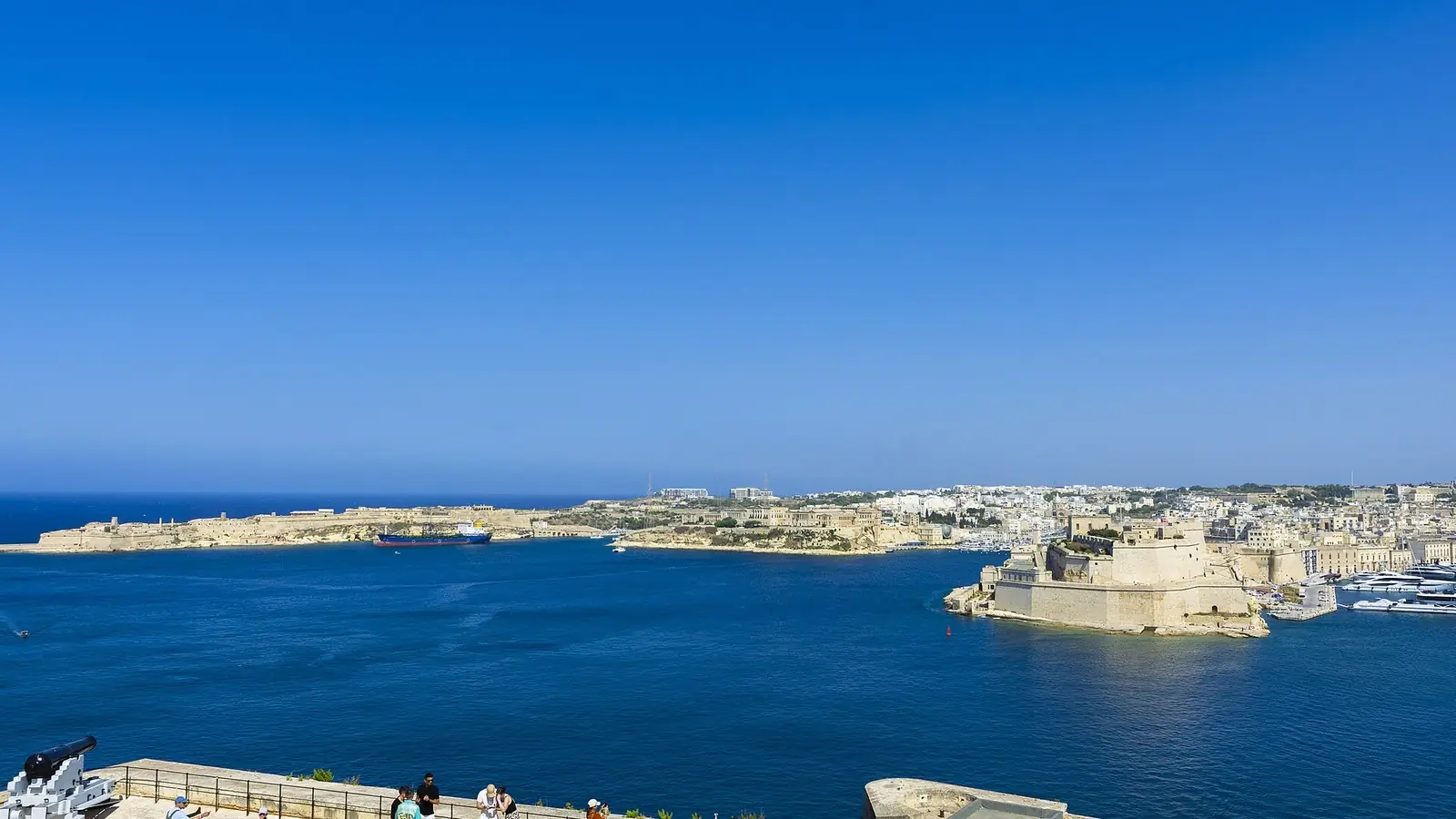
For all its heavy history, Valletta is still a working seat of government, not a film set. It shed population for decades, but its 2018 turn as European Capital of Culture helped bring it back. For the older, quieter story of the Knights, just look across the Grand Harbour to the Three Cities (Vittoriosa, Senglea, and Cospicua), where the Order was based before Valletta existed.

US, UK, and EU visitors currently get visa-free short stays in the Schengen area (Malta is in Schengen), though the EU’s ETIAS pre-authorisation system is being phased in. Entry rules change, so check current requirements before you book.
To catch the city’s rhythm, leave the main streets. Find a corner near the lower bastions just before midday: as the heavy concussion of the noon gun from the Saluting Battery rolls across the harbour, listen for the ragged brass of a band-club rehearsal drifting from an open first-floor window — the grand fortress grounded, firmly, in everyday life.
FAQ
How do I get from Malta airport into Valletta?
Malta International Airport (MLA) is about eight kilometres from the capital. The dedicated airport express bus takes roughly thirty minutes to the Valletta terminus, or you can take a taxi or a ride-hailing app like Bolt for a slightly quicker trip.
How long do I need in Valletta?
The city is tiny — barely a kilometre long and half as wide — and easily walkable. You can see the main sights comfortably in a single full day, though staying two nights lets you feel the quieter evening city once the cruise-ship crowds have gone.
What should I see in Valletta?
The priorities are St John’s Co-Cathedral (above all for the Caravaggio) and the Upper Barrakka Gardens, which give the definitive sweeping view over the Grand Harbour and the Three Cities.
When is the best time to visit?
Spring (April to June) and autumn (September to October) are best. High summer, in July and August, is intensely hot and crowded, while winter is damp and windy but still fairly mild.
Cover photo: Trajcinema, CC BY 4.0, via Wikimedia Commons.
