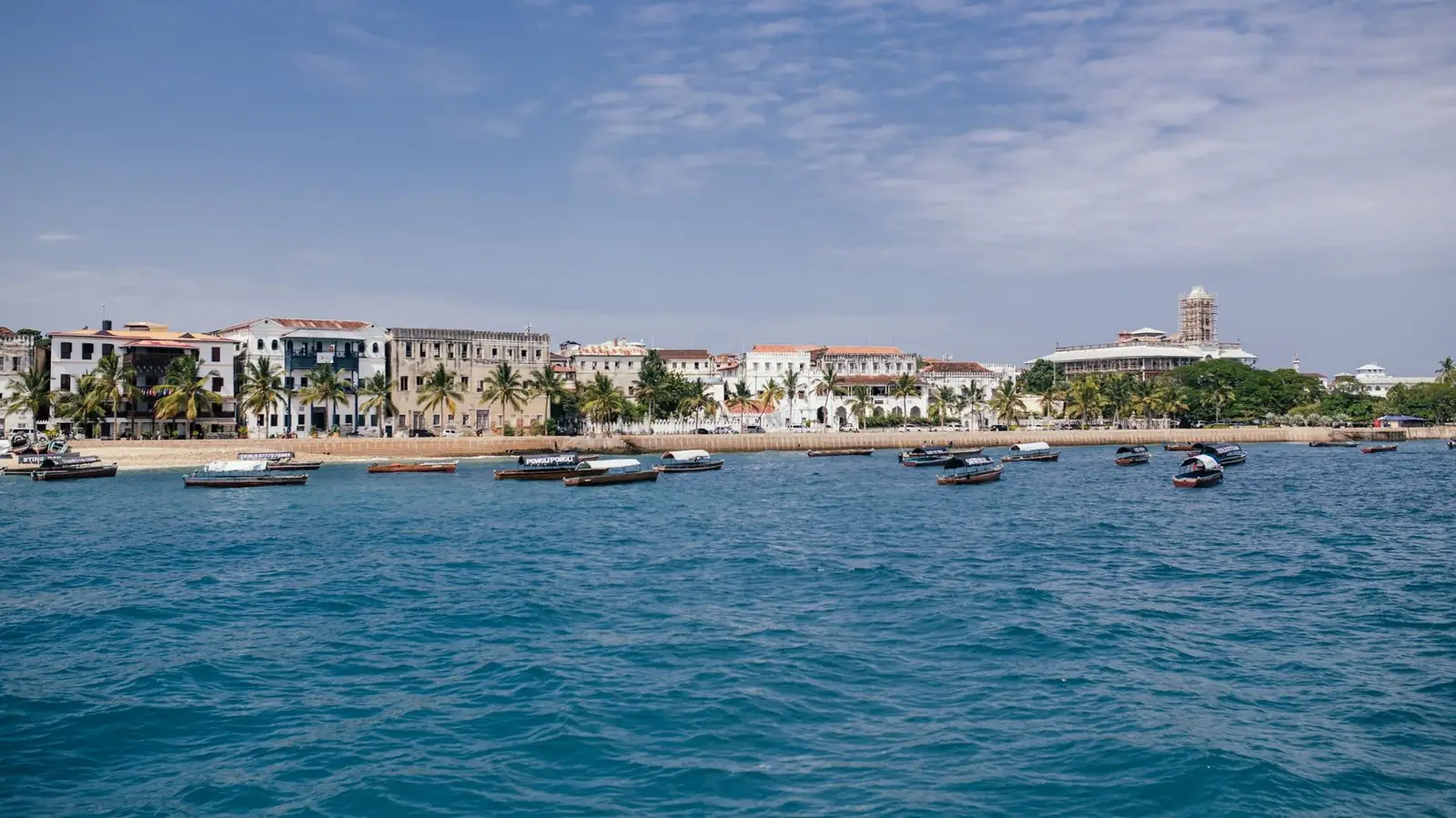

The Swahili Melting Pot
For centuries, Zanzibar sat at the very centre of the Indian Ocean trade routes. Stone Town, its historic heart, is a UNESCO-listed labyrinth where African, Persian, Indian, and Arab (specifically the Omani sultanate) influences fused to create Swahili culture.
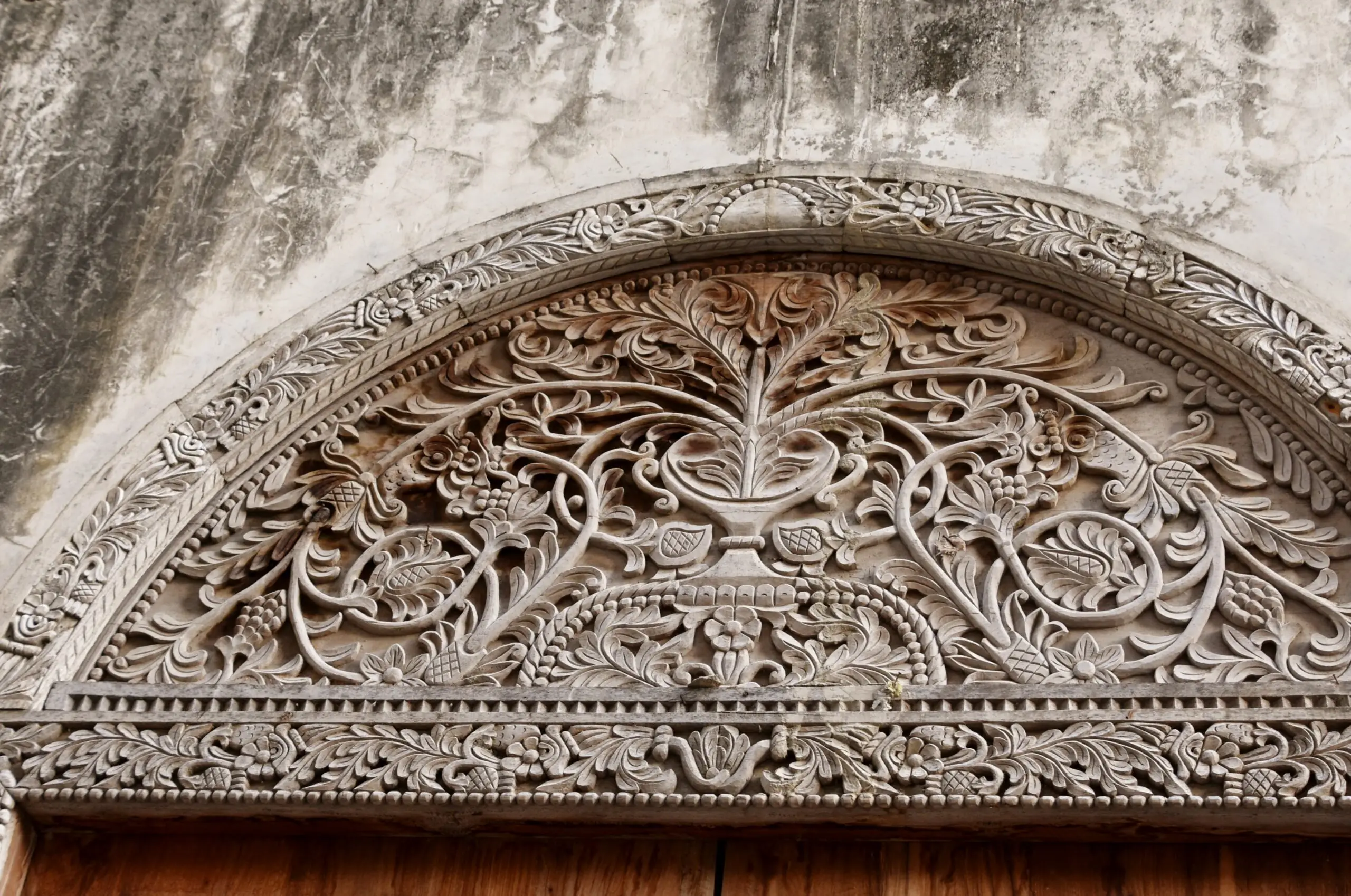
You can read this history directly in the architecture. The winding streets are famous for their heavy, magnificently carved wooden doors. They serve as historical markers: the rectangular doors with intricate geometric carving usually point to an Omani or Arab lineage, while the doors featuring arched tops and heavy brass spikes—said to derive from an Indian tradition of studding gates against war elephants, though Zanzibar itself never had any—reflect the island’s Indian mercantile history.
The wealth that built these doors came largely from the island’s position as the “Spice Island.” The inland farms produced vast quantities of cloves, nutmeg, and cinnamon, turning Zanzibar into a crucial global trading hub rather than just a local market.
Handling History Honestly
However, the other source of that immense wealth was human life. Stone Town was the site of one of the largest and last open slave markets in East Africa. It is a history that must be confronted with plain, unsensationalised respect. Today, the Anglican Christ Church Cathedral stands directly on the site of the old market. Beside it, you can visit a stark, moving memorial and the cramped, suffocating underground chambers where enslaved people were held. It is a sobering experience, but an absolutely essential part of understanding the island.
The city’s relationship with its more recent famous sons is also complex. Farrokh Bulsara, who the world knows as Queen frontman Freddie Mercury, was born here. Today, his legacy is heavily marketed to visitors, with a dedicated museum and numerous “Mercury was here” signs. In truth, the reality of his time on the island was relatively modest, and the conservative, predominantly Islamic society of Zanzibar maintains a slightly complicated, uneasy relationship with fully claiming his flamboyant legacy.
The Seafront and the Night Market
The waterfront is defined by a different set of landmarks. The massive walls of the Old Fort sit near the Beit al-Ajaib, the House of Wonders. The latter was once the grandest building in East Africa, though following a partial collapse a few years ago, it remains under a long, slow process of restoration.
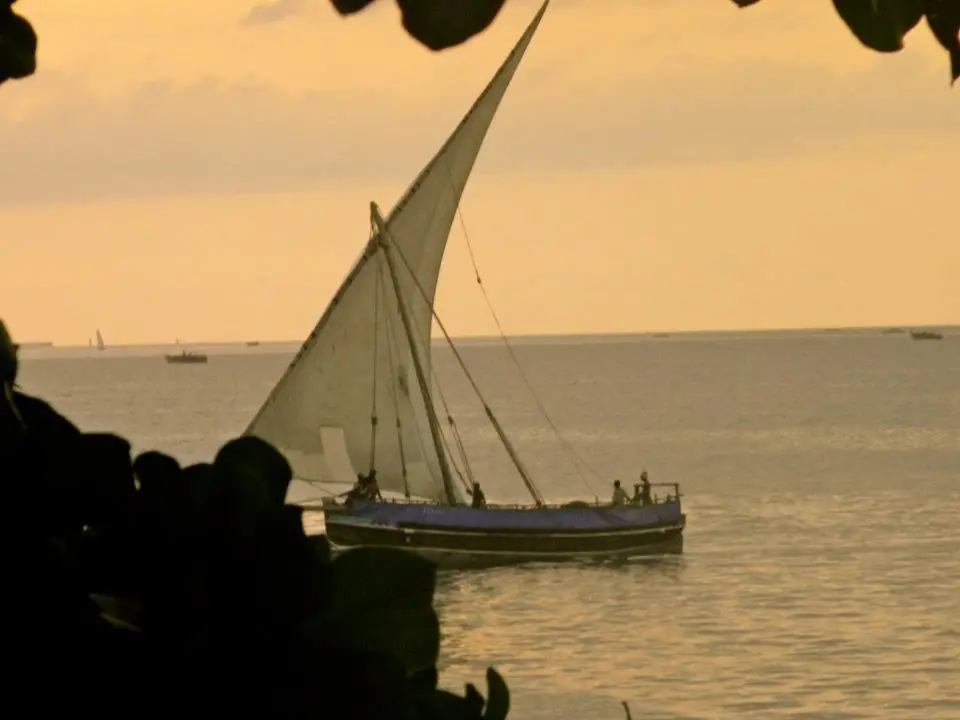
As evening approaches and the traditional wooden dhows sail back into port, life moves to the Forodhani Gardens night market. It is a brilliant, chaotic scene. You must try urojo (a complex, tangy bowl often called Zanzibar mix) and the heavily loaded “Zanzibar pizza.” Be aware, however, that the market is now as much a tourist destination as a local one, and the sprawling tables of grilled seafood are often aggressively sold to visitors at heavily marked-up prices.
My own sharpest memory of Stone Town is sitting on a low concrete bench by the port, watching two older men play a fast, silent game of bao (a traditional mancala board game) in the shade of an almond tree. They ignored the tourists, they ignored the heat, and they played with the rhythmic, absolute certainty of a culture that has weathered centuries of change and still remains entirely itself.
If you are planning a trip, be aware that Zanzibar is predominantly Muslim and fairly conservative. While swimwear is accepted at the enclosed beach resorts, when walking through Stone Town, it is important to dress modestly, covering shoulders and knees out of respect for local norms.
Regarding entry, Tanzania (which includes Zanzibar) is not broadly visa-free. Most international visitors require a visa, which can usually be obtained via the official e-visa system in advance, or, for certain nationalities, on arrival. Rules shift frequently, so you must carefully check current entry requirements before you travel.
FAQ
When is the best time to visit Zanzibar?
The dry seasons—from June to October, and again from January to February—are the best times to visit, offering clear skies and manageable humidity. The long rains hit between March and May.
Do I need a visa for Zanzibar/Tanzania?
Yes, most visitors require a tourist visa to enter Tanzania. It is highly recommended to apply for an e-visa online well before your departure, though some nationalities may still be eligible for a visa on arrival.
Is Stone Town worth visiting, or should I just go to the beach?
It is absolutely worth visiting. Spending at least two nights in Stone Town provides the essential cultural and historical context for the island, preventing your trip from being just a generic beach holiday.
What should I wear in Stone Town?
Zanzibar is a conservative Islamic society. When leaving the beach resorts and walking through Stone Town, both men and women should dress modestly, ensuring that shoulders and knees are covered.
Images: Tonpol360 / CC BY-SA 4.0; Richard Mortel from Riyadh, Saudi Arabia / CC BY 2.0; Lanesentex / CC BY-SA 4.0. Source: Wikimedia Commons.
Read also
- Tourists in Seychelles
- Cheap flights to Dubai: the stopover megahub, the metro from the airport, and dodging the heat
- Dubai: From desert dunes to modern wonder


