
The Reality of the Bouchon
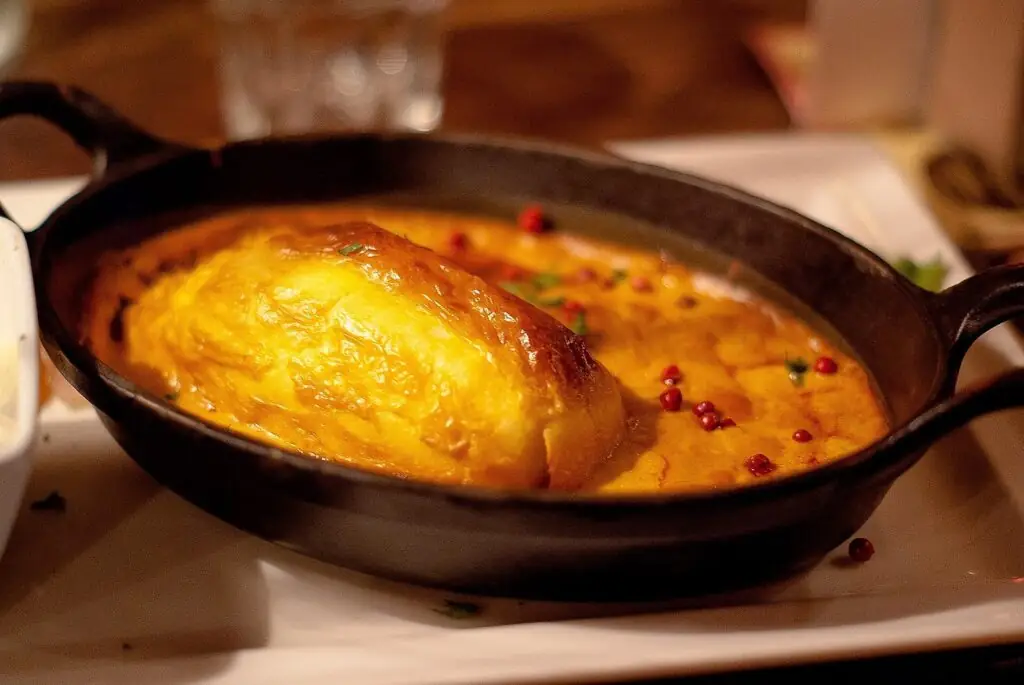
The bouchon is a specific, historic tradition, born from the mères lyonnaises — the working-class women cooks who built the city’s reputation. Real bouchon food is heavy, modest, and made to fuel manual labour: thick pike quenelles in crayfish sauce, andouillette (a coarse tripe sausage), salade lyonnaise with bacon and a poached egg, the vivid pink praline tart.
But “bouchon” on a painted sign is no legal guarantee, and the tourist core of Vieux Lyon is thick with poor imitations serving microwaved food. To find the real thing, look for the places full of locals eating a fixed midday menu. There’s an official Les Bouchons Lyonnais certification label, which is a useful starting point — treat it as a helpful guide, not an absolute guarantee.
Silk and the Canuts
Lyon got rich on silk. To find the city’s spine, walk up the steep slopes of the Croix-Rousse. The district was built for the looms of the canuts (the silk weavers), and it shows in the architecture: tall windows for maximum light, unusually high ceilings to fit the big Jacquard machines. The canuts were a fiercely independent workforce, and they staged one of Europe’s first major workers’ revolts here, in 1831.
The Traboules
To move finished silk down to the river without it getting soaked, the weavers used traboules — a network of covered passageways cutting straight through buildings and internal courtyards, mostly in Croix-Rousse and Vieux Lyon.
Many traboules are open to the public by day, but remember they are lived-in, residential spaces, not a museum exhibit. You’re walking through people’s apartment blocks, so keep your voice down and move through quietly. During the Second World War these hidden passages were famously used by the French Resistance to slip away from capture. That history is real — but the scale of it has been heavily romanticised over the years; not every passage hid a secret meeting, and the more dramatic tales are best taken as local legend rather than established fact.

Roman Lugdunum and the Rivers
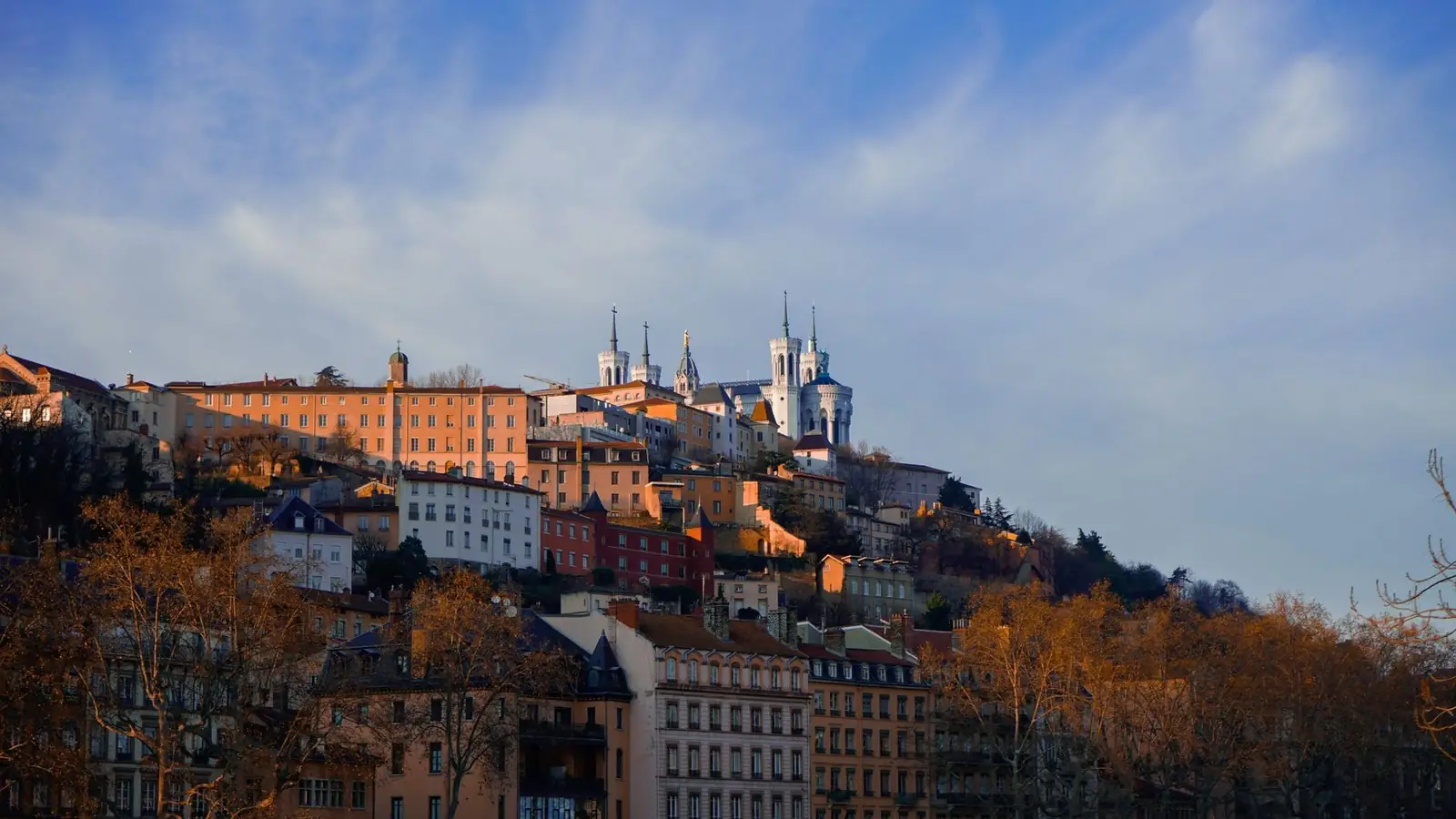
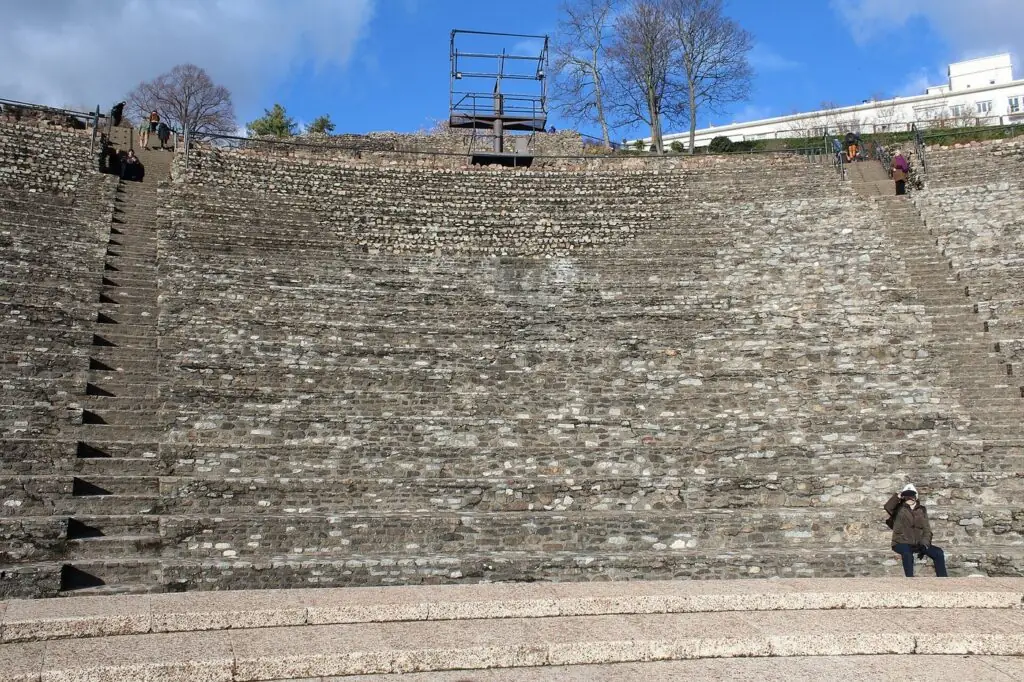
The deepest layer sits on Fourvière hill, above the centre. Two thousand years ago this was Lugdunum, the capital of Roman Gaul. The Roman theatres are still cut into the hillside and still used for summer concerts; above them looms the late-nineteenth-century Basilica of Notre-Dame de Fourvière, which dominates the skyline.
From the hill, the geography makes sense. Lyon is defined by water: the broad Rhône and the narrower Saône meet here, and between them sits the Presqu’île, a long peninsula holding the grand civic centre, anchored by the vast open square of Place Bellecour.
The defining image of Lyon isn’t a polished Michelin-starred plate. It’s the late-afternoon light catching the dust in a high-ceilinged Croix-Rousse workshop, or a waiter dropping a blisteringly hot, sauce-bubbling quenelle onto a scratched zinc counter with a brief nod before turning back to the kitchen.
US, UK, and EU visitors currently get visa-free short stays in the Schengen area, though the EU’s ETIAS pre-authorisation system is being phased in. Entry rules change, so check current requirements before you book.
FAQ
How do I get from Lyon airport into the city?
The Rhônexpress tram runs directly from Lyon–Saint-Exupéry Airport to the central Part-Dieu railway station, covering the roughly twenty-five kilometres in about thirty minutes.
What’s a real bouchon, and what should I eat?
A genuine bouchon serves heavy, traditional, offal-rich working-class food. Look for pike quenelles, andouillette, and salade lyonnaise, then a pink praline tart. Steer clear of places with street touts or multi-language picture menus.
Can you visit the traboules?
Yes — many in Vieux Lyon and Croix-Rousse are open to the public during the day. They run through private residential buildings, so the etiquette matters: don’t shout, respect residents’ privacy, and turn back if a courtyard door is locked.
When is the best time to visit Lyon?
Spring (April to June) and autumn (September to October) are most comfortable for walking the hills. July and August can be very hot, and the famous Fête des Lumières in early December is spectacular but heavily crowded.


