

Ruins as Street Furniture
What makes the city singular, earning its UNESCO World Heritage inscription in 1979, is how the ruins are integrated into the working street grid. Massive, stabilized structures stand open to the sky right next to bakeries and produce markets. Behind the active parish church on the main plaza, you can walk through the haunting, roofless nave of the original Antigua Guatemala Cathedral. A few streets away, the intricate, partially collapsed architecture of the Convent of Las Capuchinas remains fully visitable.

The Volcanoes
Antigua sits in the shadow of three immense volcanoes. Volcán de Agua dominates the immediate southern skyline, filling the end of half the streets in town. To the west sit Acatenango and Fuego. Fuego is famously and consistently active, producing regular Strombolian eruptions and ash plumes. The overnight hike up Acatenango to watch Fuego erupt from a safe distance is a major draw, but it requires honesty: it involves high altitude, bitter cold, and genuinely demanding physical exertion. You must go with a reputable operator and check the current access conditions before committing.

The Arch and La Merced
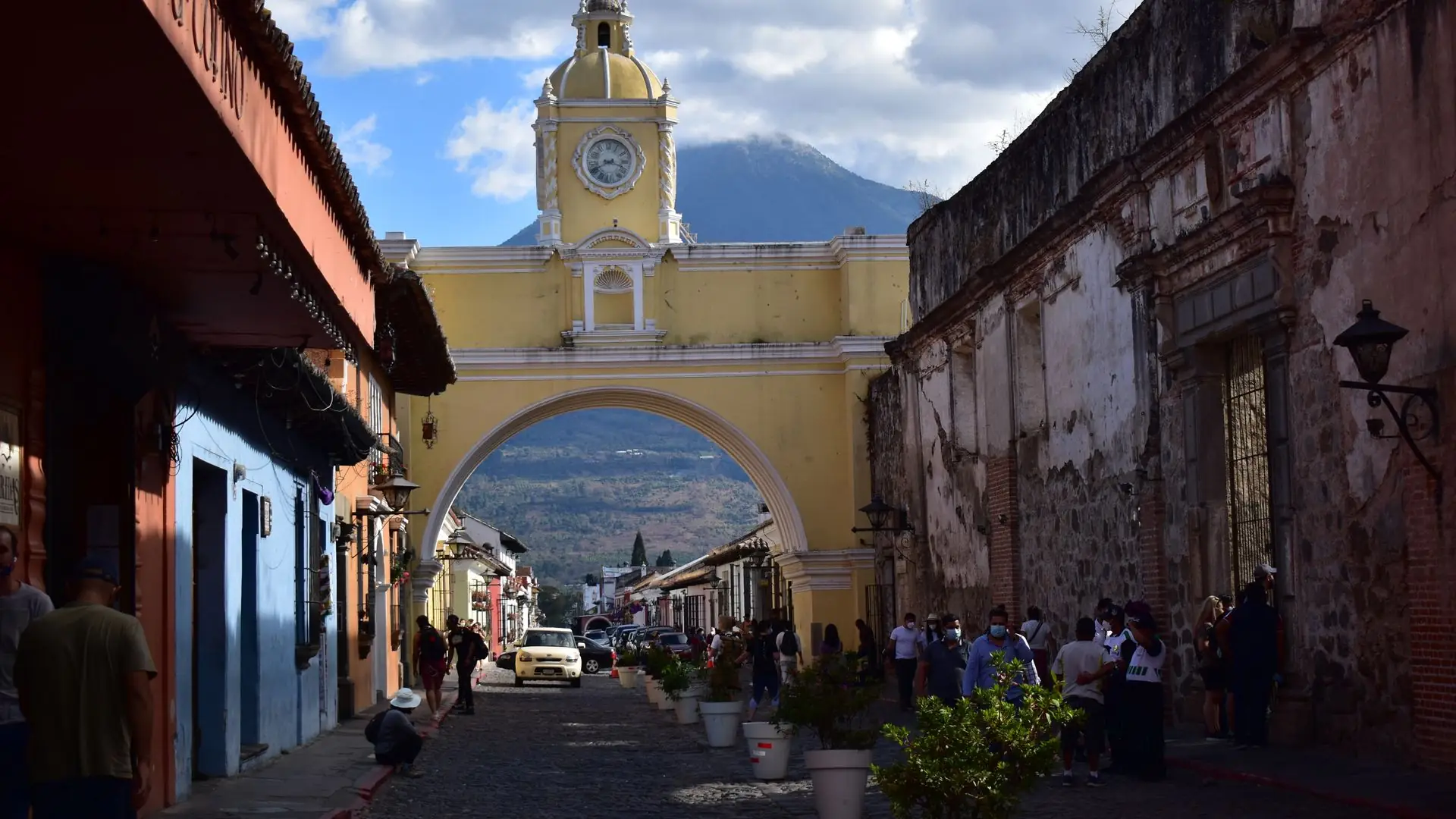
The yellow Santa Catalina arch, originally built so nuns could cross the street unseen, is the shot everyone comes for, particularly when framed with Volcán de Agua behind it and the brilliant yellow facade of La Merced church nearby. It is undeniably the most photographed corner of Guatemala, but the sharp morning light entirely justifies the crowds.
Holy Week
If you visit during Semana Santa (Holy Week), the city transforms into what is widely considered one of the largest Easter observances in the Americas. The streets are covered in alfombras—intricate, brilliantly coloured carpets made of dyed sawdust, pine needles, and flowers. The detail that carries the entire tradition is the impermanence: families and community groups spend all night painstakingly building the carpets, only for them to be completely destroyed minutes later as the heavy religious processions walk directly over them.
The Living Town
The surrounding slopes are heavily planted with coffee, and farm tours are an easy afternoon trip. Within the grid, the city functions as one of Latin America’s classic Spanish-language-school hubs, bringing a steady, long-term international crowd. For an overview of the valley, visitors hike to the Cerro de la Cruz viewpoint. However, the wooded trail has a history of opportunistic muggings; standard safety guidance advises walking up in a large group or simply taking a tuk-tuk to the top.
Generally, Antigua is heavily touristed, highly walkable, and much calmer than the modern capital. Standard big-city awareness applies to your valuables, and all day trips or volcano logistics should be handled through established, reputable operators. Transiting through Guatemala City itself is a different conversation requiring tighter logistics.
The Practical Frame
Antigua has no airport. You fly into Guatemala City (GUA) and take a road transfer—usually a shared tourist shuttle—which takes roughly an hour, depending heavily on the capital’s traffic.
Regarding entry, Guatemala is part of the CA-4 Border Control Agreement alongside El Salvador, Honduras, and Nicaragua. For US and UK citizens, this means you generally receive 90 days of visa-free travel that applies across all four countries combined, not 90 days per country. Always check current entry requirements before you book.
To grasp the enduring nature of the town, step onto a cobbled street early in the morning. The volcano at the end of the block catches the first light, grass grows on top of a ruined arch, and the smell of roasting coffee and fresh tortillas drifts from an open doorway. The empire left; the morning routine didn’t.
FAQ
Is Antigua Guatemala worth visiting?
Yes. It is the defining historical city of Central America. Despite the heavy tourist presence, the sheer scale of the stabilized ruins integrated into the daily life of the town makes it architecturally and atmospherically unique.
Is Antigua Guatemala safe for tourists?
Antigua is generally safe during the day in the main grid, provided you apply standard awareness regarding petty theft. You should avoid walking alone late at night, take reputable transport to the Cerro de la Cruz viewpoint, and always use established guides for volcano hikes.
How do I get from Guatemala City airport to Antigua?
The journey takes roughly 45 to 60 minutes. The most common and reliable method is to book a seat on a shared tourist shuttle or arrange a private transfer directly from the arrivals hall at GUA.
When is Semana Santa in Antigua and is it worth the crowds?
Semana Santa takes place during the week leading up to Easter Sunday. It is absolutely worth the massive crowds and inflated hotel prices to witness the creation and destruction of the sawdust carpets, but you must book accommodation many months in advance.

