
A City Frozen by Failure
In the fifteenth century, Bruges was one of the wealthiest cities in northern Europe — a staggering, cosmopolitan cloth-and-finance powerhouse. It was so central to European trade that the very word for a stock exchange comes from the city: merchants met at the inn owned by the local Van der Beurze family, and the gathering became the first bourse.
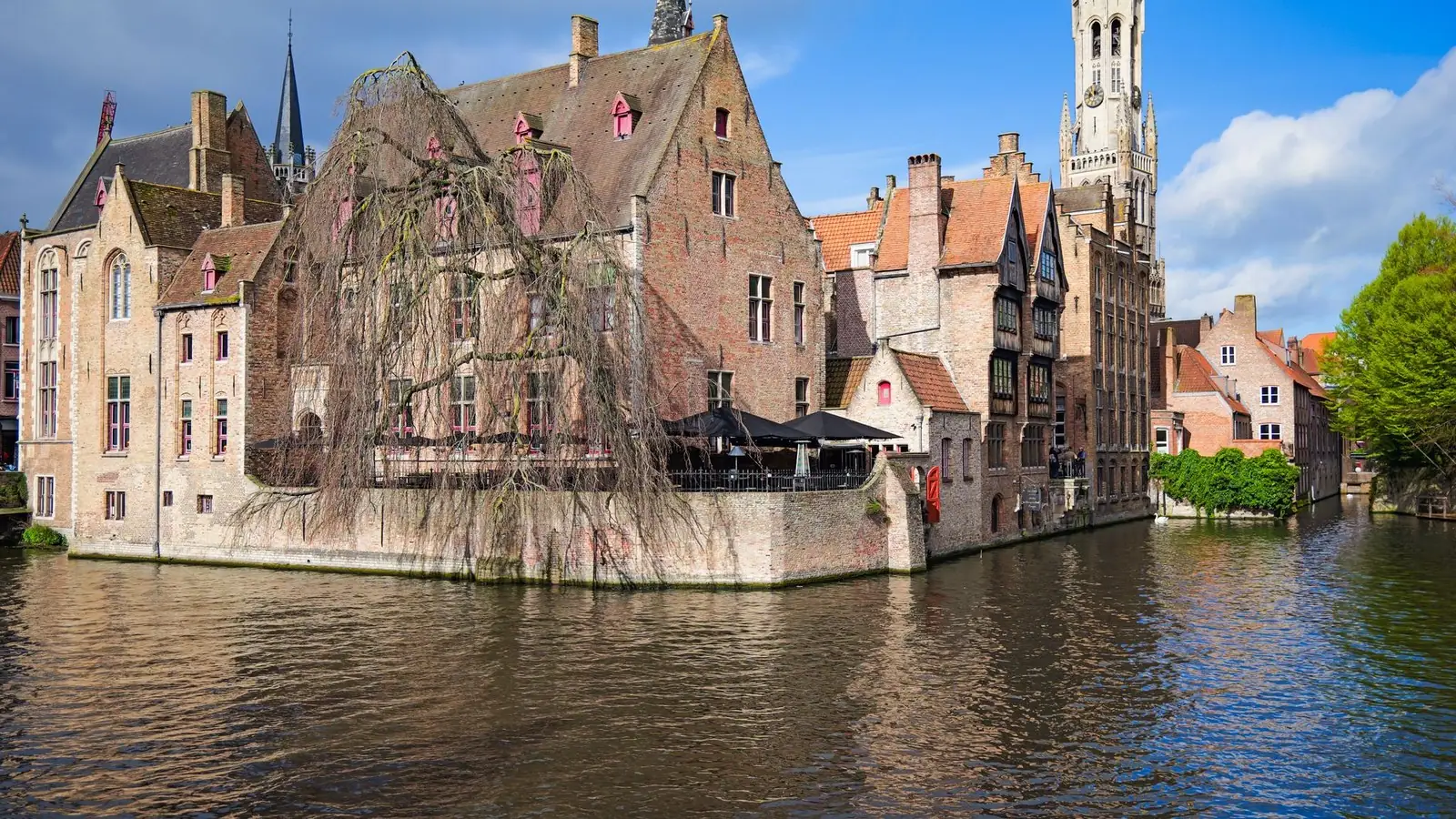
The collapse, when it came, was geographical. The city’s vital lifeline to the sea, the Zwin inlet, silted up. Cut off from deep-water shipping, the great maritime trade shifted to nearby Antwerp, and Bruges sank into centuries of profound poverty. It was simply too poor to demolish its old buildings and modernise. The medieval streetscape survived as an accident of economic collapse.
The Nineteenth-Century Reinvention
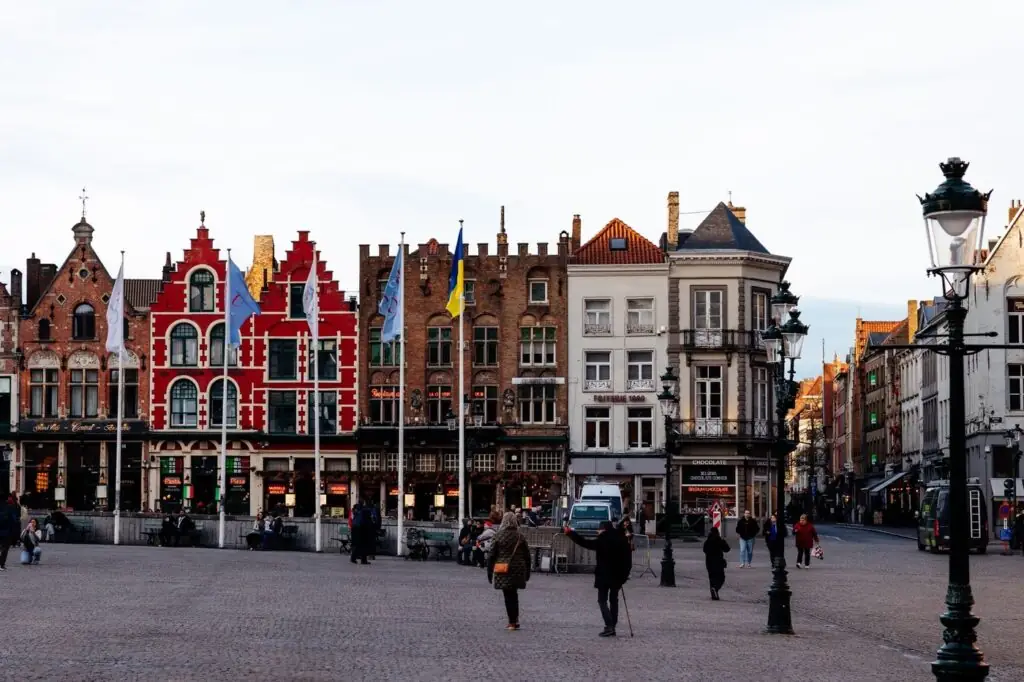
The city we walk through today rests on a second honest layer. In the nineteenth century, early Romantic tourism and Georges Rodenbach’s 1892 novel Bruges-la-Morte (“Bruges the Dead”) reinvented the forgotten, melancholy town as an attraction. The restorations that followed heavily polished — and in several places entirely invented — the “medieval” look, throwing up neo-Gothic facades that were made to look older than they were. Much of what you photograph today is a nineteenth-century idea of what the Middle Ages looked like.
Merchant Wealth and the Flemish Primitives
Before the money left, it bought astonishing art. Bruges was the cradle of the Flemish Primitives, and you can see the heavy, meticulous brilliance of Hans Memling, Gerard David, and Jan van Eyck — who lived and died in the city — in the Groeningemuseum.
The most powerful flex of the city’s old merchant wealth, though, sits quietly in the vast brick expanse of the Church of Our Lady: Michelangelo’s Madonna and Child, carved in white marble. It was bought directly by a wealthy family of Bruges cloth merchants and is one of the very few works by Michelangelo to leave Italy during the artist’s own lifetime.

The Surviving Layers
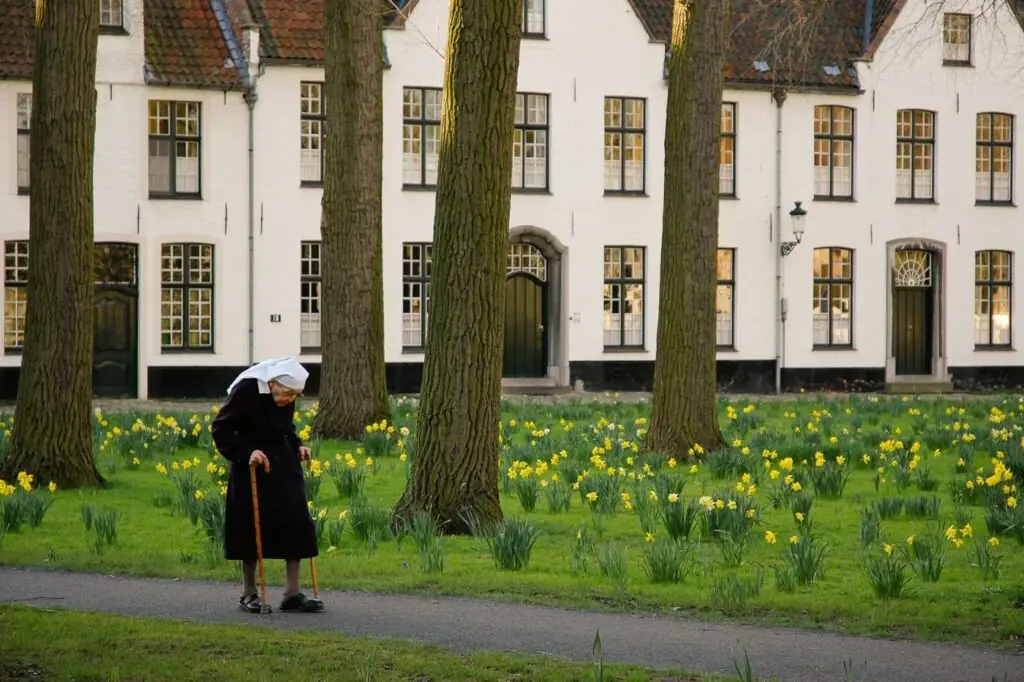
Under the heavy tourism, the older layers still function. The Basilica of the Holy Blood keeps its relic and its annual procession. The peaceful, tree-lined Begijnhof (beguinage) and the whitewashed almshouses remain quiet, enclosed spaces, originally built for unmarried or widowed women. And while lace and beer are sold hard on every corner, it is worth admitting that the lace trade is now overwhelmingly tourist-facing.
US, UK, EU, and Canadian visitors currently get visa-free short stays in Belgium under Schengen rules (up to 90 days in any 180-day period), with the EU’s ETIAS pre-authorisation system being phased in. Entry rules change, so check current requirements before you book.
To understand Bruges properly, walk away from the Markt at dusk and find a quiet stretch of canal near the Begijnhof. With the tour groups gone and the water flat, you can read the truth of the place plainly: a city that outlived its own economy and survived by becoming a picture of itself.
FAQ
How do I get to Bruges — does it have an airport?
Bruges has no commercial airport of its own. Visitors usually fly into Brussels Airport (BRU) or Brussels South Charleroi (CRL). From Brussels Airport, direct trains run to Bruges in roughly an hour to an hour and a half.
Is Bruges’s medieval look genuine?
Largely yes, but with a caveat. The core layout and many buildings survived because centuries of economic stagnation left no money to redevelop. But the city was heavily restored and partly reinvented in the late nineteenth century, so some of its “medieval” look is actually later neo-Gothic design.
What should I see in Bruges?
The essentials are the Markt and the Belfry, the Groeningemuseum for the Flemish Primitives, the Church of Our Lady for Michelangelo’s Madonna and Child, and the quiet enclosure of the Begijnhof.
When is the best time to visit?
Late spring (May) and early autumn (September to October) are excellent — mild weather and slightly thinner crowds. Summer is intensely busy, while mid-winter offers a stark, quiet atmosphere that suits the city’s history.


