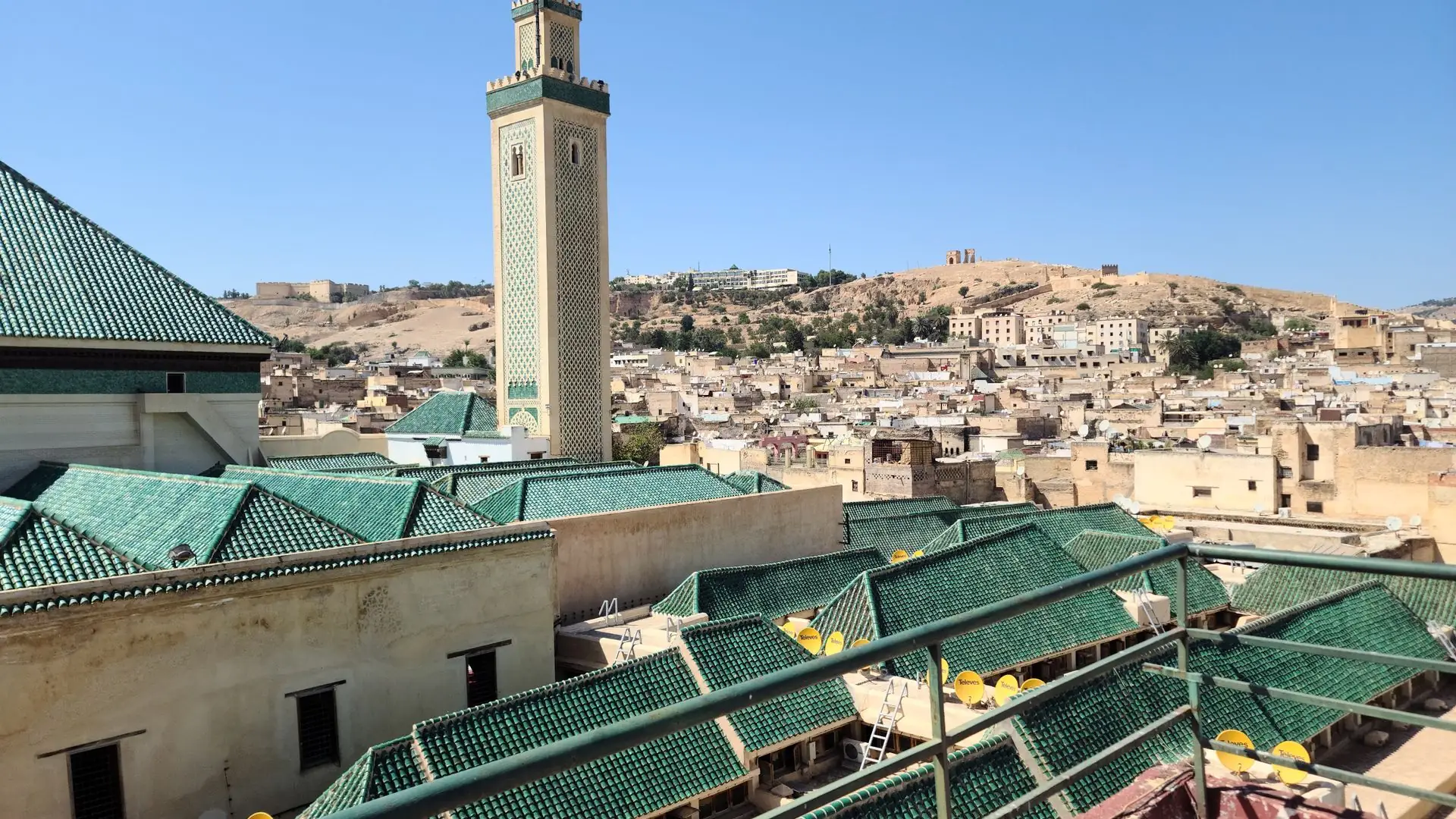

The University Claim
At the spiritual centre of the city sits Al-Qarawiyyin. Founded in 859 by Fatima al-Fihri, it is recognised by both UNESCO and Guinness World Records as the oldest existing, and continually operating, educational institution of higher learning in the world. The mosque itself is closed to non-Muslims. The historic library reopened after its restoration, but public access remains inconsistent in practice—some visitors are admitted to the exhibition space, others are turned away at the door—so ask locally before making the detour.
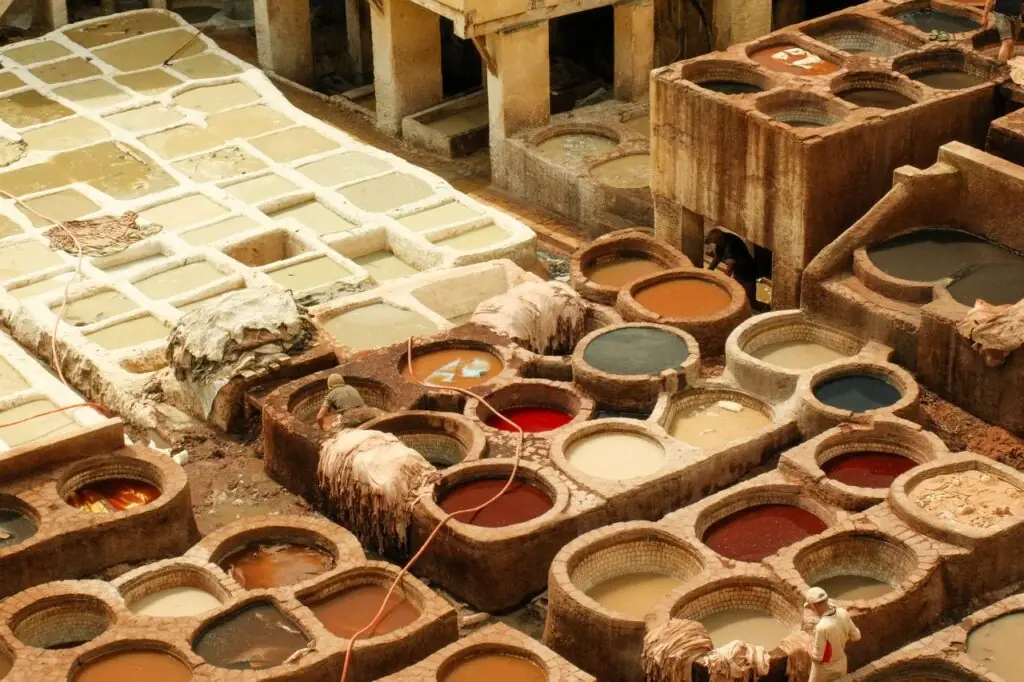
The Tannery
Chouara is the city’s famous honeycomb of dye pits, traditionally viewed from the terraces above with a sprig of mint held against the smell. It is open and fully operational following major structural renovations, and its origins are conventionally traced back to the 11th century. The terrace viewpoints themselves are leather shops, and the persistent pressure to buy a bag or jacket is simply the accepted price of the visit.
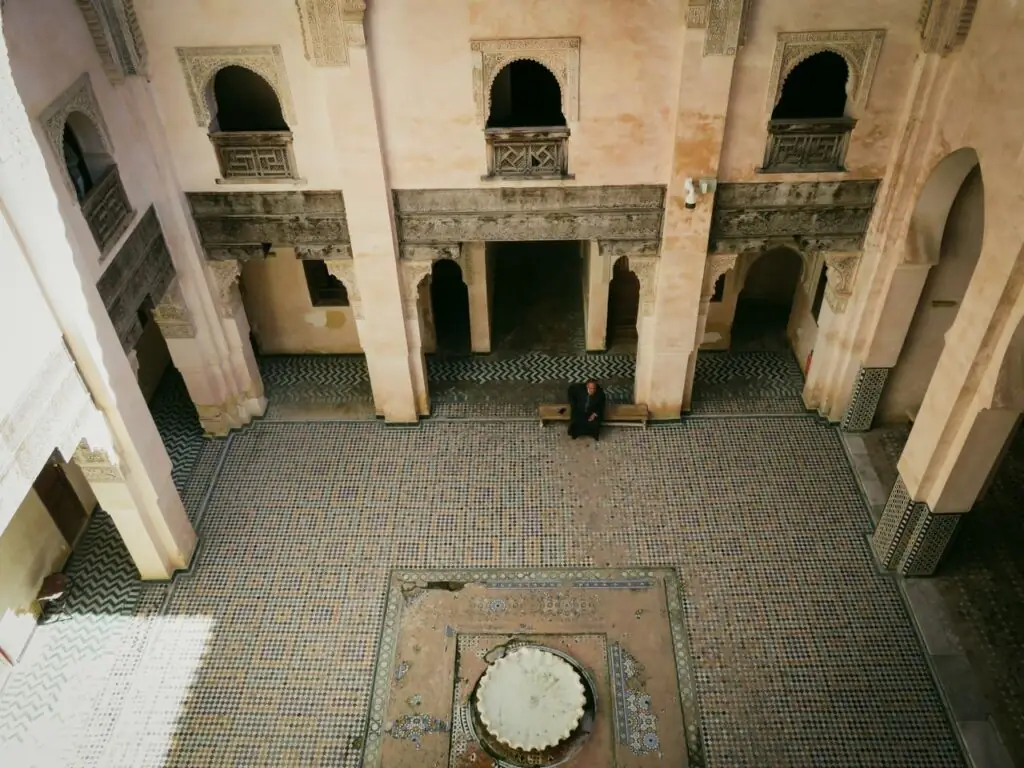
The Medersas
The Medersa Bou Inania and the Medersa al-Attarine stand as the architectural masterpieces of the medina. Crucially, both are open to non-Muslim visitors. They offer brilliant examples of intricate zellij tilework, heavily carved cedar wood, and perfectly proportioned interior courtyards.
The Navigation Reality
The medina is a system you cannot reliably navigate by map on your first day. You will inevitably encounter dead ends, faux guides, and the familiar script of “the road is closed, my friend.” The standard advice is simple and calm: always agree on a price before accepting help from a local, or hire an official guide who carries formal Ministry of Tourism credentials.
The Other Fez
Outside the ancient walls lies Fes el-Jdid, containing the Mellah (the old Jewish quarter) and the highly ornate, visitable Golden Gates of the Royal Palace. On the hill above the city, the ruined Merenid tombs offer the standard panoramic viewpoint over the entire medina, which was inscribed by UNESCO in 1981.
The Honest Calendar
Summer in inland Morocco is genuinely brutal, with daytime heat regularly spiking to 40°C. Winter nights are surprisingly cold. Spring and autumn are the sane windows for travel. The city also hosts the Festival of World Sacred Music, conventionally held in June. If your visit overlaps with Ramadan—which shifts roughly 11 days earlier each Gregorian year—note that restaurants in tourist-focused areas generally remain open during the day.
The Practical Frame
Fez-Saïss Airport (FEZ) connects to the city via the Line 16 bus, which reaches the railway station in roughly 40 minutes, or a standard taxi, which makes the run in about 25. For the broader picture of Moroccan gateways, see our Marrakesh flights guide.
By rail, ONCF schedules the journey from Casablanca to Fez at 3 hours and 50 minutes, and from Rabat to Fez at around 2 hours and 50 minutes.
Entry is straightforward: both US and UK passport holders currently receive visa-free entry for tourist stays of up to 90 days. Check current requirements before you book.
Wait for dusk on a medina rooftop when the maghrib call to prayer begins. A dozen minarets will answer each other across the valley. The rarest thing you can experience in a modern city is a soundscape with absolutely nothing mechanical in it, and Fez offers it nightly, for free.
FAQ
Is Fez worth visiting?
Yes. It remains one of the most culturally intact and historically dense cities in North Africa, functioning as a working logistical hub rather than a polished museum.
Can you visit Al-Qarawiyyin?
The mosque is closed to non-Muslims. You can glance through the open doorways into the courtyard, but entry is strictly prohibited, and access to the library, though nominally public since its restoration, is inconsistent in practice.
Is it easy to get lost in the Fez medina?
Yes, it is practically guaranteed. The street plan defies simple mapping. Hiring an official guide for your first day is the easiest way to orient yourself and understand the layout.
When is the best time to visit Fez?
Spring and autumn. The summer heat frequently hits 40°C, making the dense, unventilated alleys of the medina deeply uncomfortable.


