
The Royal City
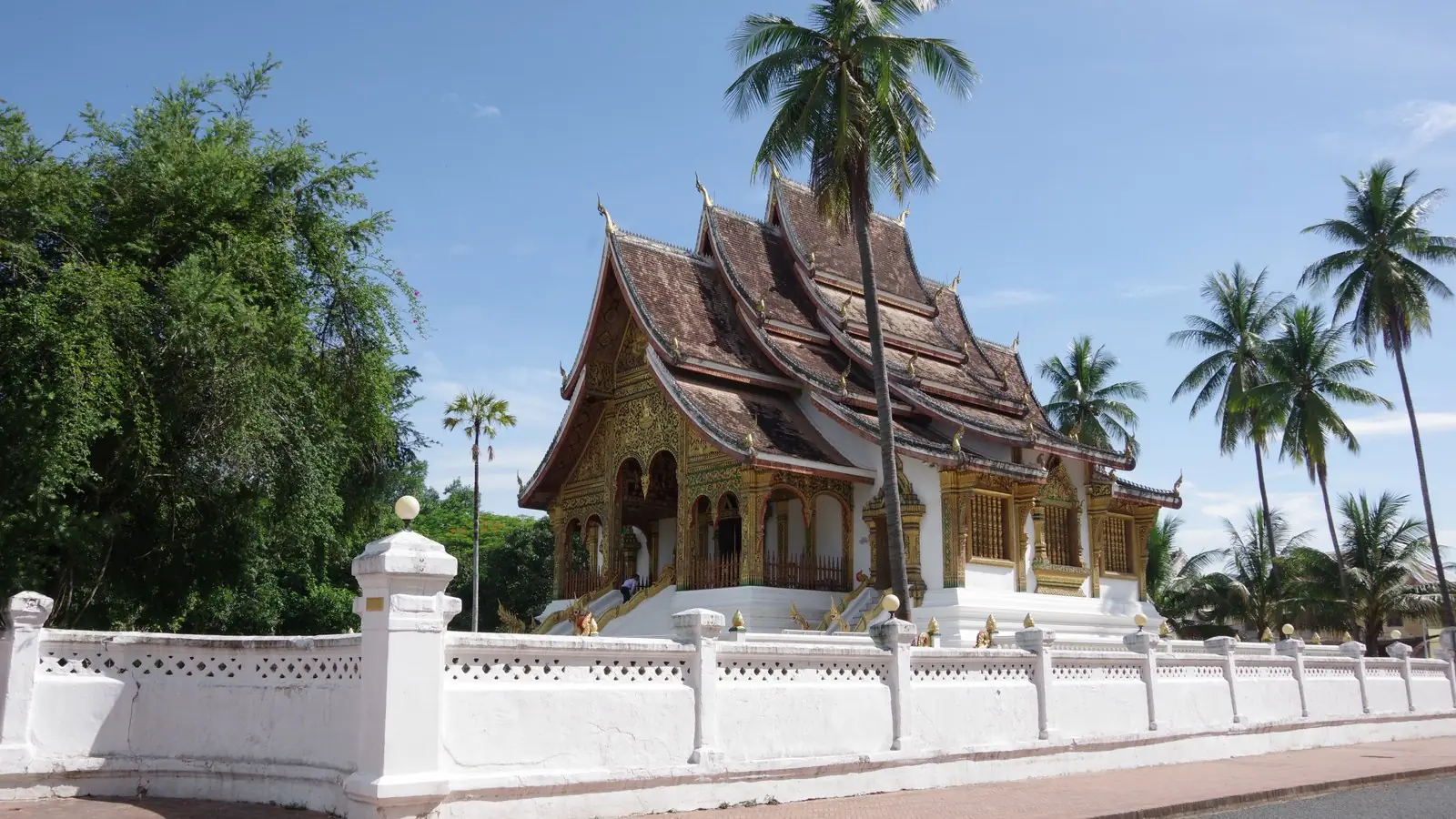
The city’s foundation rests heavily on royal authority. In 1353, the warlord Fa Ngum founded the kingdom of Lan Xang (literally “a million elephants”) and established his capital here. The city takes its name from the Pha Bang, a revered gold Buddha image gifted to the king that effectively legitimised his royal line. Even after Lan Xang eventually split in the eighteenth century, Luang Prabang remained a royal capital. The former Royal Palace—now operating as the National Museum—still holds the original throne room and the Pha Bang itself.
The French Layer
The fabric of the streets, however, relies heavily on a much later colonial residue. From 1893, Laos became a French protectorate. The French administration built wide streets lined with shuttered villas and brick shophouses, leaving behind a deep-seated local bakery habit. That distinctly colonial architecture now sits seamlessly alongside traditional Lao timber houses and ancient temple compounds—a unique architectural hybrid that secured the entire town a UNESCO World Heritage listing in 1995.
The End of the Monarchy
The romantic framing of a royal city on the river rarely includes the brutal reality of how the monarchy actually ended. In 1975, following the end of the Vietnam War and the Secret War in Laos, the communist Pathet Lao successfully took control of the country and formally abolished the monarchy. The last king, Sisavang Vatthana, alongside the queen and the crown prince, was arrested and sent to a remote “re-education” camp in the north of the country, where he died. The state never officially announced his death.
The Ritual and the Pressure
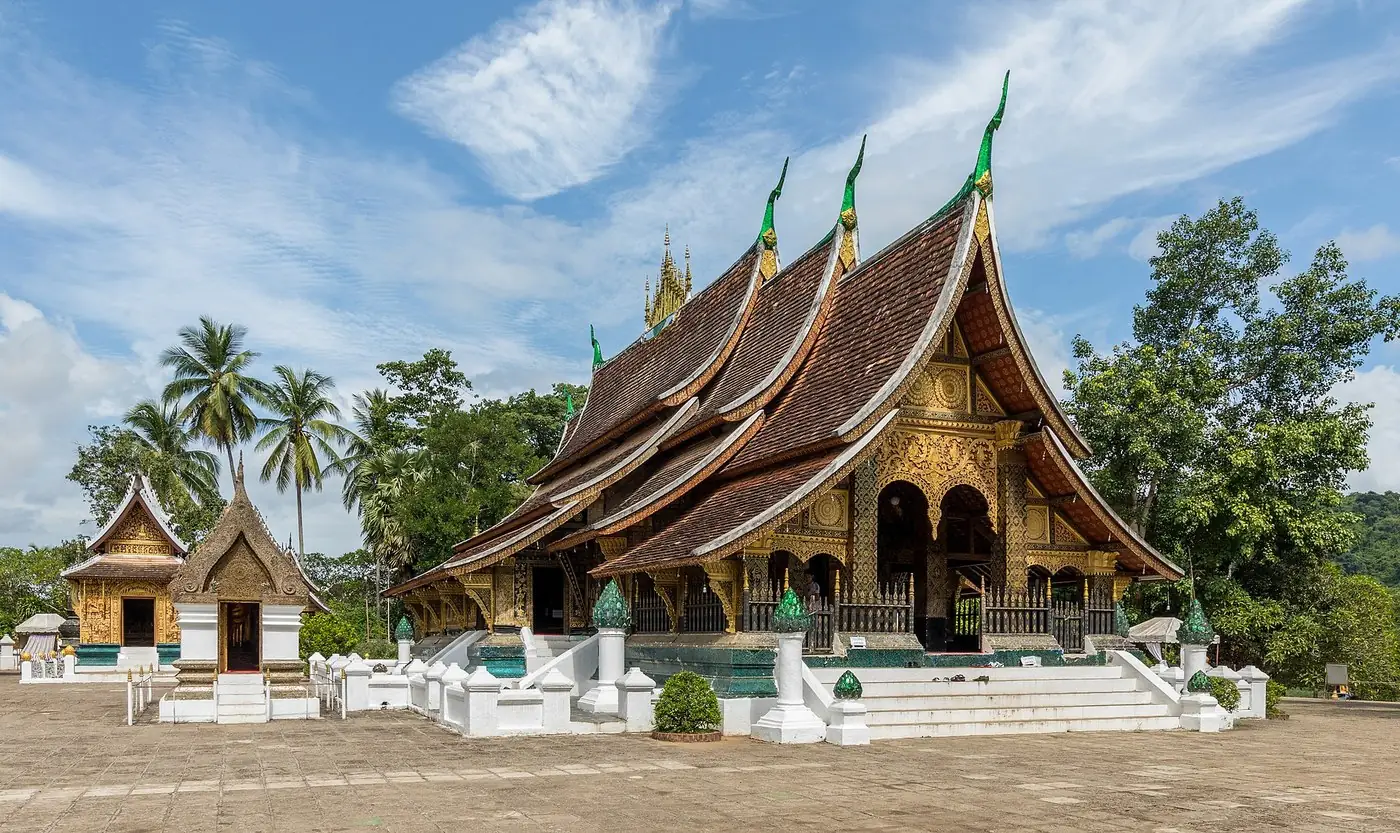
Despite the regime change, the city remains intensely religious. There are dozens of fully active monasteries, anchored by the sweeping, low-hanging roofs of Wat Xieng Thong, a masterpiece built in 1560.
The core of that religious life is the tak bat, the daily dawn alms round where hundreds of monks and novices walk the streets to collect rice from kneeling residents. It is a strictly working devotional practice, but the massive influx of modern tourism has turned it into a strained spectacle. Tour buses frequently unload crowds of photographers who step directly into the procession, aggressively fire camera flashes into the faces of the monks, and buy “alms rice” from street vendors to play-act participation. The disruption has been so severe that local monasteries have repeatedly threatened to suspend the ritual entirely.
If you go to watch the tak bat, the etiquette is non-negotiable: watch from across the street, maintain absolute silence, never use a flash, keep your shoulders and knees covered, and do not participate in the almsgiving unless you are doing so properly, fully prepared, and with sincere intent.

That pressure is only increasing. The opening of the massive Laos–China Railway in December 2021 cut the journey from the capital, Vientiane, to just two hours, multiplying visitor numbers drastically. Luang Prabang is now absorbing an infrastructural boom it was never scaled to handle.
Most visitors to Laos can easily obtain a visa on arrival or an eVisa for short tourist stays (roughly thirty days), while a handful of nationalities can enter visa-free. Entry rules change regularly, so always check current requirements before you book.
To see the town breathe at its own pace, walk out to the bamboo bridge over the Nam Khan—a fragile structure that is entirely washed away by the monsoon each year and painstakingly rebuilt every dry season by local families. It is a quiet reminder of a city that still runs on its own deep, cyclical time, provided you step one street away from the crowds.
FAQ
How do I get to Luang Prabang?
You can fly directly into Luang Prabang International Airport (LPQ), which is about four kilometres from the centre. Alternatively, you can take the modern, high-speed Laos–China Railway from the capital, Vientiane. The train takes roughly two hours, but you must book tickets well in advance as they sell out very quickly.
What is the tak bat and how do I watch it respectfully?
The tak bat is the daily dawn alms collection by local monks. It is a solemn religious practice, not a tourist performance. If you watch, do so from across the street in silence, ensure your shoulders and knees are covered, never use a camera flash, and do not intrude on the monks’ path.
What should I see in Luang Prabang?
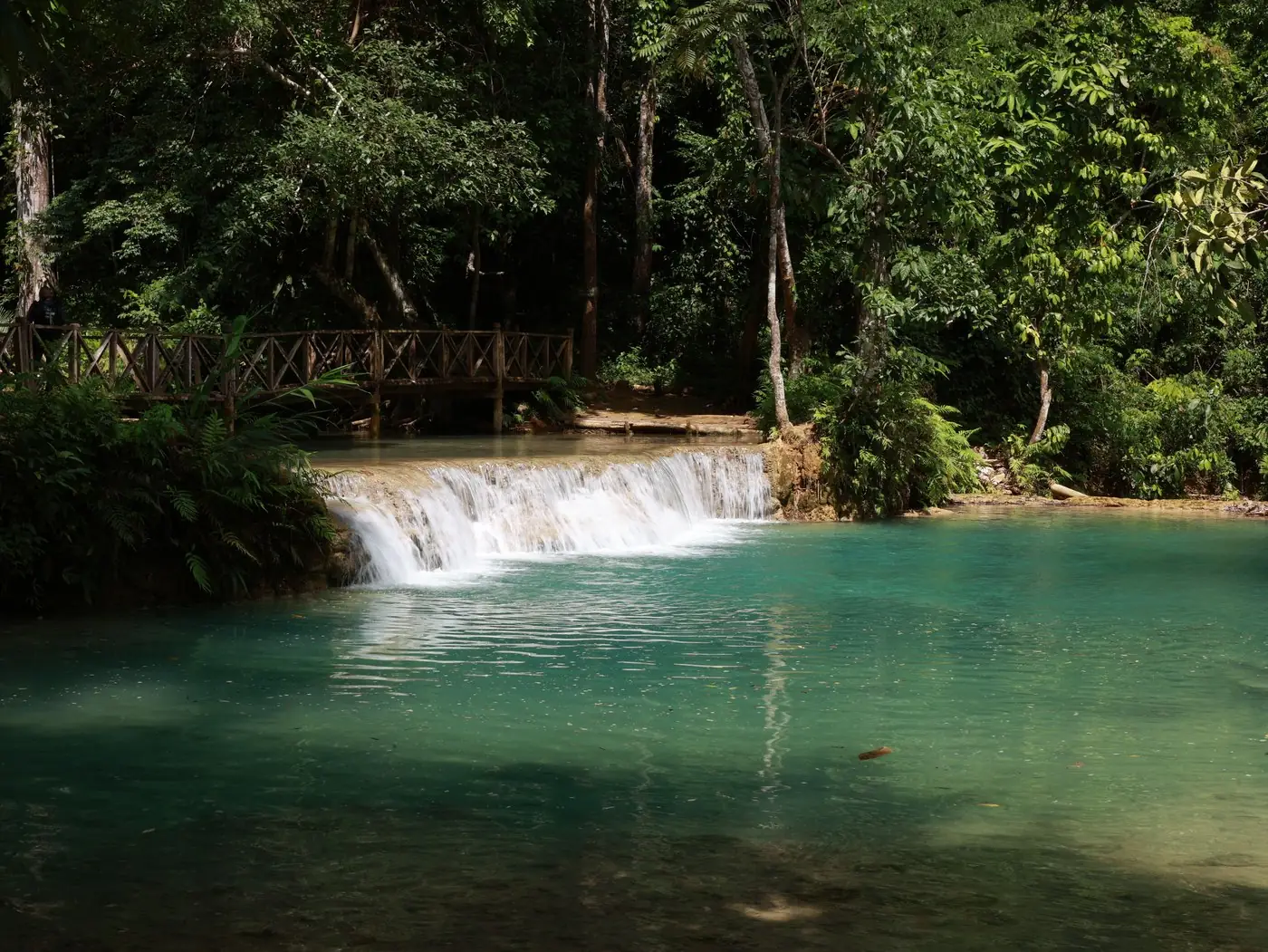
Essential sights include the stunning 1560 architecture of Wat Xieng Thong, the Royal Palace Museum, the sunset view from the top of Mount Phousi, the sprawling evening night market, and the tiered, bright turquoise pools of the Kuang Si falls located outside the town.
When is the best time to visit?
The dry season, from roughly November to March, offers the best weather and cooler temperatures. April is punishingly hot and often obscured by heavy agricultural smoke (the burning season). The monsoon season runs roughly from May to October, bringing heavy, dramatic downpours and high humidity.
