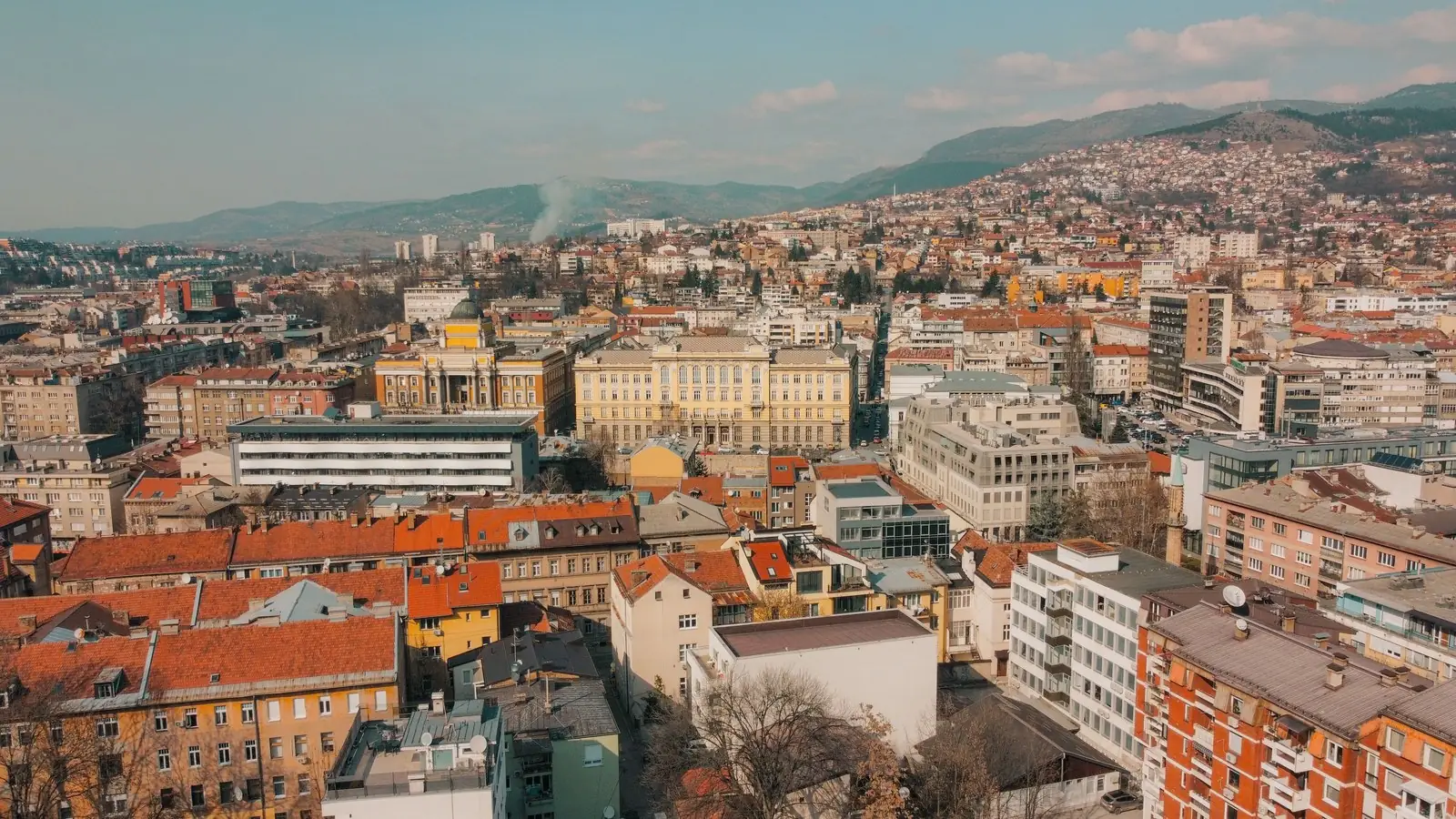

The Ottoman and Habsburg Layers
Sarajevo was founded by the Ottomans in the mid-fifteenth century. Its core was heavily shaped by Gazi Husrev-beg, a sixteenth-century governor whose monumental endowments—including the grand mosque, the covered bazaar, and the madrasa—still anchor the old town. The čaršija remains a working craft and trading quarter, fundamentally Ottoman in its layout and function.
However, in 1878, the empire abruptly changed. The Austro-Hungarian Empire took control, and the architecture shifts instantly from low, timber-framed Ottoman shops to grand, sweeping Central European facades. This fracture is famously visible on the main pedestrian street, Ferhadija, marked on the pavement as the “Sarajevo Meeting of Cultures.” The great showpiece of the Habsburg era is the Vijećnica, or City Hall. Built in a striking Moorish Revival style, it later served as the National Library. It was deliberately burned in 1992, destroying around two million books and documents, but was painstakingly rebuilt and reopened in 2014.

1914: The Turn of the Century
It was in this Austro-Hungarian city that the modern world fractured. On 28 June 1914, on a street corner near the Latin Bridge, the young nationalist Gavrilo Princip shot and killed Archduke Franz Ferdinand and his wife, Sophie. The assassination triggered the July Crisis, dragging Europe directly into the First World War. Today, the corner is marked plainly with a small plaque and a museum; there is no fanfare, just the exact location where the century turned.

The Olympics and the Siege
Seventy years later, Yugoslav Sarajevo enjoyed its modern high point by hosting the 1984 Winter Olympics. The primary monument to that era is the winding concrete bobsleigh track on Mount Trebević—now heavily covered in graffiti and easily reachable by the rebuilt cable car.
But the city’s darkest period followed shortly after. From 1992 to 1996, Sarajevo endured the longest siege of a capital city in modern history, lasting nearly four years. The city survived largely due to the Tunnel of Hope, a hand-dug tunnel under the airport runway that kept a trickle of supplies flowing. If you walk the streets today, you will occasionally see mortar scars in the pavement filled with red resin. These are the “Sarajevo Roses,” kept as memorials to where civilians died. Visiting the tunnel museum or pausing at a Rose requires a specific respect: you are not sightseeing, you are paying attention to what this city endured.
The Living City
Yet, Sarajevo refuses to be reduced solely to the siege. This is a fiercely resilient, living city. It operates on the slow, deliberate ritual of drinking strong Bosnian coffee served with rahat lokum (Turkish delight). It debates intense local rivalries over which shop serves the best ćevapi.

Citizens of many countries (including US, UK, and EU passport holders) can currently enter Bosnia and Herzegovina visa-free for short tourist stays. Entry rules change, however, so always check current requirements before you book.
To understand the city, walk up to the Yellow Fortress (Žuta Tabija) at sunset. Look out over the Miljacka river embankments, the countless minarets, and the red roofs tucked into the valley. You are looking at a layered, complex city that outlasted every single empire that tried to build it.
FAQ
How do I get to Sarajevo?
Sarajevo International Airport (SJJ) is small and located about ten kilometres southwest of the centre. You can take a taxi or the airport bus into town. Most international connections route through major European hubs like Vienna, Munich, or Istanbul.
What should I see in Sarajevo?
The essentials include the Baščaršija old town, the Gazi Husrev-beg mosque, the Latin Bridge (site of the 1914 assassination), the rebuilt Vijećnica, the Yellow Fortress for sunset views, and the Trebević cable car. The Tunnel of Hope museum is vital for understanding the siege.
Is it respectful to visit the war sites?
Yes, if done quietly and respectfully. Museums like the Tunnel of Hope exist exactly so visitors can understand the reality of the siege. However, avoid taking smiling selfies at memorials or the Sarajevo Roses, and remember you are in a living city, not a war theme park.
When is the best time to visit?
Late spring (May to June) and early autumn (September to October) are excellent for walking the city. Winter is cold, but the surrounding hills get heavy snow, which perfectly suits the former Winter Olympic capital.
