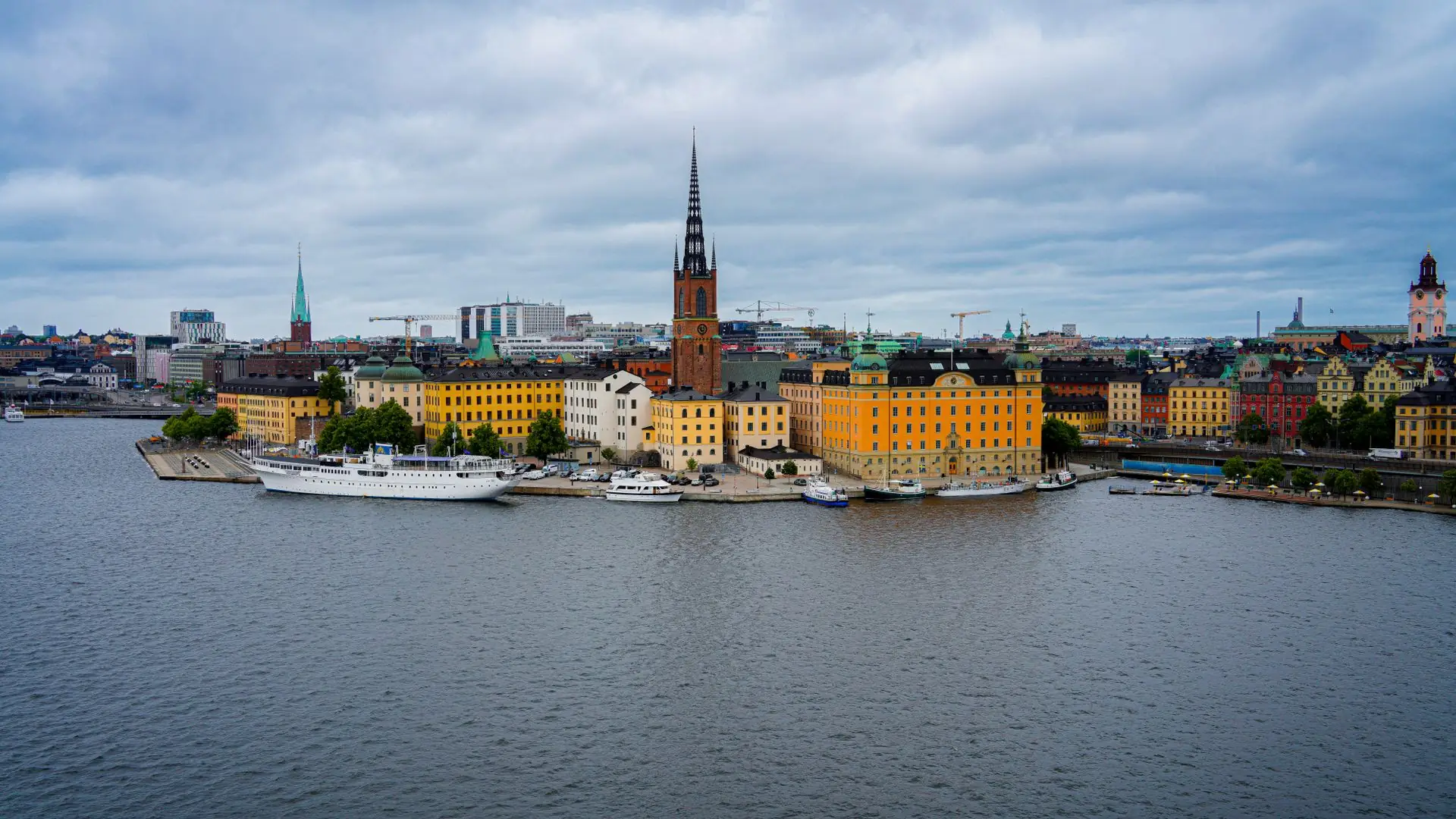

Everything worth understanding about Stockholm starts there, on the water, because the water is what shaped both the city’s plan and its luck. Two things preserved this place while other European capitals were being flattened and rebuilt: a country that stayed out of the century’s wars, and a geography that never let the city grow into one continuous mass. The result is a capital where the old fabric is genuinely old — and where every district ends, sooner than you expect, at a shoreline.
What neutrality left standing
Sweden sat out both world wars. No air raids to speak of, no artillery, no ruined quarter, no post-war decision about whether to rebuild the old town as it had been or as something new. Gamla Stan’s lanes are the real thing, laid down and rebuilt across the thirteenth to eighteenth centuries and never once knocked flat.
The founding date you will see everywhere is 1252, and it is worth knowing exactly what it means. Two letters from that year, one of them sent by the regent Birger Jarl in August, contain the first written appearance of the name Stockholm. That is the whole of it: a first mention, not a founding ceremony. Timber piles driven into the strait have been dated by dendrochronology to around the year 1000, so people were working this water a quarter of a millennium before the letter that officially starts the city’s clock.
Then the second half of the mechanism, and it is the more interesting one. The central city sits on fourteen islands — Visit Stockholm’s own count, along with fifty-seven bridges — and an island cannot sprawl. It fills up and then it stops. So Stockholm never became one continuous spread of building; it became a set of separate places with water between them, and the water stayed usable. That is why a commuter boat is a normal way to get home from work here, and why almost every neighbourhood has a bit of shoreline where people swim in July.
Gamla Stan, and the hour you choose
The old town is small, and in July it does not feel it. Two streets carry almost everyone: Västerlånggatan and Österlånggatan. Walk the lanes between and behind them and the crowd thins to nothing within thirty seconds. Mårten Trotzigs gränd, the narrowest of them, is a stepped slot about ninety centimetres across at its tightest — you can put a palm on each wall — and it is named after a German-born copper and iron merchant who bought property there in the late 1500s.
Stortorget, the main square, is where the postcard photograph of the coloured facades is taken — the tall gabled merchant houses in ochre and red that stand in for the whole old town on every postcard rack. The Nobel Prize Museum keeps the square’s serious side these days, and in Advent the stalls of the Old Town Christmas market fill it with pine, saffron buns and mulled wine. Come with the low light, early or late: that is when the facades give you the photograph everyone else queues for at noon.
The Royal Palace is on the same island, and its own administration calls it one of the largest palaces in Europe — over six hundred rooms, and still the working address of the Swedish king rather than a preserved shell. Five museums are inside it. My advice about all of this is unglamorous: come at eight in the morning or after seven in the evening, when the light is low, the tour groups are elsewhere, and the lanes sound like stone instead of like a queue.
The ship that sank in front of everybody
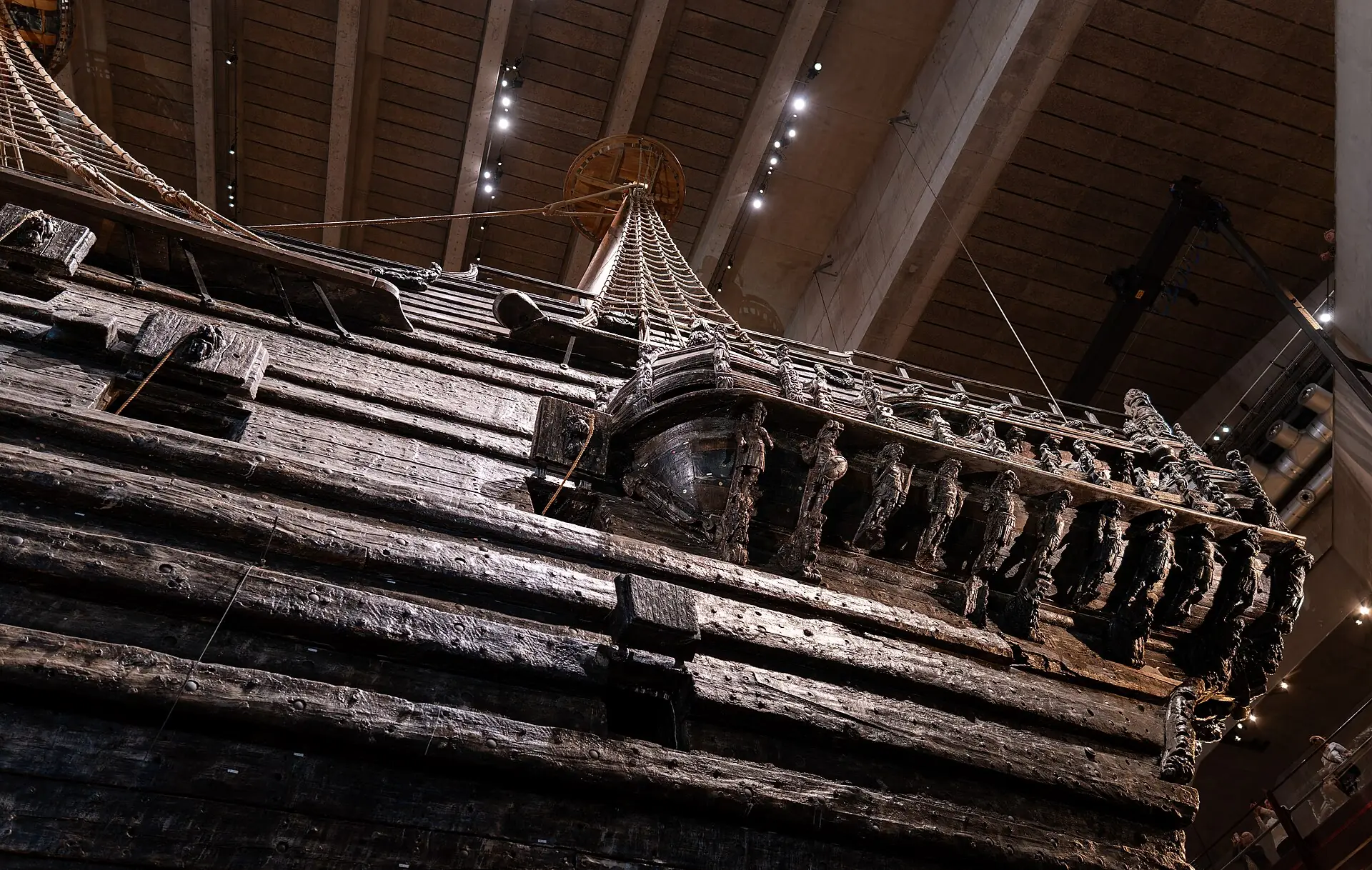
On 10 August 1628 the warship Vasa left her mooring on her maiden voyage, in front of a crowd assembled to watch the pride of the Swedish navy go to sea. She sailed roughly 1,300 metres. A gust caught her, she heeled, water came in through the open gunports on the lower deck, and she went down inside twenty minutes.
The inquest sat a month later, and it is one of the better bits of the story. The hull was too small and the ballast too light for the weight of rig and cannon above; the crew had done nothing wrong; the captain had objected to sailing and been overruled. But the king had personally approved the dimensions and the armament, the master shipwright was already dead, and the navy could not afford to lose the men who might otherwise have carried the blame. Nobody was punished. The Vasa Museum’s own account of the proceedings is admirably blunt about what that inquiry actually was.
Then the Baltic did the improbable part. It is cold, it is barely salt, and it has no shipworm, so the timber did not get eaten. The ship sat in the mud for 333 years, was located in the 1950s and raised in 1961, and she is now the only preserved seventeenth-century ship in the world — that is the museum’s own formula, and around 98 per cent of what you are looking at is original wood. It draws, by its own reckoning, more visitors than any other museum in Scandinavia.
I am generally the last person to send anyone into a queue. Join this one. Photographs cannot do the scale, and the thing that gets you is not the carving — it is standing under a hull that has been in a room since before you were born and realising it was a working ship for twenty minutes.
The gallery you need a ticket to enter
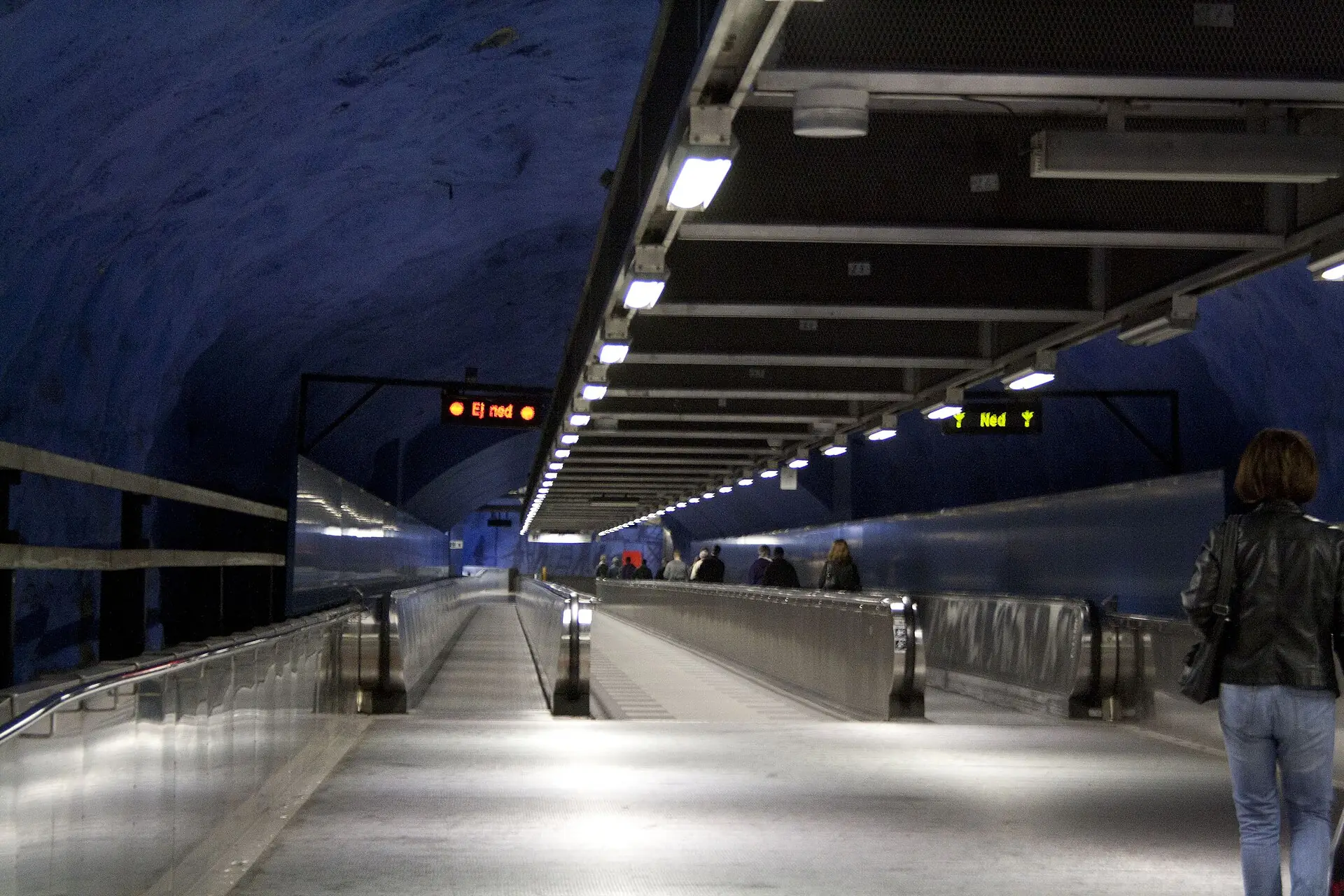
Stockholm’s other great collection is underground, and Visit Stockholm bills the metro as the world’s longest art gallery: around 110 kilometres of line, with work by more than 150 artists in over ninety of the hundred stations. Artists have been part of station design since 1957.
The stations worth the detour are the ones where the rock was left showing. Blasting through bedrock produced raw, ribbed cave ceilings, and rather than tile over them the designers painted them — the blue vaulting and climbing vines at T-Centralen, the deep red walls at Rådhuset, the excavated fragments and colours at Kungsträdgården at the end of the blue line. It costs a normal fare and takes an hour. It is also, incidentally, the most honest picture of twentieth-century Sweden in the city: public money, spent carefully, on something ordinary people use twice a day.
Fika, which is not a coffee break
You will be told that fika means coffee and cake. What it actually describes is the pause and the company: it is a noun and a verb, it happens mid-morning and mid-afternoon, it is built into the working day at most Swedish workplaces, and stopping work to take one is not considered slacking. The rule that matters is that fika is shared. On your own with a laptop, you are just having a coffee.
Where it lives is worth knowing. The old-style konditori — glass counter, cardamom buns, no music — is a different institution from the third-wave places in Södermalm, and both are real; the konditori is where you will find someone’s grandmother at half past three. Order a cinnamon bun and a filter coffee and you have done it correctly. (Yes, there is a Swedish word for moderation that gets printed on tea towels. I’m going to leave it there.)
One observation a visitor will notice within a day, and which nobody warns you about: Swedes are not unfriendly, but they are undemonstrative with strangers, and the space between you and the person at the next table is deliberate. Ask a direct question and you will get a careful, complete, genuinely helpful answer. Expect small talk to fill a silence and you will be waiting a while. The silence is not disapproval. It is just not being filled.
Paying for things where the money went digital
Sweden went further towards cashless than almost anywhere, and you feel it on the first morning: card readers on market stalls, “no cash” notices on café doors, buskers with a QR code propped against the guitar case. The domestic payment app everyone uses, Swish, runs on a Swedish personal identity number and a Swedish bank’s electronic ID, so as a visitor you will not be using it. Your card will do the work.
The current state has just shifted, though, and it shifted against the trend. Since 1 July 2026, Swedish law requires grocery shops and pharmacies with staffed tills to accept cash, with exemptions for genuine safety or cost problems, and obliges banks to keep deposit services running. It came out of a preparedness argument rather than a nostalgic one — a country this digital has a problem if the systems go down, and the Riksbank now recommends households keep some cash at home for exactly that reason. Even so, a survey quoted in the debate found under half of Swedish retail outlets take cash at all.
So: bring a card that works abroad, expect to use it for everything including a bun, and do not plan a day around a currency exchange. That side of the trip is Jake’s territory — our guide to which “Stockholm” airport your ticket actually means goes through the machines and the tickets in proper detail.
Where the city actually lives
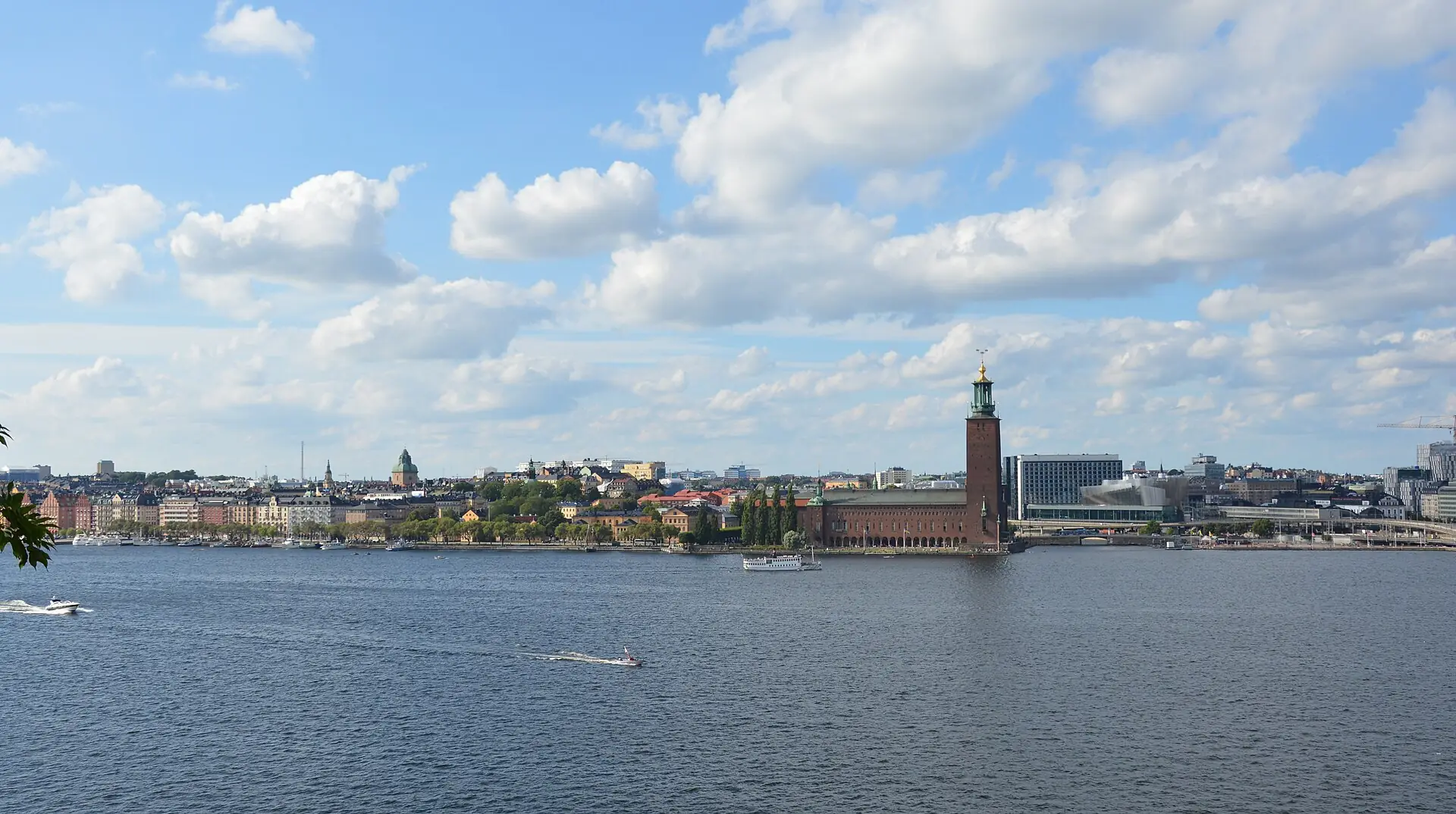
Södermalm gets called the interesting one, which usually means the one with the record shops. Go for the height instead. Monteliusvägen is a footpath along the top of the northern cliffs — a few hundred metres of it, benches the whole way — looking straight across the water at the City Hall, Riddarholmen and the old town. It costs nothing, it is open at every hour, and at nine on a summer evening it is half locals with a bottle of something and half people who have just found it. In winter the city does not clear the ice off it, which tells you what it is: a path, not an attraction.
North of the centre, Vasastan around Odenplan is where the argument for Stockholm as a place to live rather than visit gets made: nineteenth-century streets, a library, a lot of people collecting children at half past four. Nothing there is on a list. That is the point.
And then Djurgården, the green island east of the centre, which has been royal ground since a king took it as a hunting park in 1452 and is now the core of the Royal National City Park — created by the Swedish parliament in 1995, and the first national city park anywhere. Oaks, water on both sides, the museums along the near shore, and, ten minutes past them, a path where you cannot hear a road.
The way out
The archipelago is the part that will stay with you, and the numbers are best given the way the tourist board gives them: roughly 30,000 islands, islets and skerries spread east from the city into the Baltic. You reach them the same way locals do. Waxholmsbolaget, the county-owned boat operator running since the nineteenth century, serves the archipelago the year round, from Arholma in the north to Landsort in the south, out of Strömkajen in the middle of town.
What you are going for is not a sight. It is a flat rock warm from the day, pines behind it, water that goes from blue to pewter as the light drops, and a jetty where the boat will call again in four hours. The island will have a name, a few red houses and possibly no shop. Sit on the rock. That is the activity.
The honest calendar
June to August is the reason people come: something like eighteen hours of light at the solstice, the whole city outdoors, boats going everywhere. It is also peak everything, and it contains one weekend that catches visitors out badly. Midsummer Eve falls on the Friday between 19 and 25 June, and the tradition is to leave the city for it. Shops shut, many restaurants shut, and central Stockholm goes quiet in a way that has nothing to do with charm. If you land on that weekend without a plan, aim for Skansen, where the people still in town go to raise the maypole.
December has its own argument. Lucia falls on 13 December — processions of white gowns and candles, in schools, churches, offices and on national television — and the markets run through Advent. The trade-off is the light: about six hours of it around the solstice, sunrise near nine and dark by three. What you get in exchange is museums with nobody in them, candles on café tables from mid-afternoon, and a city that has spent centuries getting good at the indoors.
The sane windows are May and September: usable weather, long enough days, and the old town walkable at a normal pace.
On entry: Sweden is in the Schengen area, and US and UK passport holders visit without a visa for up to 90 days in any 180. Passports are now recorded biometrically in the EU’s Entry/Exit System rather than stamped — check current requirements before you book.
One last crossing
Take the boat again in November, late in the afternoon, when the lamps have come on at three and the water between the islands has gone the colour of a slate roof. The cabin is warm and smells faintly of wet coats. Nobody is talking. Through the window the old town goes past in the dark, window by lit window, and the whole city briefly looks like what it is: a few thousand rooms of light sitting on black water, built by people who decided a very long time ago that the water was not in the way.
The woman with the shopping bags gets off at her stop and walks up the hill. It is a Tuesday. She has done it four hundred times.
FAQ
Is Stockholm worth visiting?
Yes, and for a more specific reason than “it’s beautiful”. Most European capitals you visit are partly reconstructions — Stockholm’s centre was never bombed and never had to be rebuilt, so what you walk through is the original fabric. Add a preserved seventeenth-century warship in a purpose-built hall, an underground network hung with art, and 30,000 islands starting at the end of the tram line, and three days fill themselves without effort.
Why is the Vasa ship famous?
Because she sank on her maiden voyage in 1628, about 1,300 metres out, in front of the crowd who had come to watch her leave — too tall and too lightly ballasted for the guns she was carrying. She spent 333 years in the mud of a cold, barely salt sea that has no shipworm, was raised in 1961, and is now the only preserved seventeenth-century ship in the world, in the museum’s own words, with roughly 98 per cent original timber.
Is Stockholm expensive?
Yes, in the ordinary Scandinavian way: coffee, beer and restaurant dinners cost what they cost in this part of the world, and there is no clever way around it. The good news is that a lot of the best of the city is free — the cliff walks, the swimming, the metro art for the price of a fare, the archipelago for the price of a boat ticket. Buy your lunch where office workers buy theirs and the day costs a fraction of what an old-town terrace charges.
When is the best time to visit Stockholm?
May or September, if you want daylight and a city you can move through. Midsummer, in the second half of June, empties Stockholm of Stockholmers and closes half of it — lovely if that is what you came for, awkward if it isn’t. Deep winter gives you about six hours of light a day and, in exchange, no queues anywhere.
Photos: DimiTalen (CC0), Jules Verne Times Two (CC BY-SA 4.0), Chech Explorer (CC BY-SA 3.0), Olaf Meister (CC BY-SA 4.0), via Wikimedia Commons.


