

The Search for Duende
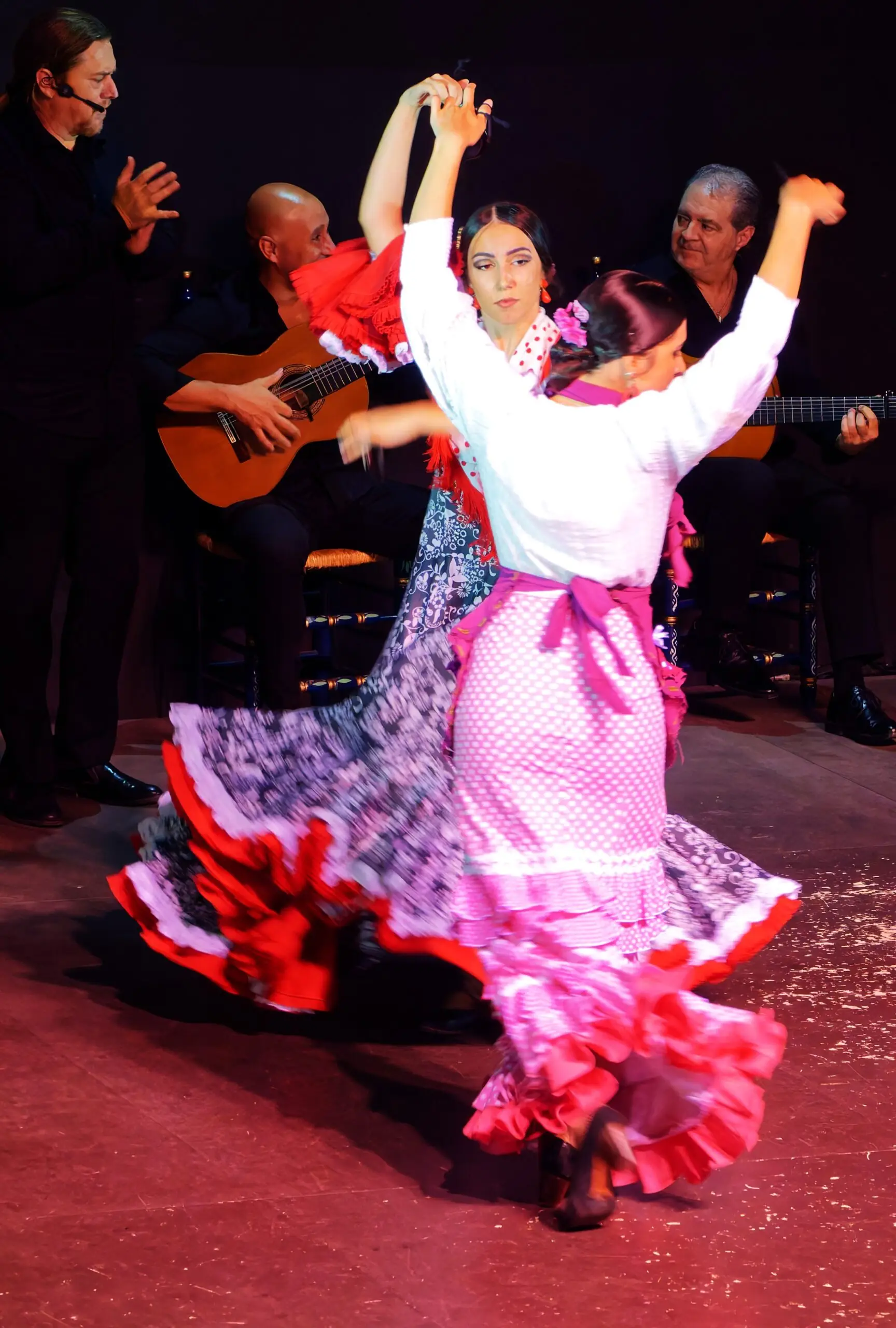
Seville is inextricably linked to flamenco, though it is not the sole birthplace; neighbouring cities like Jerez and Cádiz share strong, competing claims to its Roma (gitano) roots. To experience it here requires knowing what you are looking for.
The polished, theatrical tablaos in the centre offer excellent, professional shows tailored for visitors. But to find duende—that elusive, raw emotional power at the heart of the art form—you need to seek out a local peña (cultural club). In these smaller, unpolished rooms, the performance is less about perfect choreography and more about a fierce, impromptu dialogue between the singer, the guitarist, and the dancer.
Layers of Empire
The city’s history is written clearly in its two greatest monuments. The immense Cathedral, the largest Gothic church in the world, holds an elaborate tomb claimed to house the remains of Christopher Columbus—a claim that is still fiercely contested. More striking is its bell tower, La Giralda. It began life in the 12th century as the minaret of the city’s great mosque, sharing a direct architectural lineage with the Koutoubia in Marrakech.
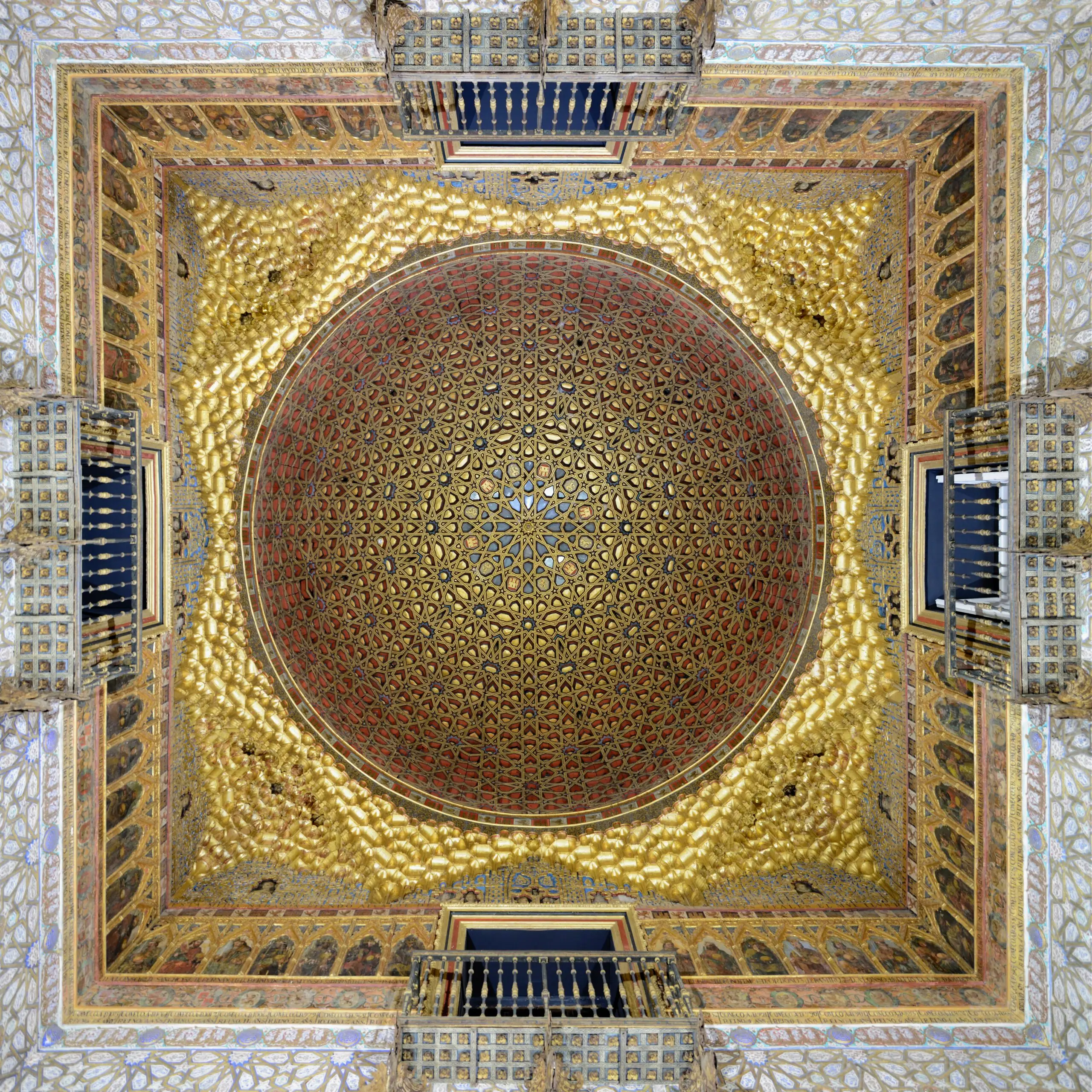
Directly opposite sits the Real Alcázar. It is a masterpiece of Mudéjar architecture, built largely by Christian kings using the Moorish idiom and craftsmanship left behind after the Reconquista. What many visitors miss as they admire the intricate tilework and serene courtyards is that the upper floors remain a working royal residence, the oldest still in use in Europe.
Further south lies the sweeping Plaza de España. With its bridges, moat, and vast semi-circle of brick and tile, it looks like an ancient royal complex. It is, in fact, entirely modern, built as the centrepiece of the 1929 Ibero-American Exposition (and famously doubling as the planet Naboo in Star Wars).
The Andalusian Clock
The rhythm of daily life here is dictated entirely by the climate. The brutal, blinding heat of the Sevillian summer explains the enduring logic of the siesta; the city simply shuts down in the afternoon to survive.
This is also why the evening paseo (stroll) happens so late, and why dinner at 10pm is considered perfectly normal. Eating here is a mobile affair. You rarely sit down for a heavy meal; instead, you navigate from bar to bar, ordering a drink and a small plate of tapas—perhaps jamón ibérico or slow-cooked pork cheeks (carrillada)—before moving on to the next.
The city’s calendar is defined by two massive spring events that pack the streets to bursting: the solemn, hooded processions of Semana Santa (Holy Week), followed quickly by the joyous, sherry-soaked partying of the Feria de Abril. The contrast between the two perfectly captures Seville’s dual nature.
My own sharpest memory of the city came while sitting under the heavy shade of the orange trees that line nearly every street and plaza. A tourist reached up to pluck a piece of fruit, ignoring the slight shake of the head from a waiter nearby. She bit into it and immediately recoiled at the intensely bitter, sour taste. Seville’s famous oranges are beautiful, but they are grown for British marmalade, not for eating off the branch—a small, sharp reminder that the city is not always the sweet, easy postcard it appears to be.
Spain is part of the Schengen Area, meaning short, visa-free stays for most Western passports, with the ETIAS system expected to apply to visa-exempt visitors in the near future. As always, check current entry requirements before you travel.
FAQ
When is the best time to visit Seville?
Spring (March to May) and autumn (October to November) are ideal. The mid-summer months of July and August are punishingly hot, with temperatures routinely exceeding 40°C, causing much of the city to shut down in the afternoons.
Where can I see authentic flamenco in Seville?
While the central tablaos offer excellent professional shows, for a rawer, more authentic experience, seek out a local peña flamenca (cultural club) in neighbourhoods like Triana.
Is the Real Alcázar worth visiting?
Absolutely. It is one of the finest examples of Mudéjar architecture in the world. Because it is incredibly popular, you must book your tickets online well in advance to secure an entry time.
How many days do I need in Seville?
Three days is a perfect amount of time to explore the Alcázar and Cathedral, get lost in the winding streets of Barrio Santa Cruz, and spend an evening hopping between tapas bars.
Images: H. Zell / CC BY-SA 3.0; Alvesgaspar / CC BY-SA 4.0; Holger Uwe Schmitt / CC BY-SA 4.0. Source: Wikimedia Commons.
Read also
- The most beautiful square in Europe – Grand Place in Brussels
- Tuscany: Wine, Art and the Middle Ages
- Barcelona: Where Art Embraces the Sea


