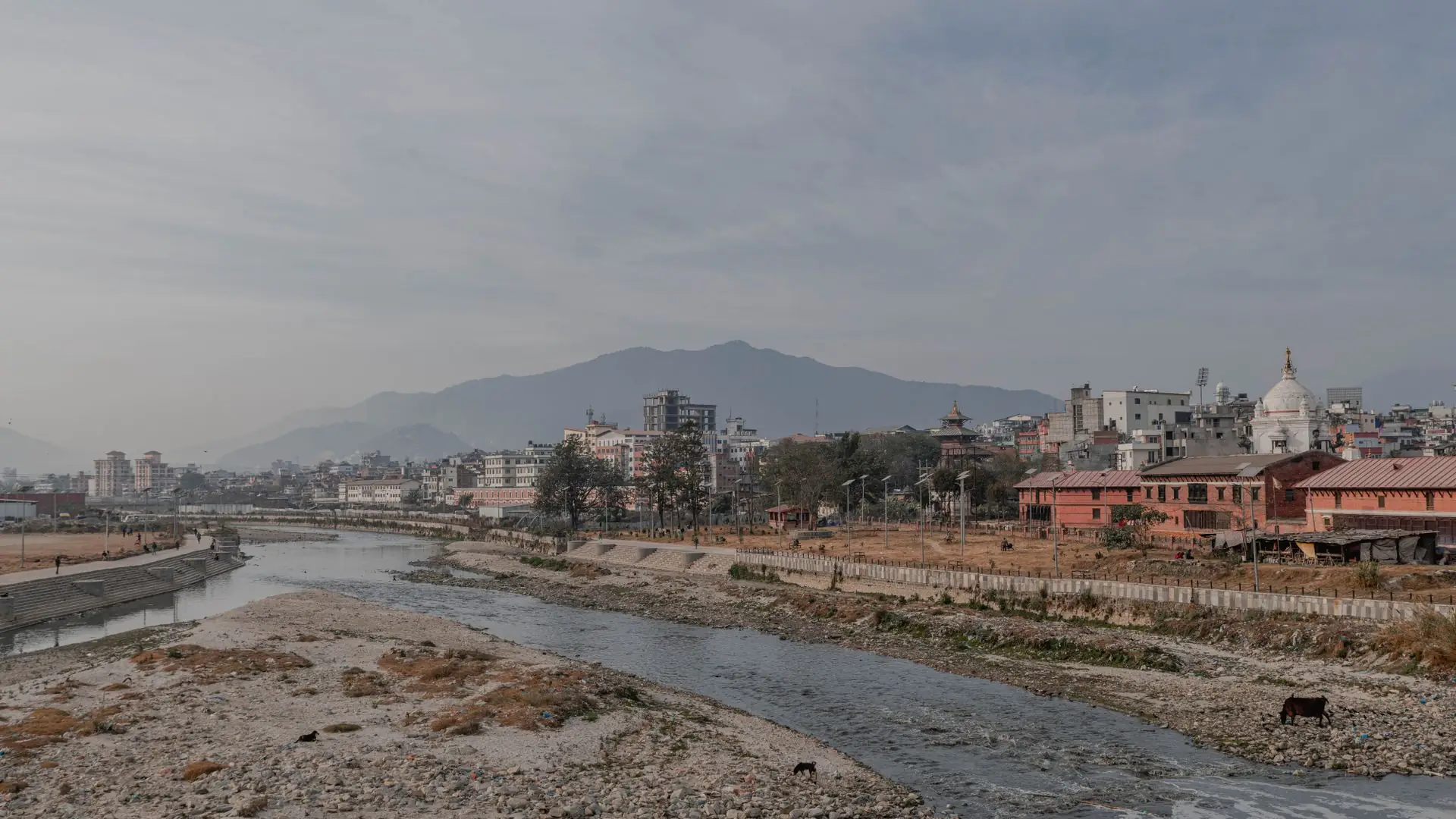

Nobody is hiding this. It’s just that the guidebook sentence “fly from Kathmandu to Lukla” has outlived the arrangement it describes, and it’s the single most consequential thing to get right about a Nepal trip. The good news is that almost everything else here is easier than its reputation — starting with the paperwork, which is genuinely the least demanding of any big trip I can think of.
The visa is the easy part, and that surprises people
Nepal issues tourist visas on arrival at the airport, to citizens of most countries including the United States and the United Kingdom. There’s no embassy appointment, no invitation, no pre-approval to wait on. You land, you fill in a form, you pay, you get the stamp.
Here’s how to make it fast. Nepal’s immigration department runs an official online form you can complete in advance — the UK government’s wording is that “you can apply online for a visa on arrival up to 15 days in advance of your arrival,” and you bring the submission receipt to the desk. Miss that window and it costs you nothing but time: there are kiosk machines in the arrivals hall that do the same job, they’re just slower when a widebody has landed ahead of you. Fill it in at home.
- Durations: tourist visas come in 15, 30 and 90-day lengths, extendable afterward at immigration offices. There’s an overall ceiling of 150 days in a calendar year on a tourist visa, which no ordinary trip will trouble.
- Passport: it needs at least six months’ validity from your date of entry, and it must be machine-readable — handwritten passports are refused.
- Paying: cards are accepted at the airport desks, but the standing official advice is to carry cash as a backup, with US dollars the preferred currency. Bring some. It’s the one place on this trip where hard currency in your pocket is worth the bother.
- Timing: the queue is real in peak season and can take a while. If you’re connecting onward to a domestic flight the same day, that’s a reason to give yourself room.
I checked the two passports separately rather than assuming they behave identically, and on the practical points — on-arrival availability, the 15-day advance form, six-month passport validity, card-with-cash-backup — they line up. As always: check current requirements before you book.
The airport sits in a bowl, and it sleeps at night
Tribhuvan International is about six kilometers east of the center and closer still to Thamel, where you’re probably staying — by the standards of this series, that’s nothing. Prepaid and metered taxis operate at both terminals around the clock, and there are city buses connecting the international terminal to the center too.
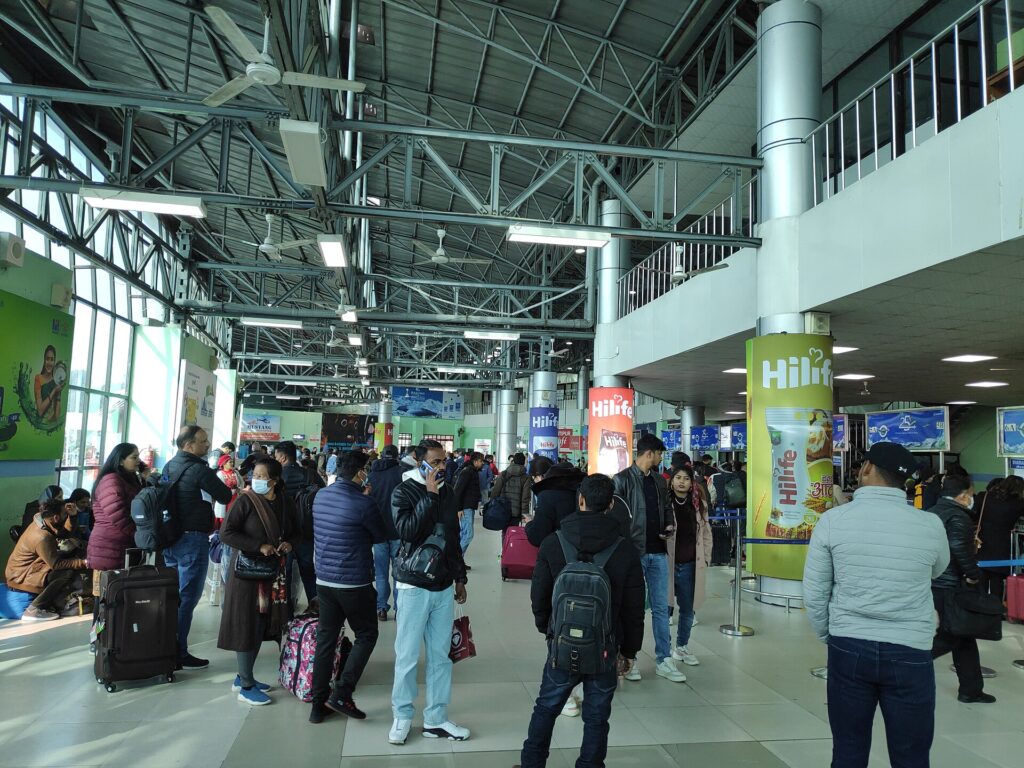
The practical advice runs the opposite way to what you’d expect. Ride-hailing apps are how this city moves — Pathao, InDrive and Yango are all in use, and once you’re settled they’re the cheap, easy default. But at arrivals they are the less reliable option: app pickup at the airport is subject to designated-area rules that change, and the apps generally want a local SIM to register in the first place. The move that always works is the prepaid taxi counter in the arrivals area: fixed fare, receipt, regulated, no negotiation. Pay the small premium on the way in, get a SIM at the terminal kiosks, and use the apps for the rest of the trip.
Two structural things about this airport are worth knowing before you pick a flight. First, it’s closed overnight — a nightly shutdown window in the small hours, currently shortened to six hours while a major expansion proceeds. That’s why you won’t find the 3 a.m. arrivals that are normal elsewhere in this series, and why the schedule bunches the way it does. Second, the valley is a bowl ringed by hills, and weather here shuffles schedules more than it does at a flat coastal airport. Neither is a problem; both are reasons to build a spare day into any itinerary with a connecting domestic flight in it, which is advice this article will repeat.
There’s no nonstop from the West — here’s the honest reason and the workaround
Straight answer: there is no nonstop flight to Kathmandu from the United States, the United Kingdom or anywhere in Europe. Two facts sit behind that. No Western carrier operates the route — the distance and the market don’t support it. And no Nepali carrier can fly to Europe, because Nepal’s airlines are on the EU Air Safety List, which the European Commission extended again in February 2026. That’s the whole of what I’ll say about it: it’s a regulatory listing, it’s why the map looks like this, and it has no bearing on the airlines you’ll actually fly to get there.
So you connect — and the connecting menu here is genuinely deep, because Kathmandu is well served from three different directions.
- The Gulf owns this market, and it’s the default answer from the UK and the US East Coast. Qatar Airways via Doha and flydubai via Dubai are the workhorses; add Air Arabia from Sharjah and Abu Dhabi, Jazeera Airways and Kuwait Airways via Kuwait City, and SalamAir from Muscat. Frequencies are high and the connections are civilized.
- Istanbul. Turkish Airlines flies to Kathmandu, which puts most of Europe and a good chunk of North America one connection away.
- India, the short hop. Air India and IndiGo from Delhi, IndiGo also from Mumbai, SpiceJet from Delhi and Air India Express from Bengaluru. Often the cheapest way in — with one caveat that costs people money: if you book the long-haul and the Delhi–Kathmandu hop as two separate tickets, nobody is responsible for your bags or your missed connection. Either book it as one itinerary or leave yourself a long, deliberate gap.
- East and Southeast Asia — the US West Coast play. Korean Air via Seoul, Cathay Pacific via Hong Kong, Singapore Airlines, Thai Airways and Thai Lion Air via Bangkok, Malaysia Airlines and Batik Air Malaysia via Kuala Lumpur, plus Air China and Sichuan Airlines via Chengdu, China Eastern via Kunming and China Southern via Guangzhou. If you’re starting from the western US, price these against Doha before assuming the Gulf is cheaper.
- The home carriers. Nepal Airlines flies a modest international network from its Kathmandu hub, and Himalaya Airlines runs a wider one across the Gulf and China, adding Shenzhen this year. Both are worth a price check on the regional legs.
Taken together that’s something over thirty airlines serving Kathmandu to roughly forty-odd airports. For a city most people think of as remote, that’s a lot of doors.
The other two “international” airports, honestly
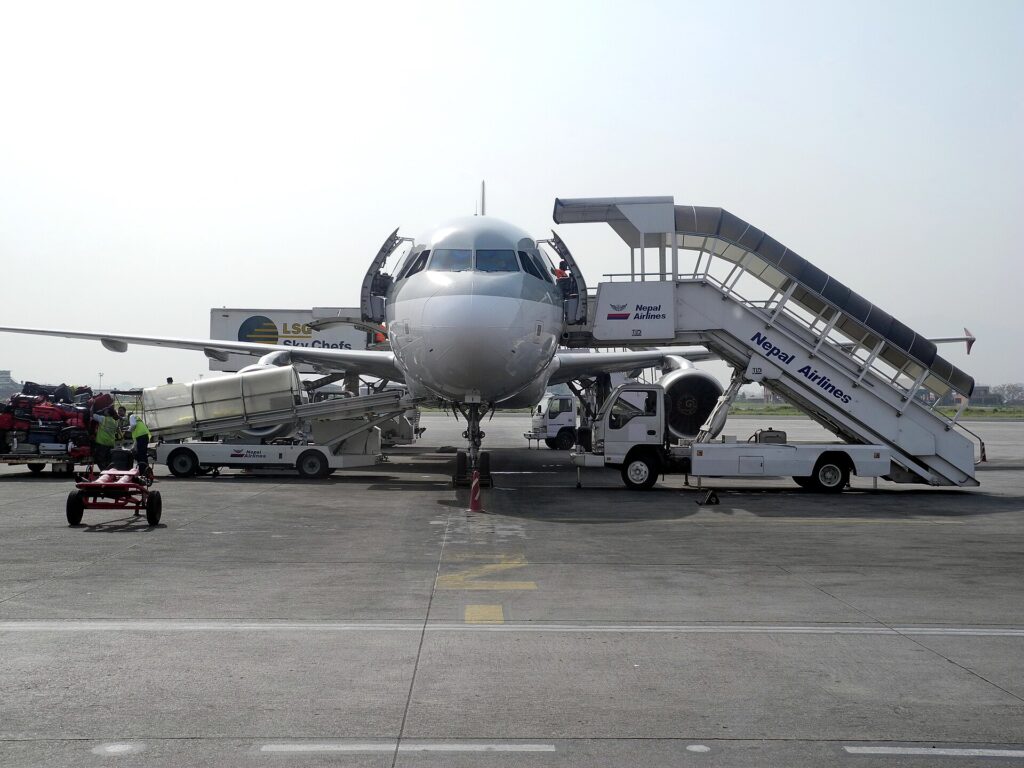
Nepal has two more airports carrying the international label — Pokhara and Gautam Buddha at Bhairahawa, the latter being the one near Lumbini — and if you’re searching “fly direct to Pokhara,” you deserve the real answer rather than the brochure one.
Pokhara is, in practice, a domestic airport with an international terminal. Scheduled international service has been essentially absent: a Lhasa route launched and was withdrawn inside a year, and the rest has been charters. That may be about to change — flydubai has announced Dubai–Pokhara from 23 September 2026 — but the permission granted was for an initial month, with continuation depending on how the trial goes. By the standards of this series that’s a filed schedule with a trial attached, not a route to plan a trip around. If it’s flying and it’s still flying when you book, take it; otherwise, fly to Kathmandu and take the short domestic hop, which is frequent, quick and scenic in its own right.
Bhairahawa has a handful of genuine international services — Thai AirAsia and Kuwait Airways among them — but they’ve been irregular over the airport’s short life. Check the airline directly rather than trusting a booking site, because a lot of what’s sold as “flights to Bhairahawa” is actually a connection through Kathmandu.
The Lukla flight, and why it isn’t where you think
Now the big one. Flights to Lukla — the airstrip where every Everest region trek begins — are operated by Tara Air, Summit Air and Sita Air, and in the two busy trekking seasons they largely do not depart from Kathmandu. Nepal’s civil aviation authority moves them to Manthali airport in Ramechhap, roughly 130 kilometers east of the capital, to take the morning rush out of a congested Tribhuvan and give the airlines a cleaner weather window at lower altitude.
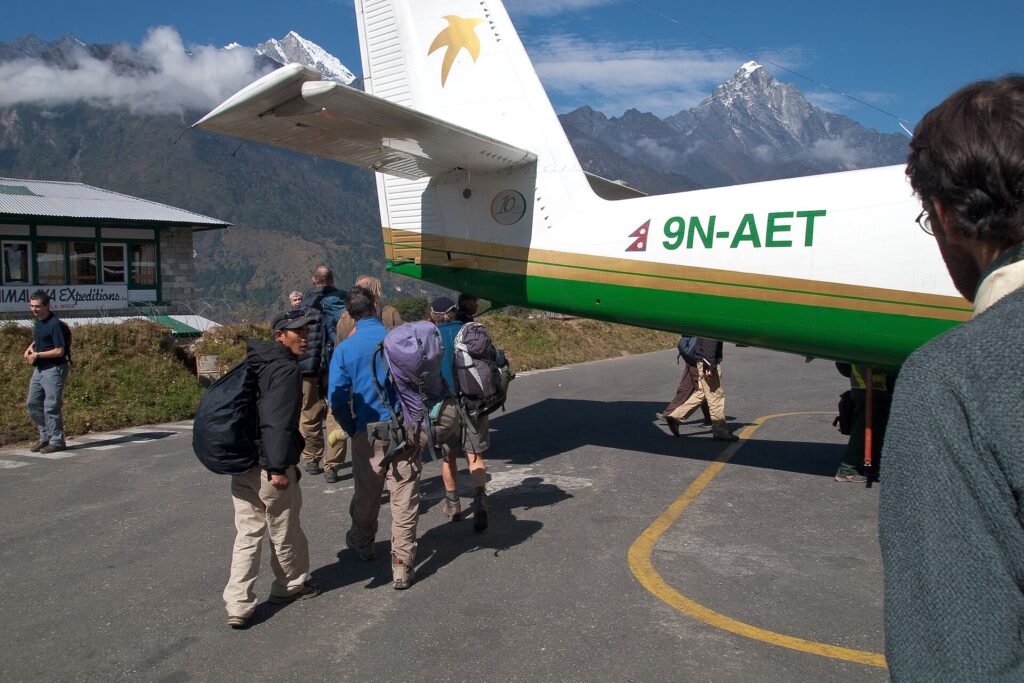
What that means in practice, and this is the part to plan around:
- The drive is four to five hours on a mountain road, so agencies run transfers that leave Kathmandu somewhere around midnight to 2 a.m. to make the early flight window. Pickups cluster around Thamel.
- The flight itself is the short part — fifteen to twenty minutes from Manthali, against about half an hour from Kathmandu.
- The diversion covers the peak months in both directions — broadly the spring and autumn trekking seasons. For this autumn, operators are working to a window running from roughly the last week of September to the end of November. The exact dates are set by the authority and the airlines and they move from year to year, so treat that as the shape of it and confirm your specific date with whoever issues your ticket.
- Helicopters are the other way in, they fly from Kathmandu, and they exist precisely because of all the above. More expensive, and a legitimate answer if your schedule can’t absorb the road transfer.
- Build in buffer days at both ends. This is mountain flying into a short strip; weather stops it regularly, and a trek that assumes a same-day connection back to an international departure is a trek with a bad last day in it.
None of this makes the trip harder. It makes the trip different from the version in your head, which is a much easier problem — as long as you find out now rather than at a hotel desk the night before.
The mountain flight, for everyone not walking
If you’re not trekking, there’s a bookable product that gets you the view anyway: the Everest sightseeing flight, a roughly hour-long morning run out of Kathmandu operated by Buddha Air and others. Two details make it better than it sounds. Every seat is a window seat — the aisle seats are simply left empty — and the aircraft turns around at the far end, so the side you’re sitting on stops mattering. Departures are early, around dawn, for the same reason everything else here happens early: that’s when the air is clearest. It’s weather-dependent by definition, so book it for your first morning, not your last, and you’ll have a spare day to try again.
Two calendars, and the festival that fills every plane
- October and November are the season, and it isn’t close. The monsoon has cleared, the air is at its most transparent, and valley temperatures sit in the mid-teens to mid-twenties Celsius — the high fifties to mid-seventies Fahrenheit. October has the best visibility and the biggest crowds; November is slightly cooler and noticeably quieter, which makes it my pick of the year. Book flights, guides and lodges well ahead in both.
- March to May is the second season — warmer, hazier than autumn, and the rhododendron forests are the compensation. The Lukla diversion applies here too.
- June to September is the monsoon and the honest cheap window. Rain, cloud, mountains you often can’t see, and trails that get difficult. In exchange: low prices and very few people. There’s a real exception worth knowing — the Mustang and Dolpo areas sit in the rain shadow behind the main range and stay dry through the summer, which is why serious trekkers go there in exactly the months everyone else avoids Nepal.
- Winter is cold at night, clear by day, and cheap. High passes close, but lower-altitude walking is perfectly good and the visibility can be superb.
One date to put on your calendar right now if you’re coming this autumn: Dashain, the country’s biggest festival, falls across roughly 11 to 21 October in 2026, with Tihar following in early November. The festival itself is somebody else’s department — mine is what it does to transport, which is this: it is the year’s largest movement of people inside Nepal, as families travel home. Domestic flights and long-distance buses fill up, and offices, banks and many businesses close around the main days. If your itinerary includes a Kathmandu–Pokhara hop or any internal flight in that window, book it weeks ahead rather than days. Your international flight is unaffected; it’s the legs inside the country that tighten. And exact dates shift with the lunar calendar, so confirm against a current Nepali calendar closer to the time.
Money and time, briefly
The currency is the Nepali rupee, it’s the only legal tender, and you generally can’t obtain it before you arrive — so plan to change or withdraw on the ground. Cards work in the better hotels, restaurants and agencies of Kathmandu and Pokhara; beyond that, and on every trekking route, it’s cash. Trekking permits are cash too. ATMs are easy to find in both cities and much less dependable in the mountains, so draw what you need for a trek before you leave the valley.
And the detail I enjoy most: Nepal runs on UTC+5:45. Not a whole hour, not a half hour — three quarters, fifteen minutes ahead of India. It is one of a tiny handful of quarter-hour time zones on earth. Practical consequence: check your connection times by the clock rather than by mental arithmetic, because the offset breaks the habit your brain has built.
Which brings me to the reason to go in autumn specifically. On a clear approach into the valley, the descent turns and the northern horizon is not sky — it’s a white wall standing above the cloud, too high to be where your eye expects a mountain to be. You get perhaps ninety seconds of it before the turn. It’s the best free thing in commercial aviation, it costs nothing but choosing the right month, and it happens before you’ve even cleared the visa desk. What to do with the city underneath it is another article — ours, the guide to the city of the living goddess. My job was the door, and the door here opens easily.
FAQ
Do flights to Lukla leave from Kathmandu?
In the peak trekking seasons, mostly no. Nepal’s aviation authority shifts Lukla flights to Manthali airport in Ramechhap, about 130 kilometers east of Kathmandu, through the busy spring and autumn months — so trekkers take a road transfer leaving the city around midnight to 2 a.m., then a 15-to-20-minute flight into Lukla. For this autumn, operators are working to a window running roughly from the last week of September to the end of November, but the dates are set year by year and do move, so confirm with whoever issues your ticket. Helicopters do fly from Kathmandu if the transfer doesn’t suit. Either way, build spare days into the itinerary — mountain weather stops these flights regularly.
Do US or UK citizens need a visa for Nepal?
Yes, but you get it on arrival at the airport, which makes it about the easiest visa on any trip of this size. Both nationalities are eligible. Fill in Nepal’s official online form in advance — the UK government’s guidance is that you can apply online up to 15 days before arrival — and bring the receipt; otherwise use the kiosks in the arrivals hall. Visas come in 15, 30 and 90-day lengths and are extendable, within a 150-day annual ceiling. Your passport needs six months’ validity and must be machine-readable. Cards are accepted at the desks, but carry cash as a backup, with US dollars preferred. Check current requirements before you book.
Are there direct flights to Kathmandu from the US or UK?
No — there’s no nonstop from the US, the UK or Europe, and you’ll connect once. The Gulf hubs dominate the market and are the usual answer from Britain and the US East Coast: Qatar Airways via Doha, flydubai via Dubai, plus Air Arabia, Jazeera, Kuwait Airways and SalamAir. Turkish Airlines connects via Istanbul. From the western US, route through East Asia instead — Korean Air, Cathay Pacific, Singapore Airlines, Thai or Malaysia Airlines. Delhi with Air India or IndiGo is often cheapest, but book it on one ticket rather than two, or you own the risk if the connection fails.
When is the best time to fly to Kathmandu?
October and November, for clear post-monsoon air and stable trekking weather — October for the best visibility, November for smaller crowds. March to May is the second season, warmer and hazier. June to September is the monsoon: cheap and quiet, with clouded views and harder trails, though rain-shadow regions like Mustang and Dolpo stay dry. Winter is cold at night, clear by day and inexpensive, with lower-altitude treks still fine. One planning note for autumn: Dashain falls around 11–21 October in 2026 and fills domestic flights and buses with holiday traffic — book any internal legs well ahead.
Photos: Xiaojun Deng (CC BY 2.0), Michel Royon / Wikimedia Commons (CC0), Vyacheslav Argenberg (CC BY 4.0), Gaurav Dhwaj Khadka (CC BY-SA 4.0), via Wikimedia Commons.


