
Prague is cheap to fly to and genuinely good value once you’re there. It’s also a city where two small facts — no train, and two terminals split by a border — decide whether your first and last hours are smooth or stupid. Here they are, in the order you’ll meet them.
There is no train. Here’s what you actually take
Václav Havel Airport Prague sits west of the city with no rail connection of any kind. Not a spur, not a shuttle to a nearby station, nothing. The public-transport answer is a two-step: a ride to a metro station, then the metro.
- Line 59 to Nádraží Veleslavín, then metro A. This is the default and it’s the one the airport itself points you at. The transit operator lists the run at 17 minutes with intervals of 3 to 10 minutes; metro A takes you the rest of the way into the center. Figure around 40 minutes airport to Old Town if the connection is clean, closer to 50 once you add the wait and the walk at the far end. Line 59 is the old 119 — it was converted to a high-capacity battery trolleybus in March 2024, with proper space for luggage.
- Bus 100 to Zličín, then metro B. Sixteen minutes to the metro. Only better than the 59 if your bed is on the yellow line — otherwise you’re just transferring somewhere less convenient.
- Bus 191 to Anděl. Fifty-one minutes, all surface. The scenic route. Take it if the others have stopped.
- Night buses 907 and 910. Night operation runs from about 00:15 to 05:00, when the daytime network is down: 907 reaches Náměstí Republiky in around 40 minutes, 910 reaches I. P. Pavlova in around 45. If you’re on a late budget-carrier arrival, this is your service — check which of the two lands nearer your bed before you land.
The railway isn’t imaginary, by the way — it’s just not yours yet. In late May 2026 the railway administration broke ground on the fifteen-kilometer Ruzyně–Kladno stretch, with 2029 given as the completion year for that section. The piece that actually reaches the terminals is a separate stage, to be built by a private partner under a concession still being negotiated when I checked. Real, funded, under construction, no help on this trip. I’m not giving you an opening date, because nobody credible is giving me one.
Two terminals, one border between them
The airport’s own wording is about as blunt as mine: “Terminal 1 is intended solely for flights to countries outside the Schengen Area. Terminal 2 looks after passengers flying to countries in the Schengen Area.”
Read that as a US or UK traveler and you land in Terminal 1, because neither country is in Schengen. Fine on arrival — you were going through passport control anyway. It bites on the return and on the intra-Europe hop. Prague to Vienna or Barcelona leaves from Terminal 2; Prague to London or New York leaves from Terminal 1. Same trip, two different buildings, and the driver will ask you which one before you’ve had coffee.
The good news: the terminals are joined and you walk between them — no shuttle, no landside train. The airport doesn’t publish a walking time and I’m not going to invent one; assume a walk with bags, not a stroll.
Then there’s the border itself. The EU’s Entry/Exit System went live in October 2025 and has been fully operational across the Schengen countries since 10 April 2026: instead of a stamp, non-EU short-stay visitors get a digital record with fingerprints and a facial image. It’s neither difficult nor expensive — it’s simply one more thing happening at the desk in front of you. And on a connection that crosses the Schengen line with checked bags, you clear passport control, collect the bag, walk to the other terminal and re-drop it. That is not a twenty-minute sequence.
Getting into town: the full menu
City transit — buy the longer ticket
One ticket covers the whole chain — bus or trolleybus, then metro, transfers included. Short-term tickets come in two tiers, 30 minutes and 90 minutes, and this is where people trip: the 30-minute ticket cannot cover the airport run. Seventeen minutes on the trolleybus, plus the wait, plus the metro, and you’re over. Buy the 90. The transit company has counters in the arrival halls of both terminals, open daily 7:00 a.m. to 9:00 p.m., plus machines at the stop; the newer vehicles take contactless on board, but the airport’s own advice is to have your ticket before you board, and that’s the advice I’d follow.
The Airport Express bus
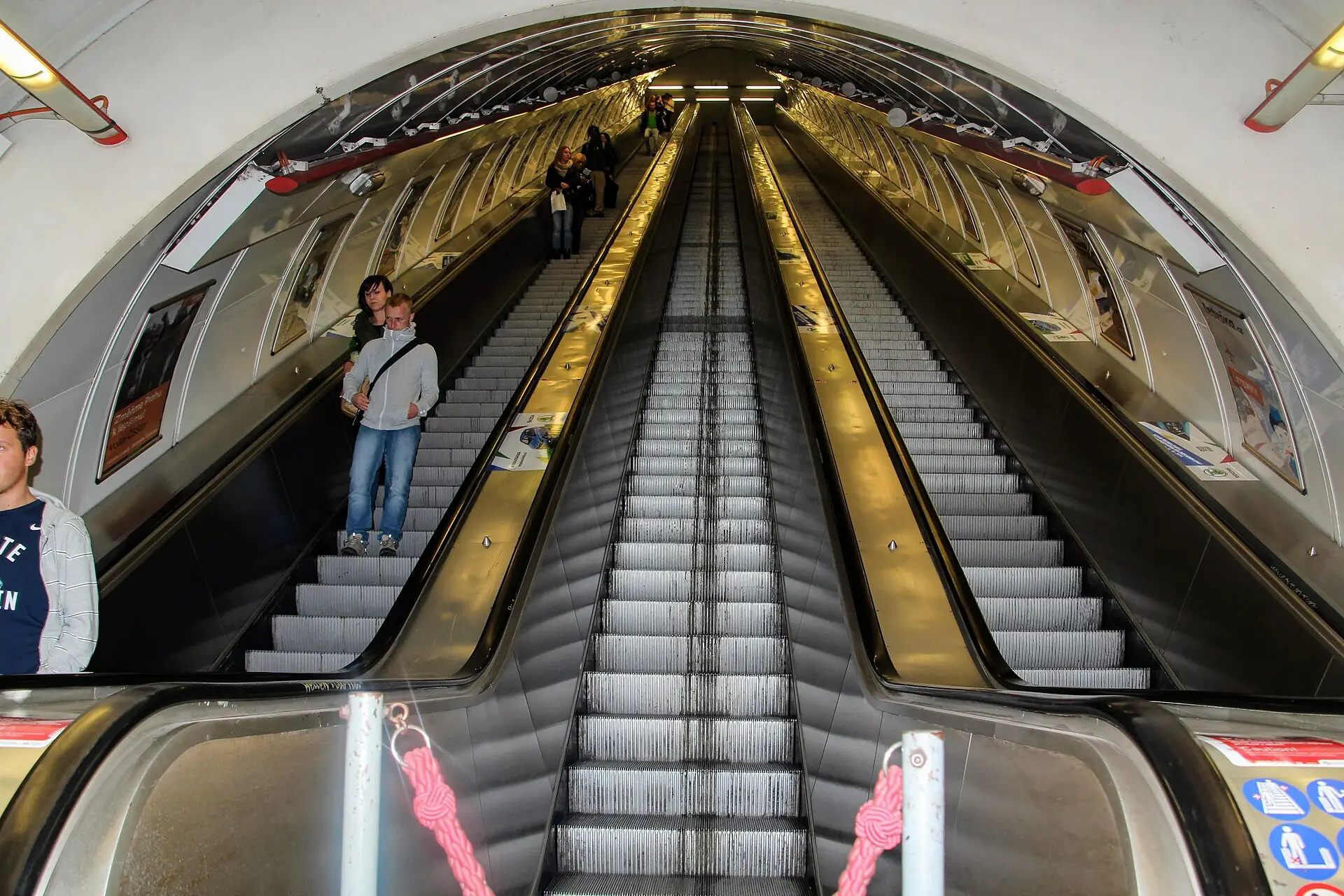
The AE runs Hlavní nádraží — Terminal 1 — Terminal 2 — airport, stopping in front of the main station building. The operator lists the journey at 40 minutes, every 20 to 30 minutes through the day and hourly overnight. Standard city tickets are not valid on it; it’s a separate, pricier fare bought from the driver or the visitor centers in arrivals. Worth it in exactly the situation it was built for — you’re going straight from the plane to an onward train. Otherwise the trolleybus-and-metro combination costs a fraction of it and gets there at roughly the same time.
Cars
Prague has done something unusual here: Uber is the airport’s official taxi partner, with designated pickup points directly in front of both arrival halls, kiosks and staffed counters inside, and a six-digit PIN you give the driver. Bolt operates too, but as a normal ride-hailing app — you meet the car where the app sends you, which isn’t the terminal curb. Either is fine. What isn’t fine is the man who walks up to you inside the building offering a taxi. There’s a marked stand outside and a counter in arrivals, and neither of them needs to come find you.
Who actually flies there
Prague is a genuine low-cost battleground, which is most of why the fares behave the way they do. On the London run alone the airport’s own destination page lists British Airways, easyJet, Jet2.com, Ryanair and Wizz Air UK — five carriers into one city pair, all landing you in Terminal 1 because the UK sits outside Schengen. Ryanair’s route page shows London Stansted, plus Bristol, East Midlands, Manchester and Edinburgh. easyJet and Wizz Air UK fly it too, and they don’t all use the same London airport — check which one your fare leaves from before you congratulate yourself on the price.
From the US the picture is thinner and seasonal, and this is the part to get right. As of this writing there are two nonstops, both summer-only: Delta from New York JFK, which has run May to early October in recent years, and American from Philadelphia, daily from 21 May to 5 October 2026 on a 787-8 — its first Prague service since 2019. The summer schedule as a whole runs to 24 October. Outside that window there is no US nonstop at all, and the smart play is a one-stop through a European hub — which is frequently the smart play inside the window too, because two airlines flying one season each is not what anyone would call competitive pressure.
Long-haul is slowly thickening: STARLUX was scheduled to open Taipei–Prague on 1 August 2026, its first regular European route. Nice for the airport. Doesn’t change your booking.
One thing you don’t have to worry about
Here’s your free win. “Prague” on a booking site means Prague. There’s no second airport an hour and a half down a motorway wearing the city’s name, the way Milan, Brussels and Stockholm all pull that trick. The airport on your itinerary is the one about seventeen kilometers west of the center — ten miles, half an hour by road in normal traffic — and every fare you compare is comparing the same place.
The flip side, since I’m not in the business of good news alone: no secondary airport also means no secondary-airport price war. What holds intra-Europe fares down into Prague is low-cost carriers competing with each other on the same runway, not a cheaper alternative down the road. When they thin the winter schedules, there’s nowhere else to look.
When Prague is actually cheap
Prague’s reputation is “cheap city,” and for most of the year it earns it. The reputation has two holes in it, and both are on the calendar.
- Summer. Peak schedule, peak everybody. Nothing exotic here — it’s the same June-to-August lump as the rest of Europe, and it’s the one people expect.
- December — the one people don’t expect. The Old Town Square Christmas market runs 28 November 2026 to 6 January 2027, daily from 10:00 to 22:00, and it turns the cheap city into a premium weekend. Flights, beds, and every table with a view of the square move in the same direction at once. A December weekend in Prague is not a budget trip; it’s a Christmas-market trip that happens to be in Prague.
- The window. The markets close on 6 January and the city exhales. Late January through March is the cheap stretch, and November — after the shoulder-season lull, before the market stalls go up — is the other one. Cold, gray, and the fares know it.
- Easter, which moves. The Easter markets fill the same squares and it’s a long weekend across the region, so the quiet end of the spring window isn’t reliably quiet. In 2027 Easter Sunday falls on 28 March — about as early as it gets — which means next spring the lump lands inside March rather than after it. Check the date before you assume March is safe.
Do the arithmetic on the whole trip, not the fare. A cheap seat into a sold-out weekend is not a cheap weekend.
Make Prague the first stop, not the only stop
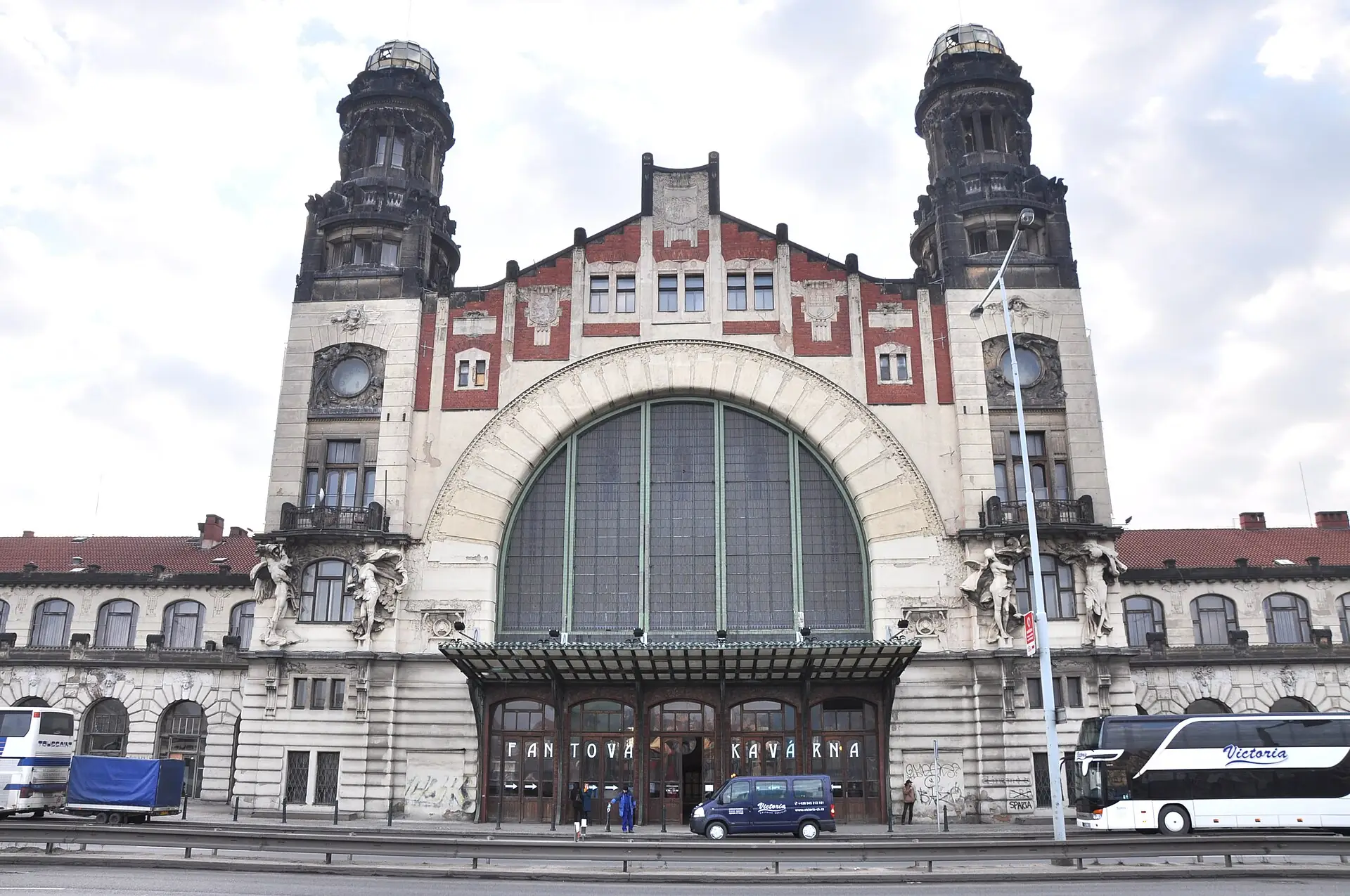
This is the argument I make to anyone flying in from the US, and it’s why Prague sits in more of my itineraries than its size suggests. Praha hlavní nádraží is a proper international hub with competing operators on the same tracks. České dráhy, the national carrier, runs the German axis — Dresden and on to Berlin. RegioJet runs Prague–Brno–Vienna. Leo Express runs east through Ostrava toward Kraków and Warsaw. Operators on these routes shuffle more than you’d think, so pick the route first, then see who’s actually selling it that month.
Fly into a low-cost battleground, leave overland, fly home from somewhere else. That’s how a Central Europe trip stops costing what a Western Europe trip costs. What you do with the days in between isn’t my department — our guide to what’s actually waiting in the Old Town covers that properly.
Entry requirements
Czechia is in Schengen, so the familiar rule applies: short stays are capped at 90 days in any rolling 180, and the Czech foreign ministry is clear that counting your own days is your job, not the border officer’s. I checked US and UK passports separately — both travel visa-free for short tourist stays. Your passport must have been issued within the previous ten years and stay valid at least three months past the day you plan to leave the Schengen area. That second rule is the one that catches people, not the 90-day one.
Two moving parts. The Entry/Exit System is live and fully operational, as above. ETIAS — the pre-travel authorization, a separate thing from EES — is scheduled to start in the last quarter of 2026, with the exact date still to be announced; that timeline has slipped more than once, so treat it as a schedule, not a fact on the ground. Rules change: check current requirements before you book, and again before you fly.
One last thing, and it’s free. Coming in from the west on a clear day, ask for the left side of the aircraft. The approach runs you over the river bends and the castle sitting up on its ridge, and you get the postcard through a scratched window before you’ve collected a bag. It’s the only capital I fly into where the view happens before the queue.
FAQ
Is there a train from Prague airport to the city?
No. Václav Havel Airport has no rail link at all. You take line 59 to Nádraží Veleslavín and change to metro A — 17 minutes on the trolleybus, then the metro, around 40 minutes airport to center on a good run. Bus 100 to Zličín connects to metro B if that suits your hotel better, and night buses 907 and 910 cover the small hours. A railway to the airport is under construction as part of the Prague–Kladno line, but no part of it serves the terminals yet.
Which airlines fly direct to Prague from the US?
As of this writing, two — and both are summer-seasonal. Delta flies from New York JFK, which in recent years has run from May to early October, and American flies daily from Philadelphia from 21 May to 5 October 2026. The airport’s summer schedule ends 24 October. Outside the season there is no nonstop from the US, so you’ll be connecting through a European hub — and given how thin the nonstop options are, it’s worth pricing the one-stop even in July.
When is the cheapest time to fly to Prague?
Late January through March, once the Christmas markets close on 6 January, and November before they open again on 28 November. Summer is the obvious peak; December is the one that surprises people, because the markets turn the budget city into a premium weekend. Watch Easter too — it moves, and in 2027 it lands on 28 March, right at the end of the cheap stretch.
How far is Prague airport from the city center?
About seventeen kilometers — roughly ten miles — west of the center, which is around half an hour by road in normal traffic and about 40 minutes by trolleybus and metro. There is only one Prague airport, so unlike Milan or Brussels you don’t have to check whether the cheap fare lands you in another county.
Images: Godot13 / CC BY-SA 4.0; Naiven.gamer / CC BY-SA 4.0; Fjmustak / CC BY-SA 4.0; Jorge Láscar / CC BY 2.0. Source: Wikimedia Commons.


