

Rome is served by two main airports, and the choice between them quietly shapes your arrival logistics. Choosing the right gateway and understanding the transit options is the first step to a successful trip.
Fiumicino vs. Ciampino: the airport split
Where you land affects your airport transfer options:
- Fiumicino (FCO): Also known as Leonardo da Vinci Airport, this is the main international hub located about thirty kilometers southwest of the city. FCO handles the vast majority of long-haul and international flights and offers the best rail connections.
- Ciampino (CIA): A smaller airport located about fifteen kilometers southeast of the city. While it sits closer to the center, Ciampino has no rail station at the terminal. It is primarily served by budget carriers. Cheap flights to Ciampino can be a bargain, but you must transfer by bus or taxi.
The FCO train question: express vs. regional
Many travelers arriving at Fiumicino assume the Leonardo Express is the only sensible option. In reality, the regional line is often the better choice:
- Leonardo Express: This non-stop train runs directly to Termini Station in central Rome, departing frequently. While fast and convenient, it is the pricier option.
- FL1 regional line: This train is much cheaper but does not go to Termini. Instead, it stops at major stations on the city periphery, including Trastevere, Ostiense, and Tiburtina. If your accommodation is in Trastevere or Testaccio, the regional train is actually a direct and more efficient route.

Ciampino transit: shuttle buses and metro
If you fly into Ciampino, your ground transit options are road-based:
- Shuttle buses: Several operators run direct buses from the CIA terminal to Termini Station, taking about forty minutes depending on traffic.
- Local bus to metro: You can take a short local bus ride to the Anagnina metro station, then board Metro Line A to reach the center. There is also the Airlink combination: a short bus hop to Ciampino town’s railway station, then a regional train to Termini.
- Late arrivals: Budget flights landing close to midnight at Ciampino have limited options if the flight is delayed, as shuttle bus schedules thin out significantly.
The ZTL trap: do not rent a car
Renting a car for your stay in Rome is a serious mistake. The historic center is a designated Zona a Traffico Limitato (ZTL) — a restricted traffic zone.
Only residents and permit holders are allowed to drive here during control hours. Every time you cross a ZTL boundary, a camera records your license plate. Each crossing generates a separate, expensive fine that is mailed to your home months later, often accompanied by a processing fee from your car rental company. Combined with scarce parking and intense traffic, public transit is the far wiser choice. If you plan to tour the Italian countryside, pick up your rental car on the day you leave Rome.
Taxis done right
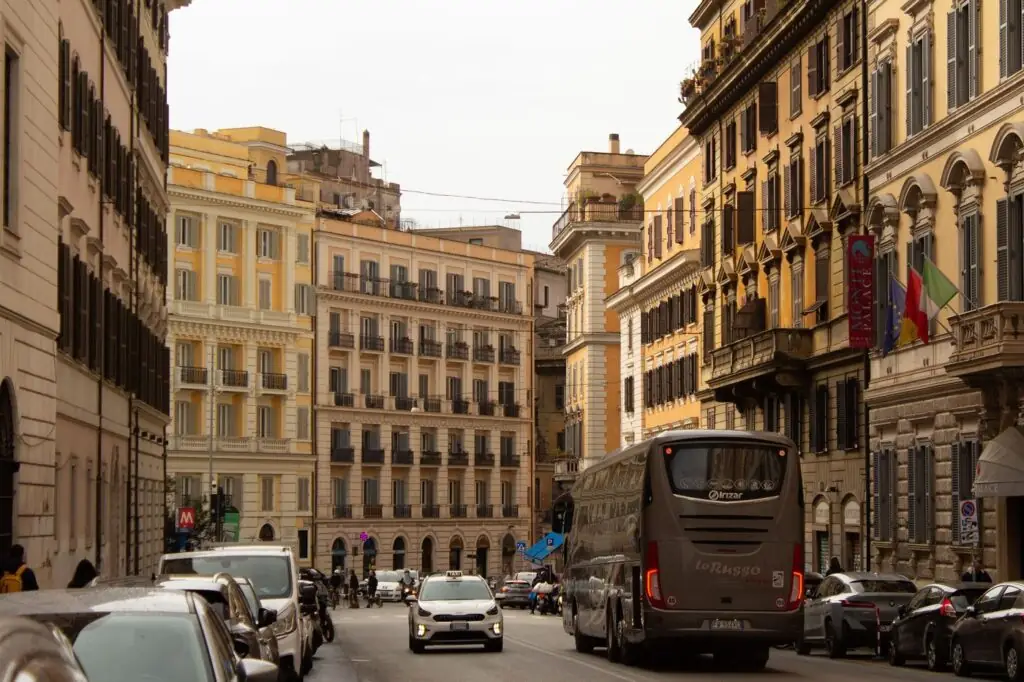
If you choose road transport from either airport, use only the official white taxis at the designated ranks outside the terminals. Taxis into the center (within the Aurelian Walls) operate on a government-set flat fare. Always ignore the unlicensed drivers offering rides inside the arrivals hall.
Weather and fare seasons
Rome is a popular destination year-round, and flight prices reflect the seasonal demand:
- High season: Spring and autumn are the busiest times, with prices spiking around Easter, major Vatican events, and conferences. Peak summer (July and August) is hot and humid, though the city itself can be quieter as locals head to the coast.
- Off-peak: Flights are generally cheapest during the winter months (excluding Christmas and New Year), which is the best time to visit if you want to avoid crowds.
Entry requirements
Italy is a member of the EU and the Schengen Area. Visitors from the US, UK, Canada, and Australia enter visa-free for tourist stays of up to 90 days within any 180-day period. The EU’s electronic pre-travel authorization system (ETIAS) is legislated but not yet in force. Entry rules can change; verify current requirements before booking.
FAQ
Should I fly into Fiumicino or Ciampino?
Fiumicino (FCO) is the main international airport with direct train links. Ciampino (CIA) is closer but has no train station, relying on shuttle buses. Compare the total cost of the flight and transfer before booking.
How do I get from Fiumicino into central Rome?
You can take the Leonardo Express train to Termini Station, or the cheaper FL1 regional train to Trastevere, Ostiense, or Tiburtina. Official flat-fare taxis are also available.
Is there a train from Ciampino airport?
No. There is no train station at the Ciampino terminal. You must take a shuttle bus to Termini Station, a local bus to the Anagnina metro station, or the Airlink bus-plus-train combination via Ciampino town’s railway station.
Should I rent a car in Rome?
No. Rome’s historic center is a restricted traffic zone (ZTL) monitored by cameras, and driving without a permit will result in expensive fines mailed to your home.


