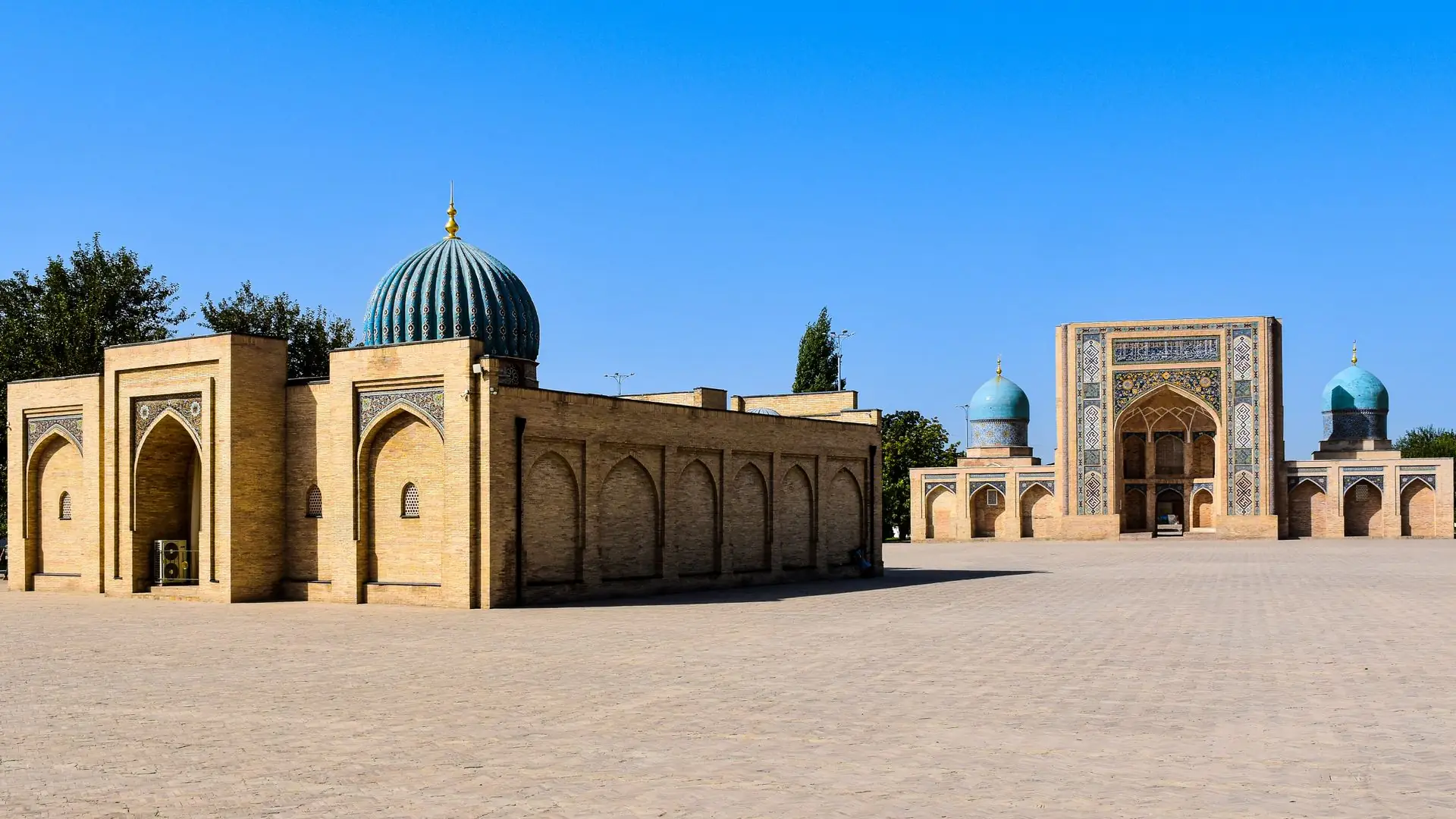

The reputation this country has — invitation letters, forms, declarations, awkward connections through somewhere at four in the morning — is a description of a decade ago. Here’s what the trip actually looks like now, checked against the operators and the government portals rather than against memory.
The visa story flipped, and most guides haven’t noticed
Start here, because it’s the thing that keeps people from booking.
US citizens: no visa, up to 30 days. The Uzbek government’s own portal states it plainly — the measure was established by Presidential Decree No. 203 of 3 November 2025 and took effect on 1 January 2026. What makes this worth a paragraph rather than a line is what it replaced. Until the end of last year, Americans under 55 had to apply for an electronic visa in advance, while travelers 55 and over had a visa-free carve-out of their own. Both of those are now history: the age test is gone and so is the application. If you’ve read otherwise — and you will, because most travel pages still describe the old regime — you’re reading something written before January.
UK citizens: no visa, up to 30 days, and this one has been true for longer. The UK government’s own wording is “you can visit Uzbekistan without a visa for tourism or business for up to 30 days.” One difference from the American rule worth catching: your passport needs an expiry date at least three months after you arrive. I checked the two passports on their own sources rather than assuming they move together, and on this detail they don’t read identically.
Registration is real, and it’s almost certainly not your problem. Foreign visitors staying more than three days must be registered with the authorities within 72 hours of arrival — but hotels do this automatically for their guests, which covers essentially every version of this trip. It only becomes your job if you’re camping, in a camper van, or otherwise not sleeping somewhere that registers you, in which case there’s an official online system and a tourist tax to pay. Keep your hotel slips; it costs nothing and closes the question.
Two footnotes and then we can move on. Travelers from countries not on the visa-free list apply through Uzbekistan’s official electronic visa portal — go to the government’s own e-visa site directly, because this is a field thick with lookalike sites that charge a markup for the same form. And there’s a customs declaration threshold for large amounts of cash, both in and out, so if you’re carrying a serious sum, read your own government’s current advice page before you pack. As always: check current requirements before you book.
The airport is close — and one habit stopped working
Officially it’s Islam Karimov Tashkent International Airport, renamed in 2017 and still the country’s main door. It sits about 12 kilometers from the center, which in practice is 20 to 35 minutes depending on the hour. Some guides quote figures as low as four kilometers; that’s a measurement from somewhere other than the middle of the city, and the honest version is that this is a close-in airport by any capital’s standards, not that it’s on the doorstep.
Now the part that will save you ten confused minutes. Every guide to this city tells you to order a ride-hail car — the apps do work in Uzbekistan and they’re the normal way to move around town. But ride-hail cars are no longer allowed onto the airport grounds, so the thing everyone recommends is precisely the thing that doesn’t work at arrivals. What’s there instead is a regulated official taxi rank, bookable from inside the terminal: pricier than a street car, and the trade you make for not negotiating at the curb. There will also be freelancers offering rides as you come out. Walk past them to the official stand.
If you’d rather take the bus, route 40 runs from the airport to the railway station and the metro beside it, which is where you want to be anyway if the Silk Road leg of this trip starts tomorrow. Fares are trivial and signage in English is thin, so have the stop on a map before you board.

The terminal split, which catches people with a domestic connection
This one is structural and it’s the reason to read a paragraph before you book a same-day onward flight. International arrivals use Terminal 2; domestic departures go from Terminal 3 — and the two are on opposite sides of the runway, roughly four kilometers apart by road. Your bags are not checked through. You land, clear immigration and customs with your luggage, leave the airport, and travel to the other terminal by shuttle bus or city bus before checking in again.
None of that is difficult, but it is time, and a connection built on the assumption of a single building will not survive contact with it. If you’re flying onward to Urgench for Khiva, or to Nukus, give yourself hours rather than minutes — or spend the night in Tashkent and enjoy it, which is the option I’d take.
One more thing worth knowing rather than worrying about: a brand-new airport for Tashkent is in the works on a greenfield site outside the city, with construction beginning this year. That’s the current state and it’s as far as I’ll go — no opening date from me, and nothing about it changes a trip you take in the next few seasons.
The nonstops most people don’t know exist
This is the fact that reframes the whole trip. Central Asia sounds like a two-connection proposition. It isn’t.
From the United States there is a nonstop, and it’s been quietly running for years. Uzbekistan Airways flies New York JFK to Tashkent on the Boeing 787, around five times a week in the summer season — roughly a twelve-hour flight out and a little over thirteen back. The Dreamliner is the backbone of this airline’s long-haul operation, and this is its flagship route. It is, as far as I can find, the only nonstop between the United States and Central Asia.
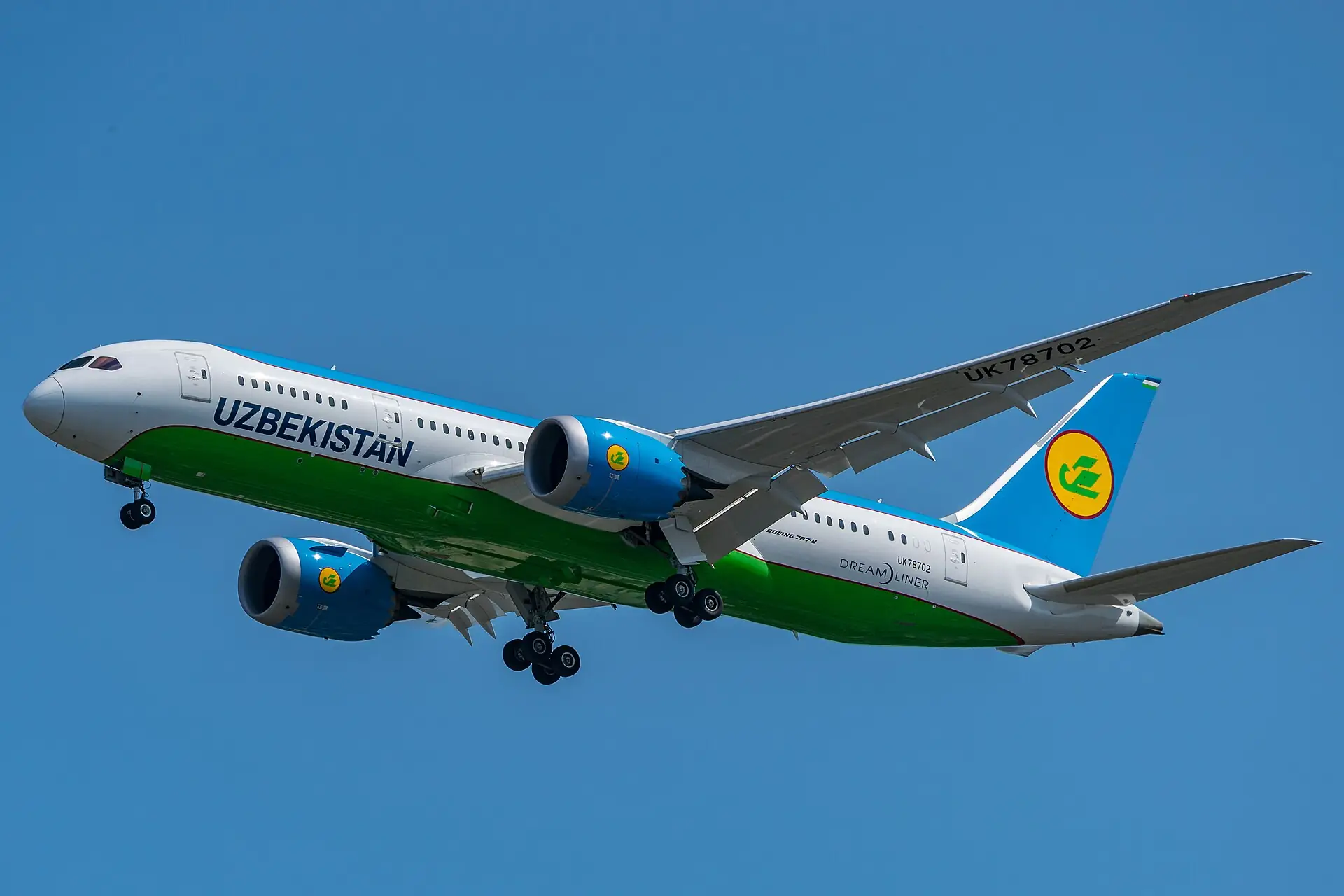
You may also see a second Tashkent–New York operator listed on flight-search sites. Treat that with care: the private Uzbek carrier Qanot Sharq has filed a twice-weekly A330 rotation to JFK, and the launch has been pushed repeatedly — from April to May to June and then again — while reservations never actually opened. A filed schedule is not a flight. If it launches it’s good news; don’t build a trip on it today.
From the UK the answer is now plural: nonstops from both Heathrow and Gatwick, on a choice of two airlines. Uzbekistan Airways serves Heathrow — twice weekly on the 787 since April this year, having previously split the week between a 787 and an A321LR — and runs a Sunday rotation of its own from Gatwick, flown there since 2024. And Qanot Sharq flies Gatwick twice weekly on the A321neo, becoming the first private Uzbek airline into that airport. Between them, London–Tashkent has gone from a connecting market to two competing carriers across two airports in about a year. The Qanot Sharq service did pause for part of last winter before resuming at the end of March, so if you’re booking into the winter season, confirm the days rather than assuming continuity.
The one-stop menu, if the nonstops don’t fit
Two flights a week is a great option and a bad constraint, so here’s everything else, sorted by the hub you’d route through:
- Istanbul. Turkish Airlines runs Tashkent around fourteen times a week — twice daily, in effect — which makes it the single most flexible one-stop on this list from either side of the Atlantic.
- The Gulf. flydubai from Dubai, Qatar Airways via Doha, Air Arabia from Sharjah, Abu Dhabi and Ras Al Khaimah, and Etihad from Abu Dhabi — Etihad having picked up the Abu Dhabi–Tashkent route directly after Wizz’s Gulf unit closed. Oman Air adds Muscat.
- Europe. LOT connects Warsaw, and Qanot Sharq has been building a European map of its own — Frankfurt from late March this year, plus Milan, Budapest and Prague. Centrum Air, another private Uzbek carrier, also flies Frankfurt.
- Asia. Asiana from Seoul Incheon, plus Air China, China Eastern and China Southern from several Chinese cities — the useful direction if you’re combining this with a trip further east.
- The ghost to ignore. Wizz Air does not fly to Uzbekistan. Its Abu Dhabi subsidiary served Tashkent and Samarkand until that airline shut down on 1 September 2025, taking the routes with it. Old guides and a few booking sites still imply otherwise.
The wider context is worth thirty seconds of your attention because it’s why fares here have behaved themselves: the number of airlines serving Uzbekistan has roughly tripled in a decade, a crop of private carriers now competes with the flag carrier at home, and the country’s airlines opened dozens of new routes last year alone. Central Asia has been the fastest-growing aviation market in the world lately, and Tashkent is the part of it with the most doors.
One consequence for the region-minded: Tashkent connects onward to the other Central Asian capitals easily — Almaty, Bishkek and Dushanbe are all short hops — so it works as a gateway rather than a terminus if you want more than one country in a trip.
One ticket, four Silk Road cities
Here’s the argument for treating the flight as a door rather than the trip. Uzbekistan’s showpiece cities sit in a line, and a genuinely fast train runs down it.
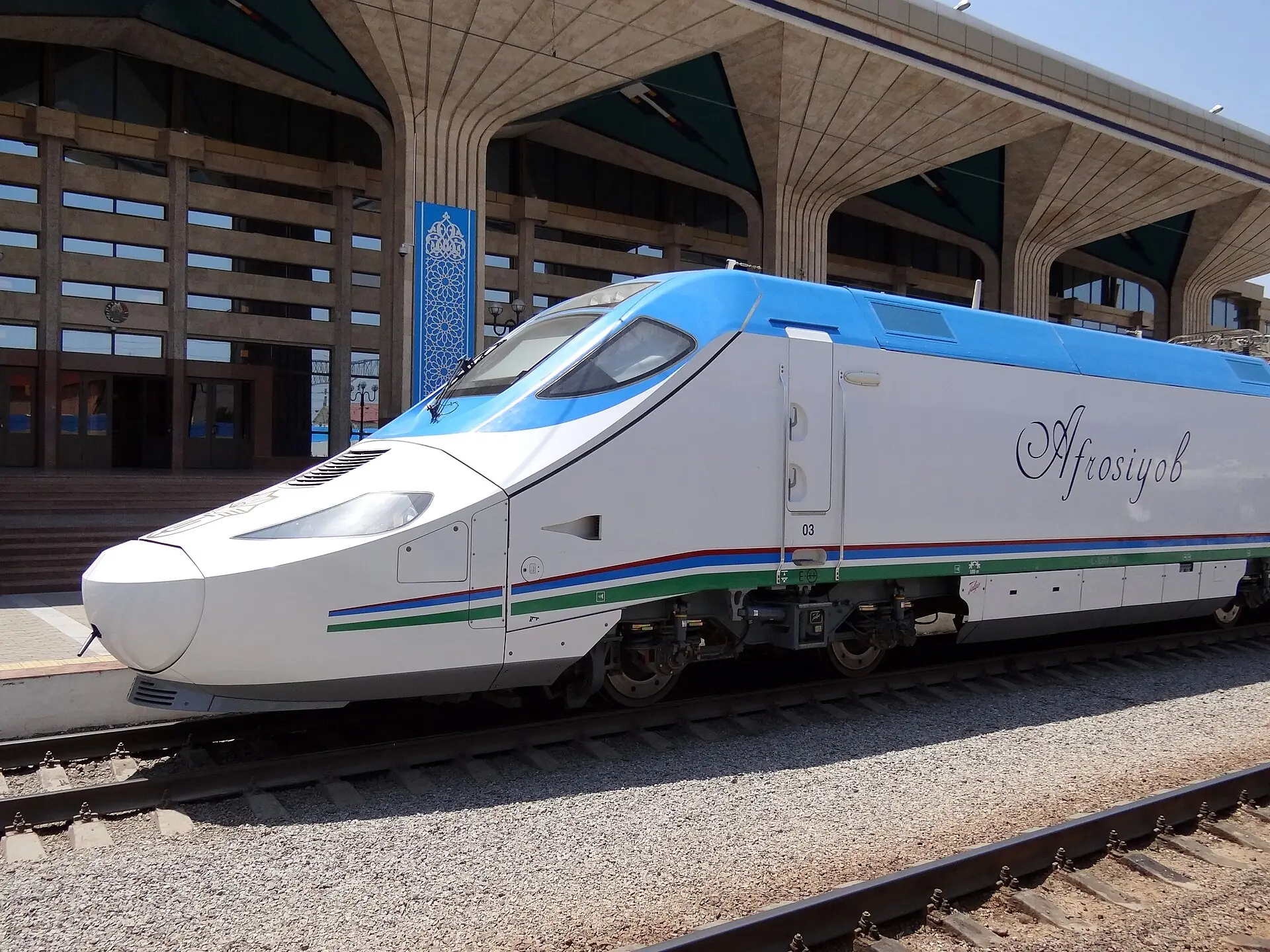
- Tashkent to Samarkand: about two and a half hours on the Afrosiyob, a 250 km/h Talgo with economy, business and VIP classes and a restaurant car. This is a real high-speed railway, not a rebranded express.
- On to Bukhara on the same service, roughly three and a half to four hours from Tashkent end to end.
- Khiva, the far one, now has a fast train too. A 250 km/h Hyundai-built service named the Jaloliddin Manguberdi runs Tashkent–Khiva in around seven hours, against roughly fourteen on the old sleeper. The overnight train still runs and is still cheaper.
The booking warning is the important part of this section. Afrosiyob seats sell out fast — sometimes within a short time of release — and the popular morning departures in peak season are the worst of it. Booking opens a fixed window ahead of departure (sources differ between 45 and 60 days, which is itself a reason to check early), and you buy through Uzbekistan Railways’ own ticketing site, with the language switched to English. Enter your name and passport number exactly as printed, because a mismatch is refused at the gate. If the fast train is gone, there’s a slower service on the same corridor and hotels will often book for you.
And the open-jaw: Samarkand has a real airport now, not a formality. It has operated under an open-skies regime since 2022, and last year around two dozen airlines flew from it to roughly thirty destinations. So the clean version of this trip is fly into Tashkent, ride the spine west, and fly home from Samarkand — the flight map finally supports the itinerary the geography always suggested.
Two calendars: heat and price
This is a straightforward one, and the answer is the shoulders.
- April–May and September–October are the season. Warm, dry, comfortable for walking a city all day, and pleasant on the train. This is also when the Afrosiyob sells out fastest, which tells you everything about when everyone else goes.
- July is genuinely hot. Average highs around 36°C — the high nineties Fahrenheit — with the record over 40, and roughly two rainy days in the month. It’s dry heat and the city is built for it, but plan around the middle of the day rather than through it. Fares and crowds are softer, which is the trade.
- Winter is grey, mild by continental standards, and cheap. The monuments have no queues and the light on tilework is at its best when the sky is clear. If price is the deciding factor, this is your window.
Money and time, briefly
The currency is the Uzbek som, and it’s the only thing that’s legal tender — don’t plan to pay in dollars. The old guidance that this is a cash-only country is out of date: Visa and Mastercard work across Tashkent and Samarkand in hotels, malls, supermarkets and mid-range restaurants upward, and you can tap a contactless card straight through the metro gates. Cash still rules at bazaar stalls, small guesthouses, and anything with a shared taxi or a marshrutka involved, so carry some. ATMs are common in the big cities and dispense som. Uzbekistan runs on UTC+5 year-round with no daylight saving, which makes connection math the same in January as in July.
And the closing argument, which is really about that 12 kilometers. There are capitals where the airport is a project — a train, a transfer, an hour of your life each way. This isn’t one. You can land in Tashkent, clear a border that no longer wants a form from you, and be sitting in front of a plate of the city’s defining rice dish inside half an hour of collecting your bag. What that dish is and where to eat it is another article — ours, as it happens, the guide to the city with palaces underground. My job was the door. The door is open, and it turns out it always was easier than the reputation.
FAQ
Are there direct flights to Tashkent from the US or UK?
Yes to both. Uzbekistan Airways flies New York JFK to Tashkent nonstop on the Boeing 787, around five times a week in summer — as far as I can establish, the only nonstop between the US and Central Asia. From London both big airports now work: Uzbekistan Airways from Heathrow twice weekly plus a Sunday Gatwick rotation, and Qanot Sharq from Gatwick twice weekly. A second Tashkent–New York operator appears on some search sites, but that route has been deferred repeatedly and reservations never opened — don’t plan around it. If the nonstops don’t fit your dates, Istanbul with Turkish Airlines is the most flexible one-stop, followed by Dubai, Doha and Abu Dhabi.
Do US or UK citizens need a visa for Uzbekistan?
No — both are visa-free for up to 30 days. For Americans this is new: a presidential decree signed in November 2025 took effect on 1 January 2026, replacing the old system in which travelers under 55 needed an e-visa and only those 55 and over were exempt. For British citizens the 30-day rule has been in place longer, and the UK government adds that your passport must be valid for at least three months after you arrive. Registration within 72 hours is required for stays over three days, but hotels handle it automatically. Check current requirements before you book.
How do you get from Tashkent Airport to the city center?
It’s about 12 kilometers, or 20 to 35 minutes by road. The catch worth knowing: ride-hail cars are not allowed onto the airport grounds, so the app everyone recommends for getting around the city won’t collect you at arrivals. Use the official taxi rank, bookable from inside the terminal — more expensive than a street car, and regulated. Bus 40 runs to the railway station and the metro next to it. And if you have a domestic flight to catch, note that international arrivals land at Terminal 2 while domestic departures leave from Terminal 3 on the far side of the runway, with no through-checked bags — allow hours, not minutes.
When is the best time to fly to Tashkent?
April–May and September–October, comfortably — warm, dry and ideal for the train down to Samarkand and Bukhara. Book the Afrosiyob as far ahead as the booking window allows in those months, because the good departures go quickly. July is the hot one, with average highs around 36°C and records above 40; it’s manageable dry heat if you plan around the middle of the day, and it’s cheaper. Winter is the value window — mild by continental standards, quiet at the monuments, and the least expensive flying of the year.
Photos: Petar Milošević (CC BY-SA 4.0), Kublanov (CC BY-SA 4.0), Adam Jones (CC BY-SA 2.0), Jean Housen (CC BY-SA 4.0), via Wikimedia Commons.


