
That’s the hardest part of getting into Yerevan, and it’s a paragraph long. The rest of this trip is easier than its reputation: the airport is a short drive from the center, the visa situation is the friendliest thing on this whole website, and the flight map — which is what most people get wrong about Armenia — has just changed in your favor.
The airport end is the simple part
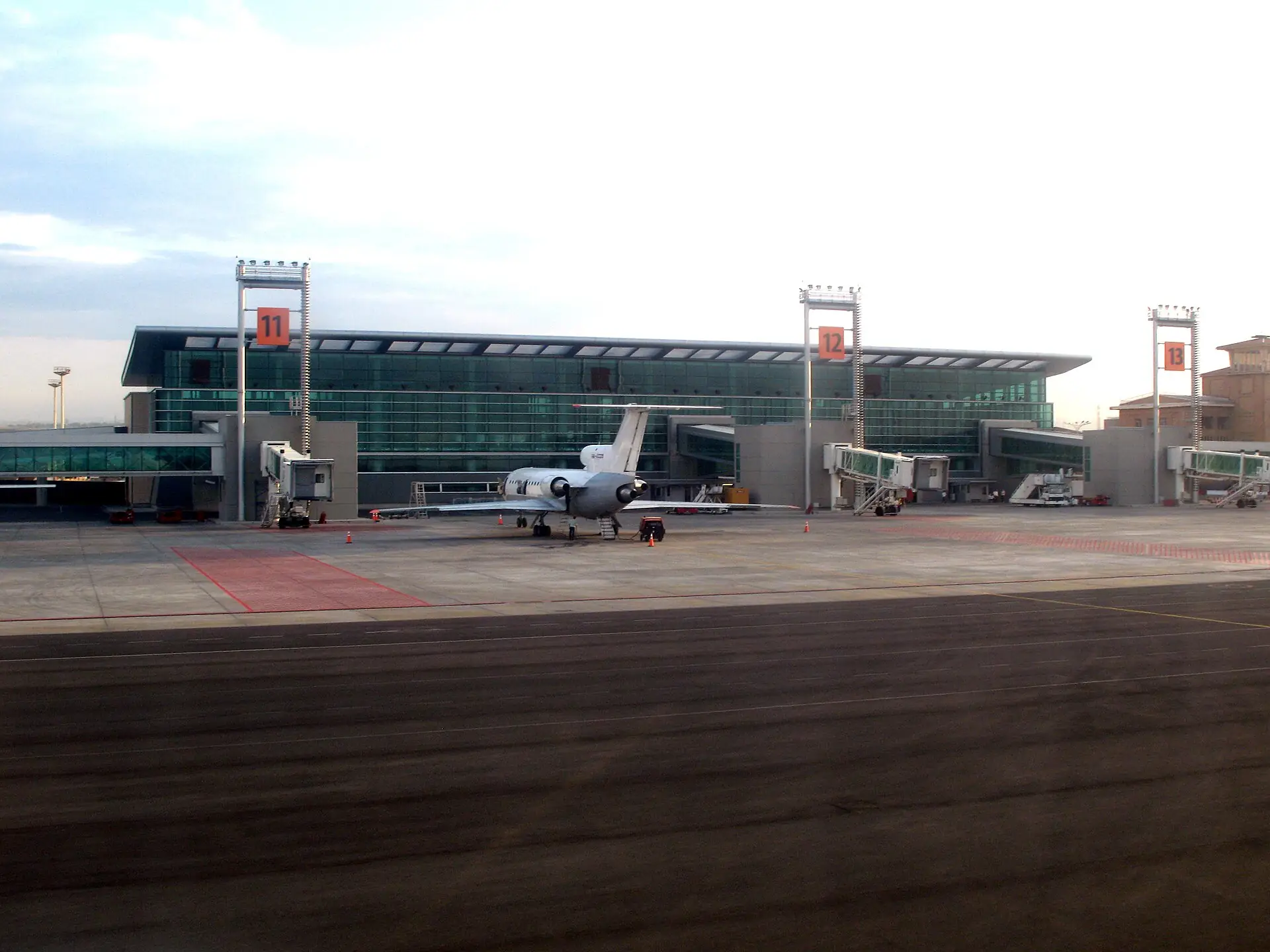
Zvartnots International sits west of the city, close enough that the transfer never becomes a project. How close depends on who’s measuring: the official aeronautical figure is about 15 kilometers, while road distance to the center comes out closer to 12 or 13. Either way it’s twenty to thirty minutes by car, and the airport is the kind where you’re outside the terminal minutes after the bags come off.
Two airport buses, two completely different rulebooks
This is the bit worth reading twice, because the airport’s own transport page lists both and almost nobody else mentions the second one.
- Route 201, the express (branded Elitebus). Every 30 minutes, 07:00 to 22:00. It’s the one all the guides name, it’s the cheaper of the two, and per the airport’s own page it takes cash in Armenian dram only. Fine if you land in daylight with a few notes in your pocket.
- Route 100, the municipal one. Every 30 minutes from 06:50 to 22:00, then hourly right through the night until 06:50. It costs a little more than the express, and it does not want your cash: payment is by QR ticket through the local transit app, a paper QR ticket from a terminal, or a Visa/Mastercard tapped on board. There are payment terminals in the arrival and departure halls.
So the rule is short: daytime, either; after ten at night, route 100, and bring a card rather than notes. That’s the reverse of what a decade of travel writing tells you about this airport, and it’s the single most useful sentence in this article. Yerevan rebuilt its whole bus network and put a unified electronic ticketing system on it at the start of 2025 — the fleet, the numbering and the way you pay all moved at once, and the guides mostly haven’t caught up.
Taxis, and the two apps
Uber isn’t a thing in Armenia. The two apps that work are Yandex Go and GG, the local one, and between them they cover the airport run comfortably. Install whichever you prefer before you fly, because the terminal has free wi-fi and you can order a car before you’ve walked out of the doors. The airport’s own site also lists a rank of named taxi and car-rental desks in the arrivals hall, open around the clock.
The one habit to bring: order in the app, then walk to your car. People will offer you rides on the way out, the way they do at every airport on earth, and the app price is the price you agreed to. Nothing dramatic — just don’t do your negotiating on the curb at three in the morning.
Landing at 3 a.m. is normal here — plan for it, don’t fear it
Look at the arrivals board and you’ll notice how much of it happens in the dark. This is a spoke on other people’s hubs, so the inbound waves are timed to leave those hubs after the evening bank: Austrian’s Vienna run, for instance, is scheduled out at night and into Yerevan around four in the morning, and the Gulf and Istanbul rotations stack up in the same window. If your itinerary has you landing at an hour that looks like a typo, it isn’t — it’s the normal shape of this route map.
What that actually means for you is three things. Route 100 is running hourly all night, so there is a public option at any hour. Both ride-hail apps work at that hour, over the terminal’s wi-fi if you haven’t sorted a SIM. And a hotel that knows its market will not blink at a 4 a.m. check-in — but tell them the flight number when you book, because the difference between a night porter expecting you and one who isn’t is the difference between a fine arrival and a bad one.
The nonstop question, answered honestly
From the United States: there is no nonstop. Not seasonal, not summer-only, none — no US carrier serves Armenia and no transatlantic route touches it. You will connect, and the rest of this article is about how little that costs you.
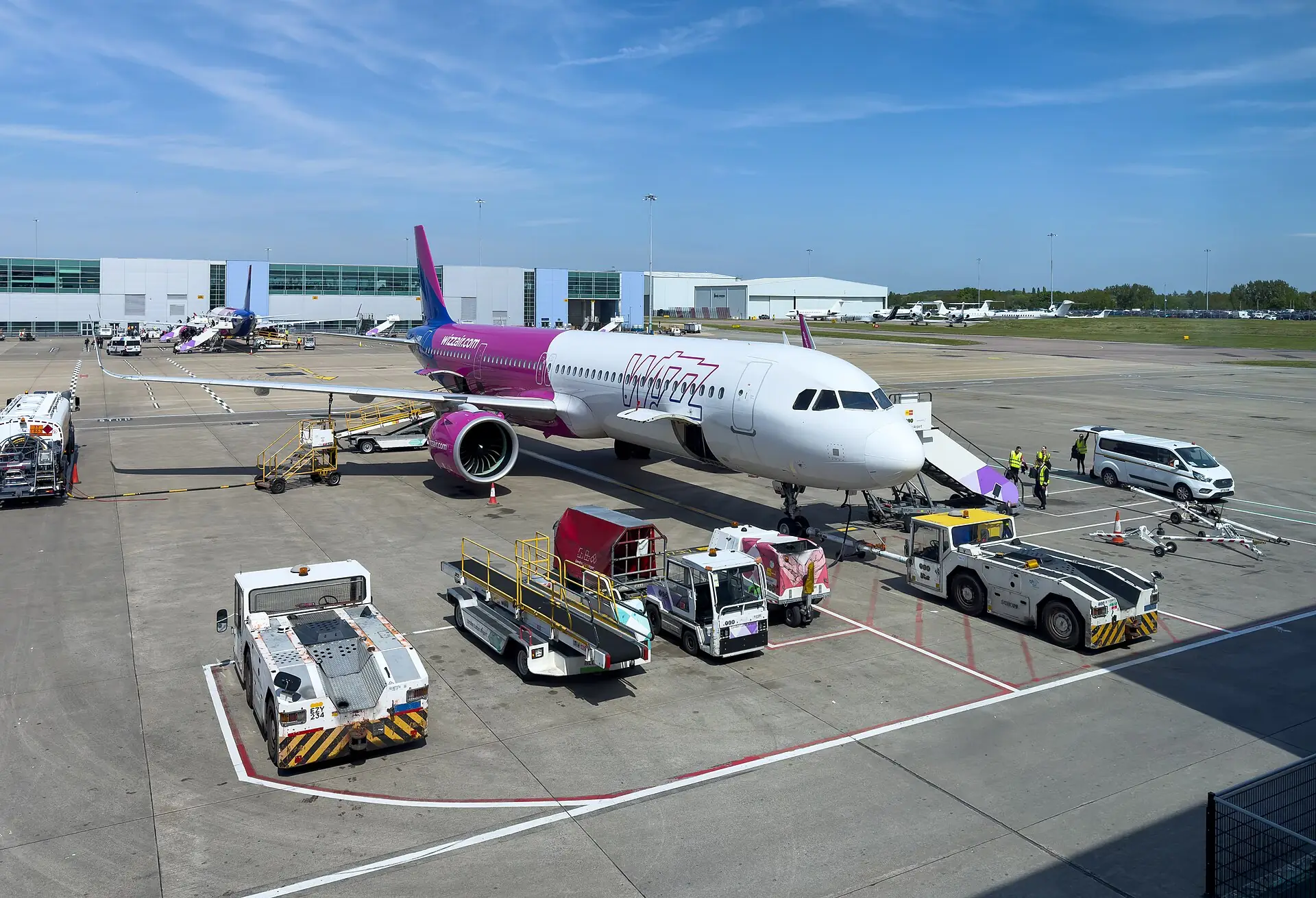
From the UK, the answer changed this summer. Wizz Air began flying London Luton to Yerevan on 12 June 2026, twice a week, Mondays and Fridays — the first direct service ever operated between the United Kingdom and Armenia. If you last researched this trip a year ago, that option did not exist. Two caveats and they’re both about being careful rather than being disappointed: it’s Luton specifically, so anything sold to you from Heathrow, Gatwick or Stansted is a connection wearing a nonstop’s clothes; and twice-weekly service on a two-month-old route is exactly the kind of thing that gets reshaped between seasons, so if you’re planning past October, confirm the days are still there before you build a trip around them.
Everyone else — and, in practice, most British travelers too, since two flights a week won’t fit every plan — is connecting. Which is fine, because the menu is genuinely wide.
The one-stop menu, in full
The airport’s own airline directory runs to something like forty-five names. Most of them aren’t useful to you — a large share of the board is Russian, Iranian and regional traffic. Strip it down to the routings a US or UK traveler would actually book and you get a shortlist that’s still longer than you’d expect:
- European hubs. Air France from Paris CDG and Austrian from Vienna are the two most useful — both daily-ish, both feeding the whole of North America and Britain behind them. Add Lufthansa, LOT via Warsaw, Brussels Airlines, Aegean via Athens, Eurowings and Condor from Germany, and Transavia into Paris Orly. Vienna and Paris are the two I’d price first.
- The Gulf. Qatar Airways via Doha is the quality option and the sane one from the US West Coast. flydubai serves Dubai, Air Arabia flies Sharjah and Air Arabia Abu Dhabi covers Abu Dhabi. From the UK the Gulf is very often the cheap answer, and the connection times are civilized.
- Istanbul. Turkish Airlines into the main airport and Pegasus into Sabiha Gökçen both fly it, and Turkish’s network means you can reach Yerevan from almost anywhere with one connection. Worth knowing as pure routing: the land border isn’t a crossing you can use, so the practical overland gateway is Georgia — but the flights are ordinary scheduled service and always have been.
- The low-cost layer. Wizz Air is the big story: it opened a base at Yerevan in 2025, put two A321neos there, and now serves something like eighteen destinations from the city — Milan, Rome, Venice, Vienna, Budapest, Prague, Hamburg, Nice, Naples, Bari, Dortmund, Memmingen, Larnaca, Paphos, Bucharest, Sofia and more. Two more are already filed for the coming winter: Eindhoven from 26 October 2026 and Brussels Charleroi from 1 February 2027, three weekly each. Ryanair does not fly to Armenia.
- The home team. FlyOne Armenia is the one to check that your search engine may under-weight — it serves around 27 international destinations across 15 countries and spent this year adding Amsterdam, Vienna, Alicante and Almaty. Armenia Airways also appears on the airport’s directory. If a European city looks unserved, check FlyOne directly before concluding it is.
Two carriers you may still find in old guides
Searching for a flight that no longer exists wastes an afternoon, so: Fly Arna, the Air Arabia joint venture that briefly served as flag carrier, stopped flying in January 2024 and was declared bankrupt by the courts in January 2025. And Wizz Air Abu Dhabi — a separate airline from the Wizz you’ll fly from Europe — ceased operations entirely on 1 September 2025; the Abu Dhabi link survived because Air Arabia Abu Dhabi flies it now. Some booking sites still surface stale schedules for both. The routes are fine; the airlines are gone.
The second airport, briefly
Armenia has a second international airport at Gyumri, in the north, and I’ll be straight with you: as a fare-hunting play it isn’t there yet. Current scheduled service is essentially Wizz Air to Larnaca, twice a week, with a reported FlyOne link to Sochi added this year. It’s a real airport with a resurfaced runway and a new arrivals terminal, and it’s growing fast from a small base — but one European route twice a week is not a menu. Watch it for future seasons; book Yerevan for this trip.
Two capitals, one trip
The best routing trick here isn’t an airline at all. Tbilisi is the neighboring capital, it has a considerably bigger flight map than Yerevan, and the two cities are joined overnight by a sleeper train — so an open-jaw into one and out of the other is a real itinerary rather than a clever-sounding one.
The current state of that train is exactly the sort of thing worth checking rather than assuming, because it is not a daily service and it changes shape by season. Right now, in the summer pattern that runs from mid-June to the start of October, the train is really the Batumi service calling at Tbilisi on the way through, and it runs every second night in each direction, leaving in the evening and arriving the following morning. Outside summer it reverts to a Tbilisi–Yerevan sleeper, still on alternate nights. Which nights run in which direction flips by month, so check the operator before you plan around it — and note that tickets go on sale a limited window ahead and that summer berths do sell. Coaches and shared minibuses cover the same route by day if the sleeper doesn’t fit.
Do it as a loop and the arithmetic gets friendly: fly into Yerevan on whatever’s cheap, take the night train north, fly home out of Tbilisi on a different carrier entirely. Two capitals, one fare structure, no backtracking.
Two calendars: heat and price
Yerevan sits in a valley, and in high summer that valley cooks. This is the single biggest factor in when you should go.
- July and August — hot, and I mean it. Average highs run in the mid-thirties Celsius, low nineties Fahrenheit, and the genuinely hot spells push past forty. The saving grace is that it’s dry heat with mountain air moving through it, and the city adapts by living outdoors in the evening instead of the afternoon. This is also peak season and peak fares, and it’s apricot season, which locals will tell you about within an hour of your arrival.
- May–June and September–October — the gold. Warm days, cool evenings, the mountain visible more often, and fares off their summer peak. If your dates are flexible at all, this is the window to aim for.
- Winter — cold, cheap, and clear. Genuinely cold, and the cheapest flying of the year. The compensation is the light: winter is when the air goes clean and the mountain on the horizon stops being a rumor.
One structural point that works in your favor year-round: because so much of the traffic here is one-stop over half a dozen competing hubs, you’re rarely at the mercy of a single carrier’s pricing. If Vienna is expensive on your dates, Doha or Paris or Warsaw usually isn’t.
Entry requirements: the pleasant surprise
Armenia is not in the Schengen area, and after a few years of European paperwork that turns out to be a feature. There is no EES biometric registration and no ETIAS authorization to think about here — those are EU systems and they stop at the EU’s borders. Your Schengen 90-in-180 allowance isn’t touched by time spent in Armenia either.
I checked the two passports separately rather than assuming they match. British citizens: the UK government’s own advice is that “you can visit Armenia without a visa for up to 180 days in a year for tourism or business,” and that your passport must be valid for the duration of your stay. US citizens: the United States sits on Armenia’s list of countries whose nationals are unilaterally exempt from the visa requirement, with stays of up to 180 days per year. Travelers from countries not on those lists apply for an e-visa online through the official portal — a straightforward process, not an embassy trip.
One point of confusion worth clearing up, because it has been widely misreported: you may have seen headlines about Armenia’s visa-free entry “expiring on 1 July 2026.” That deadline belongs to a separate, temporary scheme for residence-permit holders of certain countries — it has nothing to do with the standing US and UK passport exemptions, which are their own long-running arrangement. If you hold a US or UK passport, that expiry date is not about you. As always, check current requirements before you book.
Money and time, briefly
The currency is the Armenian dram and it’s the only one anyone takes — don’t plan on paying in dollars or euros anywhere. Cards work broadly across Yerevan for hotels, restaurants and shops; outside the capital, and in smaller cafés, markets and taxis, cash still rules, so carry some. Armenia runs on UTC+4 year-round with no daylight saving, which is a small mercy when you’re booking a connection: the offset you check today is the offset in December.
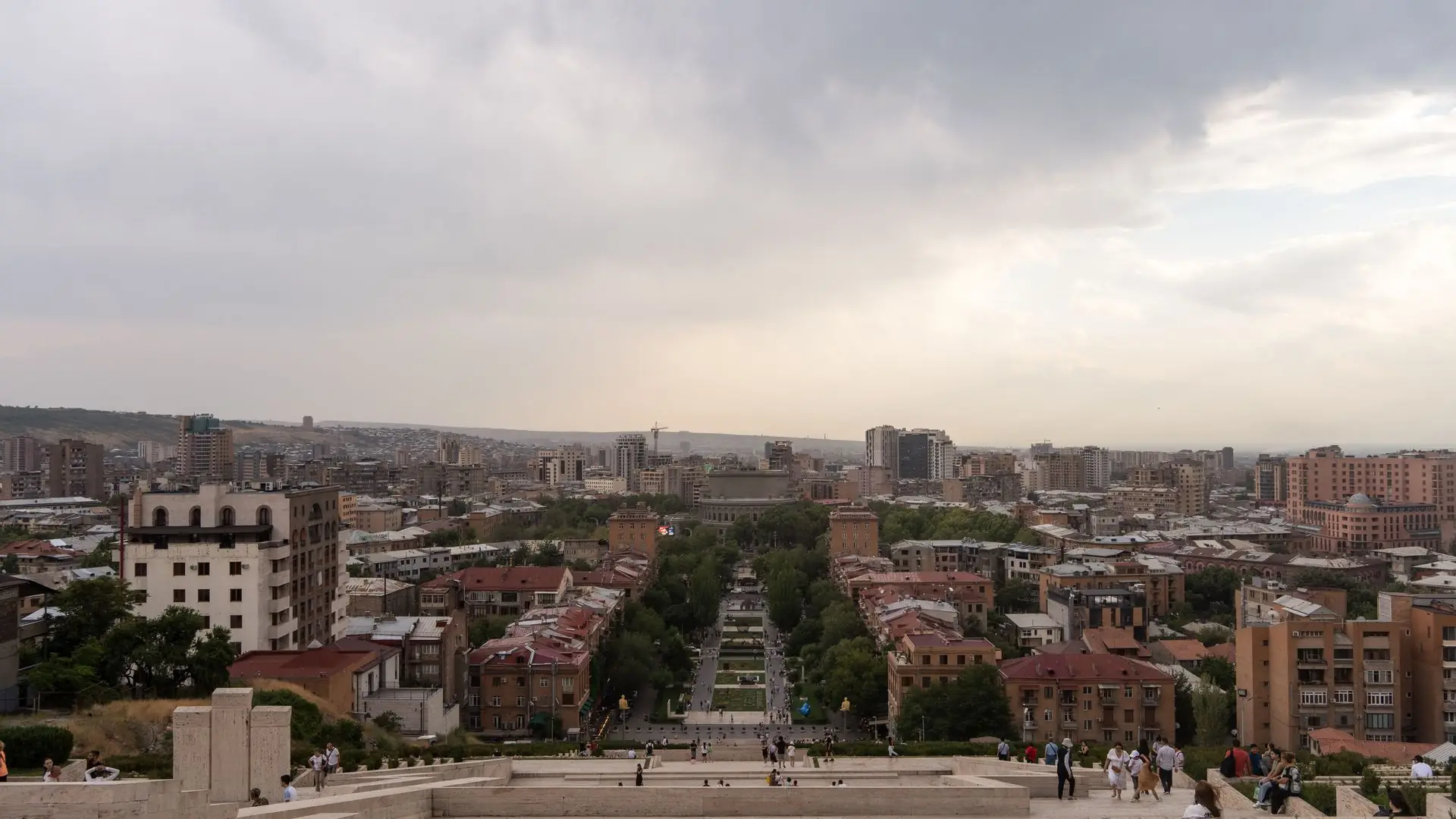
And the closer, which is the reason people come back. On a clear approach, Ararat fills a whole quarter of the sky — a mountain that is not in this country and dominates its horizon anyway. I won’t promise you which side of the aircraft, because that depends on the approach in use on the day. But you’ll see it from the city if the air is clean, and the first time you turn a corner in Yerevan and find it sitting at the end of the street is worth the connection you had to make to get there. There’s more of that in our guide to the capital older than Rome.
FAQ
Are there direct flights to Yerevan from the US or UK?
From the US, no — there is no nonstop, and you’ll connect through a European or Gulf hub. From the UK, yes, but only just: Wizz Air began flying London Luton to Yerevan on 12 June 2026, twice weekly on Mondays and Fridays, the first-ever direct UK–Armenia service. It’s Luton only, so anything offered from Heathrow, Gatwick or Stansted is a connection. Because the route is new and twice-weekly, confirm the days still stand if you’re booking beyond this season. Otherwise the one-stop menu is wide: Paris, Vienna, Warsaw, Athens, Frankfurt, Brussels, Doha, Dubai, Sharjah, Abu Dhabi and Istanbul all connect.
How do you get from Zvartnots Airport to the city center?
The airport is roughly 12 to 15 kilometers west of the center, twenty to thirty minutes by car. Two buses run it, and the difference matters: route 201, the express, runs every 30 minutes from 07:00 to 22:00 and takes cash in dram only; route 100 runs every 30 minutes from 06:50 to 22:00 and then hourly all night, and takes QR tickets or a bank card rather than cash. If you land late, it’s route 100 and you’ll want a card. For a door-to-door ride, use the Yandex Go or GG apps — Uber doesn’t operate in Armenia — and order over the terminal’s free wi-fi before you walk out.
Do US or UK citizens need a visa for Armenia?
No. Both are visa-free for stays of up to 180 days in a year — the UK government states it plainly for British citizens, and the United States is on Armenia’s unilateral visa-exemption list. Your passport needs to be valid for the duration of your stay. Armenia is not in the Schengen area, so there’s no EES registration and no ETIAS to deal with, and your Schengen day count is unaffected. Ignore the headlines about visa-free entry ending in July 2026 — that applies to a separate scheme for residence-permit holders, not to US or UK passports. Check current requirements before you book.
When is the cheapest time to fly to Yerevan?
Winter, comfortably. It’s cold, but it’s the cheapest flying of the year and the air is at its clearest, which is when Ararat is most reliably visible. July and August are the peak in both heat and price — highs in the mid-thirties Celsius with spells past forty. The best balance is May–June and September–October: warm, off-peak, and pleasant for the overnight train to Tbilisi if you’re pairing the two capitals. Because so many hubs compete for this traffic, it’s worth pricing two or three connections rather than one.
Photos: Serouj Ourishian (CC BY-SA 3.0), Avitya (public domain), Mike Peel (CC BY-SA 4.0), Aleksey Chalabyan (CC BY-SA 4.0), via Wikimedia Commons.


