
The basket and the street
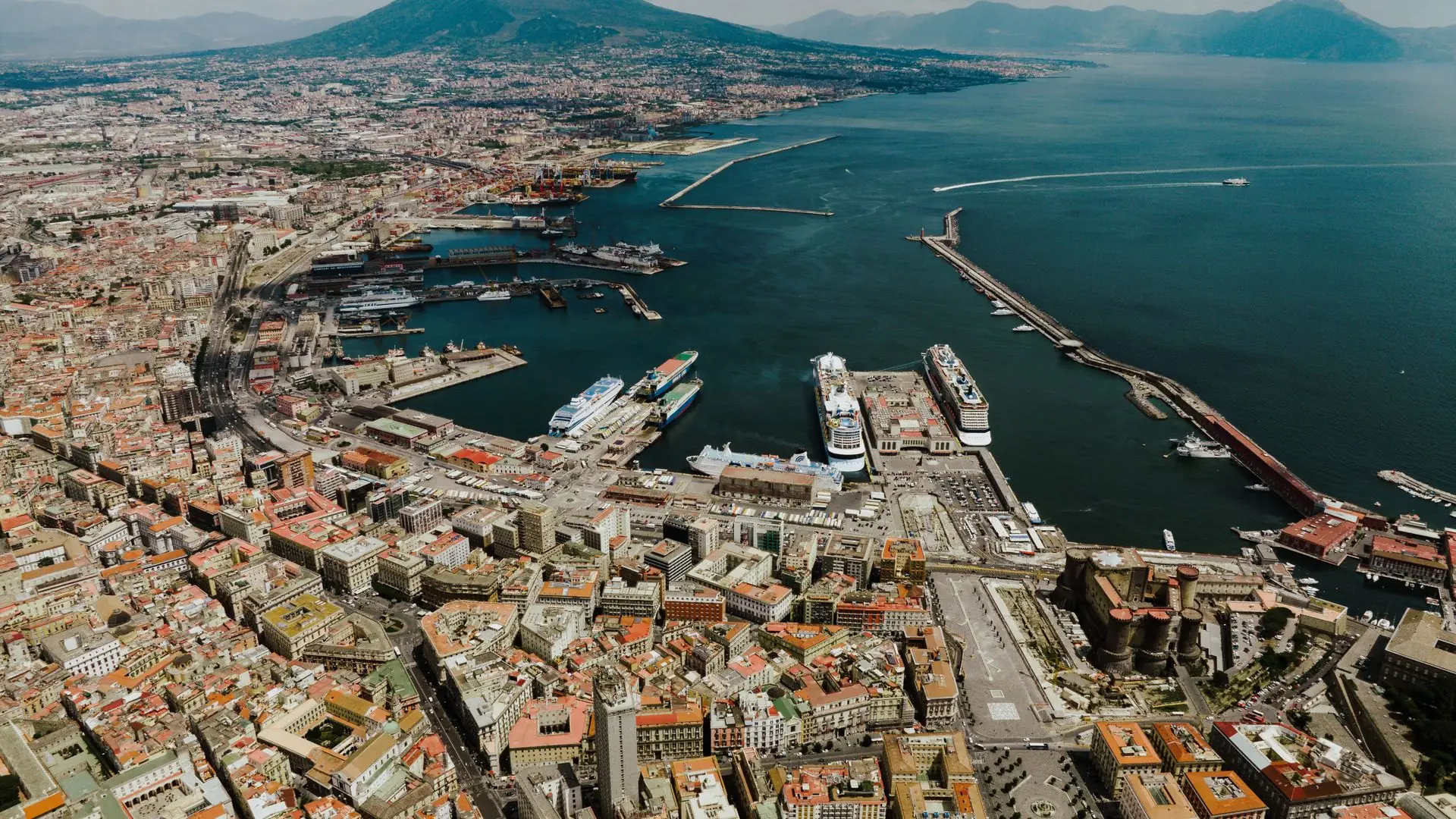
Spaccanapoli means, roughly, “Naples splitter.” It follows an ancient Greco-Roman street plan — a dead-straight line cutting through a dark, densely packed labyrinth of churches, palazzi and ground-floor apartments. The most telling symbol of the neighbourhood isn’t a monument; it’s ‘o panaro, the traditional woven basket on a long rope. You’ll still see locals lowering one from a high balcony to the street, sending down coins for the grocer or baker, who sends the bread back up. It’s a vertical village, where the street is a shared living room.
The truth about the pizza
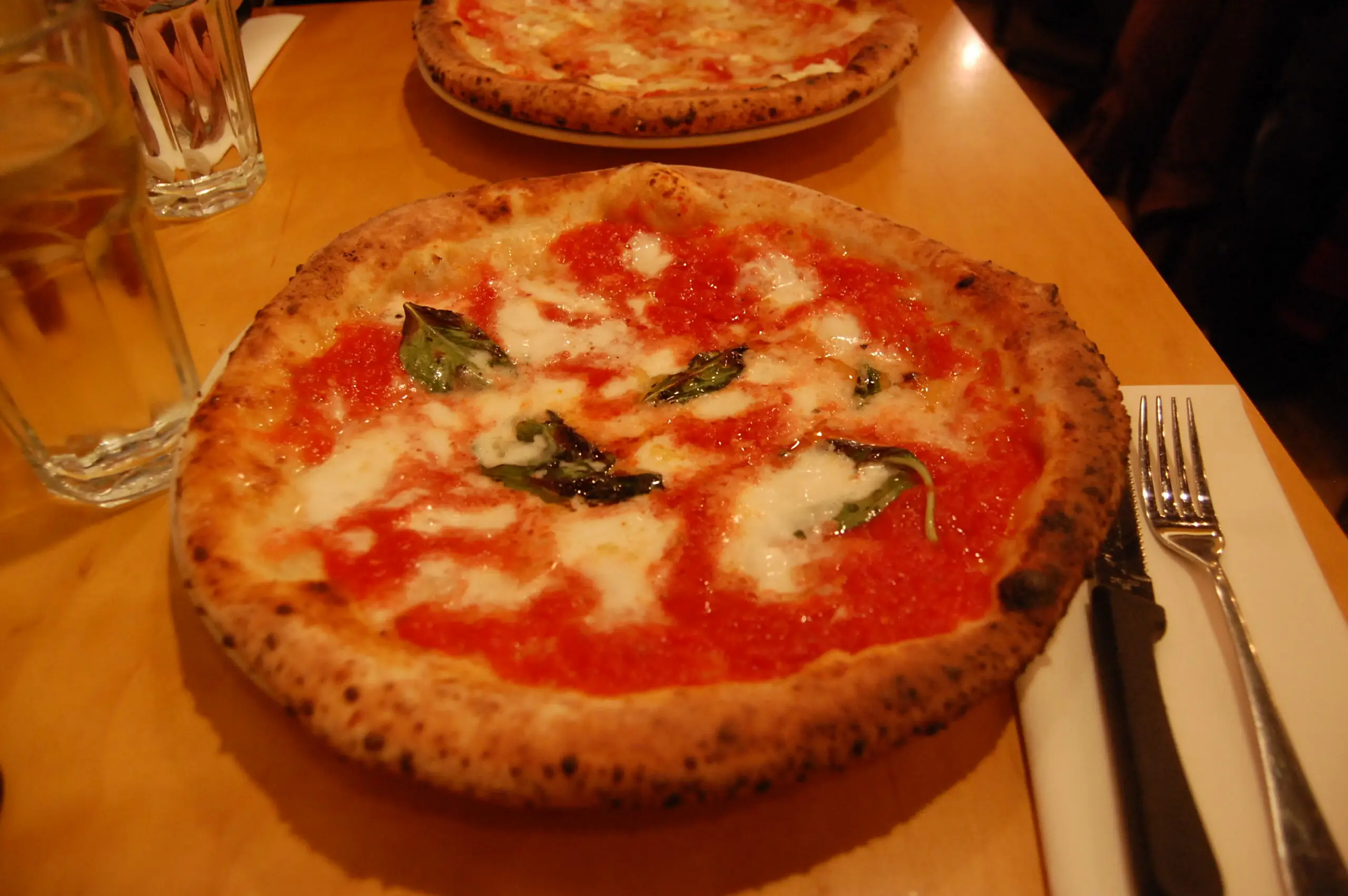
You can’t talk about Naples without talking about pizza — a point of fierce, defensive pride. The popular legend says the Margherita, topped in the red, white and green of the Italian flag, was created at Pizzeria Brandi in 1889 to honour Queen Margherita of Savoy. It’s a lovely story, though food historians dispute the neatness of the timeline. What isn’t disputed is the reality of a true Neapolitan pizza: a highly hydrated dough, slowly proofed, blistered in a ferociously hot wood-fired oven for little more than a minute. The result is a charred, soft, slightly soupy centre you have to fold to eat. Street food in its purest, simplest form.
The city beneath the city
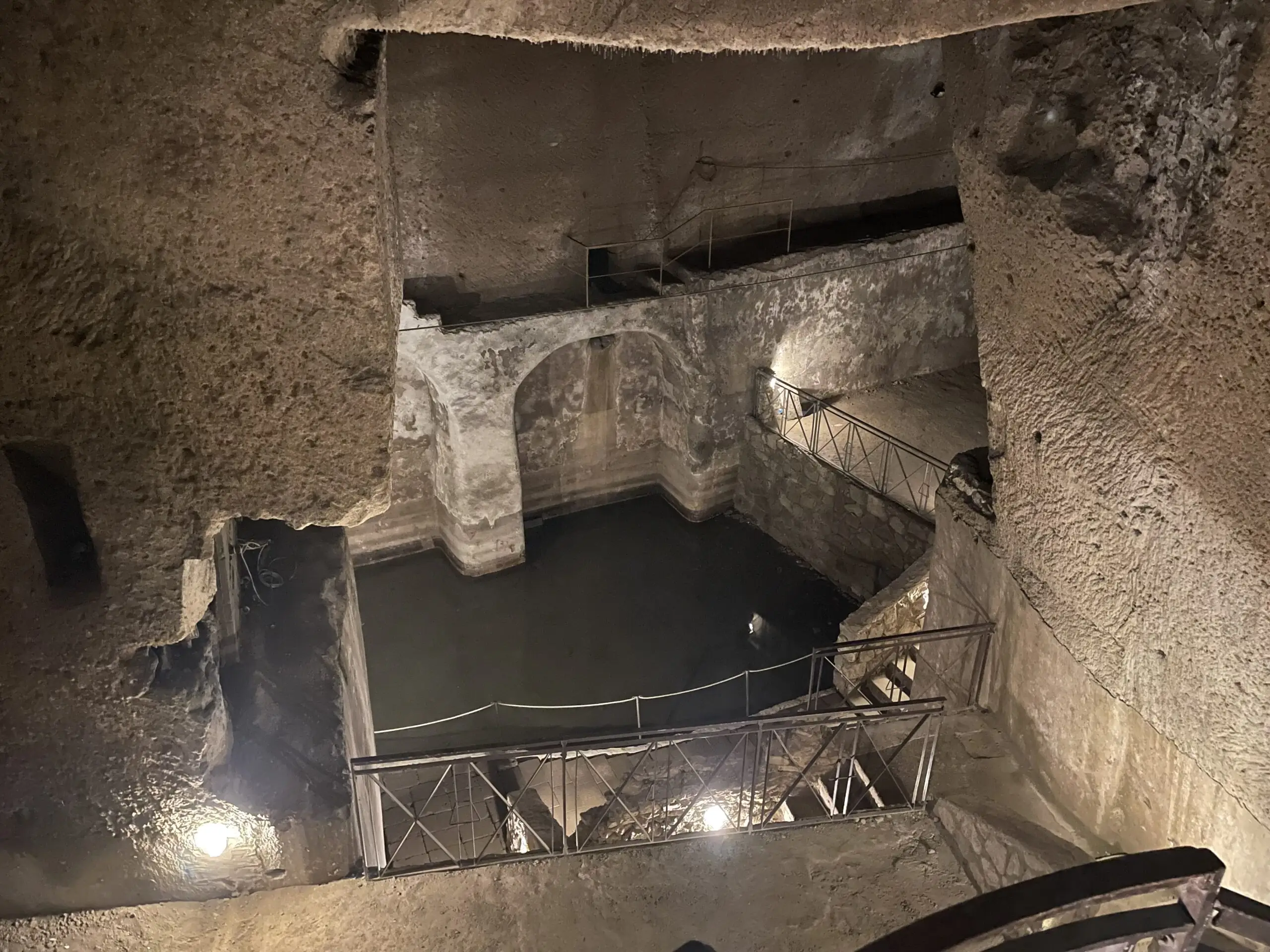
While the surface of Naples is frantically loud, there’s another layer that is utterly silent. Deep beneath the historic centre lies Napoli Sotterranea, a vast network of tunnels and caverns. The Greeks first dug them as tufa quarries to build the city above; the Romans repurposed them into an immense aqueduct; centuries later, during the heavy bombardments of the Second World War, those same echoing spaces became air-raid shelters for thousands of Neapolitans. Descending into the cool, damp tufa is a reminder of how deeply history is stacked here.
The Spanish Quarter and Diego
Climbing up from the main artery of Via Toledo is the Quartieri Spagnoli, the Spanish Quarter — a grid of impossibly steep, narrow lanes strung with cross-street washing and humming with a tight-knit community feel. It’s also the epicentre of the city’s devotion to Diego Maradona. The Argentine brought Napoli unprecedented glory in the 1980s, and his mural here is treated with the reverence usually kept for a patron saint. The quarter is vivid and intensely photogenic, but it’s also a living, working-class district — read the streets sensibly and respect that people live their lives here.
Coffee, cuoppo and the Veiled Christ
The day here runs on coffee — a thick, fiercely strong espresso that barely covers the bottom of a hot cup. It comes with a beautiful local custom: the caffè sospeso, the “suspended coffee.” You pay for two and drink one, leaving the second for a stranger who can’t afford it.
For food on the move there’s the sfogliatella, a miraculously flaky, shell-shaped pastry filled with sweetened ricotta, or the cuoppo, a paper cone overflowing with fried seafood or vegetables. And if you need a moment of quiet after the streets, find the Sansevero Chapel: the Veiled Christ at its centre, carved by Giuseppe Sanmartino, is so impossibly delicate that the marble seems to drape like wet silk. A genuine, stop-you-in-your-tracks masterpiece.
Navigating the reality
Naples has a rough reputation, and a sensible approach to safety is worth having. Petty theft and pickpocketing do happen, especially around the central station and on crowded buses, so keep your valuables secure. The traffic is famously chaotic; locals cross not by waiting for a gap but by stepping out with a steady, predictable stride and letting the scooters flow around them like water.
My sharpest memory of the city came late one evening near the port. A sudden, torrential downpour sent everyone scrambling under a café awning. Within seconds the mood flipped from annoyance to a makeshift party: the barista handed out thimbles of limoncello, a teenager put on music from a phone, and we all waited out the storm together. The chaos of Naples is real — but so is its immense, spontaneous warmth.
One practical note: Italy is in the Schengen Area, and the EU’s ETIAS authorisation is being phased in for visa-exempt visitors — so check the current entry requirements before you travel.
FAQ
Is Naples worth visiting?
Absolutely. It lacks the polished veneer of Florence or Rome, but it more than makes up for it with raw energy, extraordinary archaeology and some of the best food in the country.
Is Naples safe?
Yes, with common sense. Violent crime against tourists is rare, but be alert to pickpockets and mindful of the erratic traffic.
How many days do you need?
Three days covers the historic centre, the underground city and the museums. Add a day or two for Pompeii or the Amalfi Coast.
Where did pizza originate?
Flatbreads are ancient, but the modern pizza we know — topped with tomato and cheese — was perfected in the working-class neighbourhoods of Naples in the 18th and 19th centuries.
Images: This Photo was taken by Wolfgang Moroder. Feel free to use my photos, but please mention me as the author and send me a message. This image is not in the public domain. Please respect the copyright protection. It may only be used according to the rules mentioned here. This specifically excludes use in social media, if applicable terms of the licenses listed here not appropriate. Please do not upload an updated image here without consultation with the Author. The author would like to make corrections only at his own source. This ensures that the changes are preserved.Please if you think that any changes should be required, please inform the author.Otherwise you can upload a new image with a new name. Please use one of the templates derivative or extract. / CC BY-SA 3.0; Aaron Landry from Honolulu, HI, USA / CC BY 2.0; Photo2023 / CC BY 4.0. Source: Wikimedia Commons.
Read also
- Wonders of Norway: Visiting the Fjords
- Magnificent Austria: Journey from the Alps to the Vienna Opera
- A little about Budapest


