
La Grassa and the Food Myth
Bologna is framed by three historical nicknames: la Grassa (the fat), la Dotta (the learned), and la Rossa (the red). The food, la Grassa, is what draws most visitors, but half of what the world “knows” about it is simply wrong.
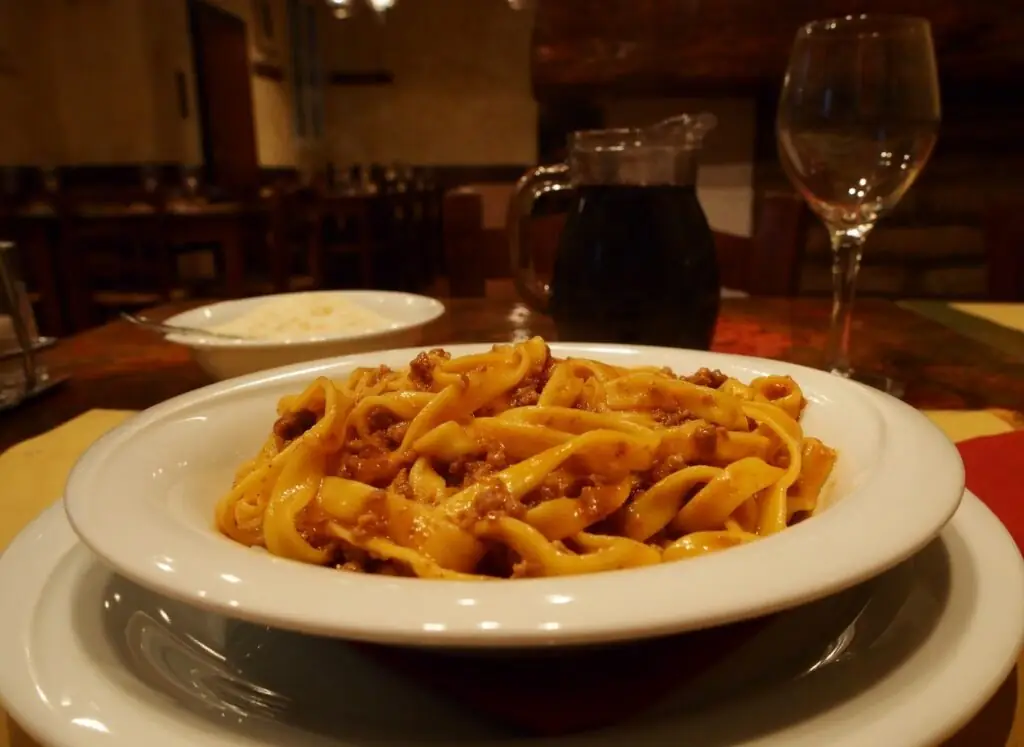
It is worth correcting the biggest myth plainly: “spaghetti bolognese” is not a Bologna dish. The city’s famous meat sauce, ragù alla bolognese, is traditionally served with wide, flat ribbons of egg pasta — tagliatelle — which hold the heavy sauce properly. Tortellini, likewise, are traditionally eaten in brodo (in a clear broth), not tossed in thick cream. And the local cured meat, mortadella, is a delicate, complex thing that bears no relation to the “baloney” found abroad. Understanding these basic rules is the most useful thing you can do before you sit down to eat here.
La Dotta: The Student City
The second nickname, la Dotta, refers to the University of Bologna. Founded in 1088, it is generally reckoned to be the oldest university in continuous operation in the Western world. What matters today is not just the history, but the fact that Bologna remains a fiercely active student city. It is not a quiet heritage diorama. The large student population shapes the daily rhythm, filling the independent bookshops, keeping the bars loud and full late into the night, and stopping the centre from feeling like a museum.
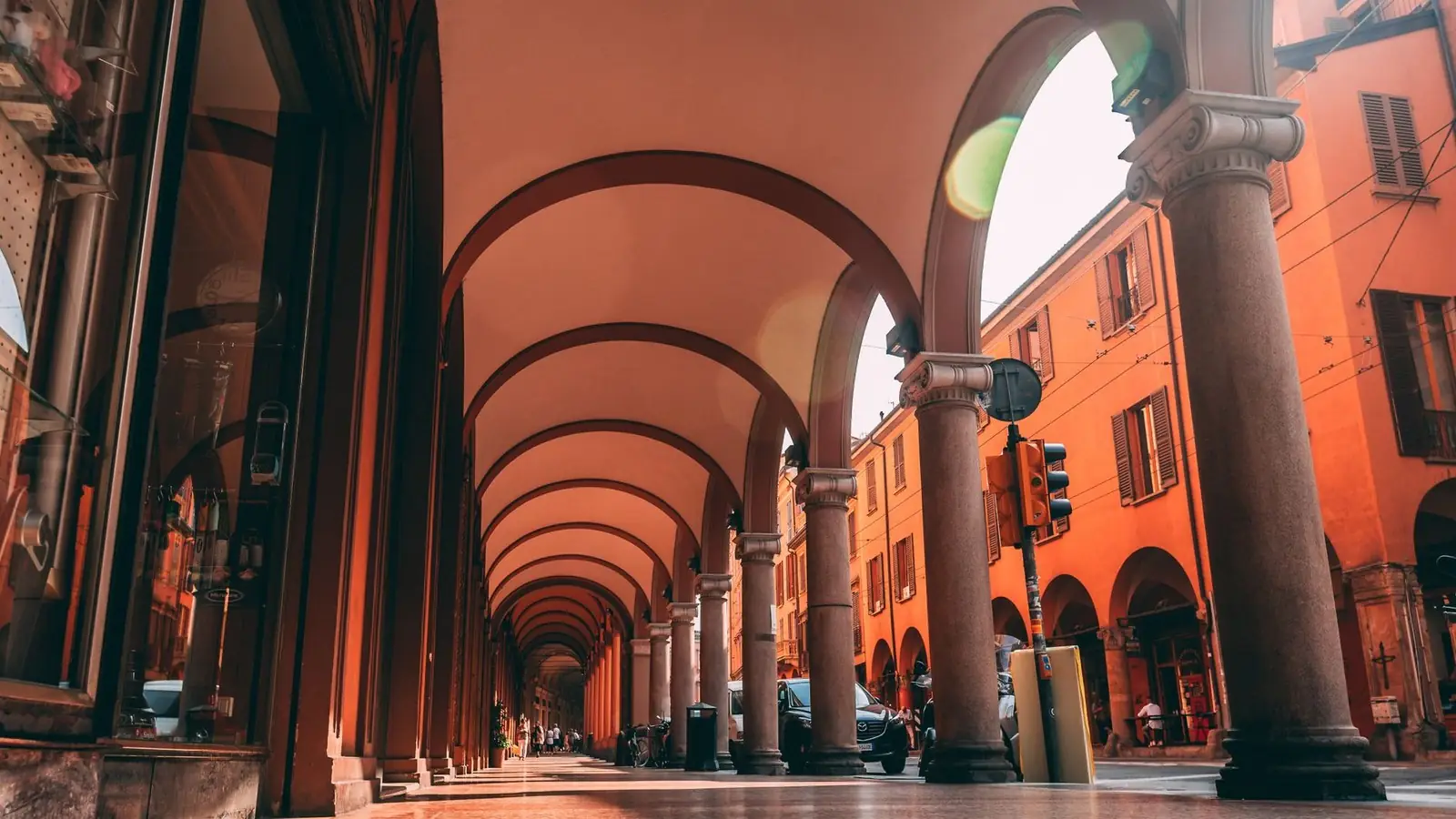
The Porticoes
To understand how the city moves, you have to look at the porticoes. Bologna has roughly forty kilometres of covered walkways stretching across its centre, which earned a UNESCO World Heritage listing in 2021. They are not merely architectural decoration; they are practical infrastructure, letting residents walk across the city shielded from the intense summer sun or the heavy winter rain. If you want a real walk, follow the portico that climbs up to the Sanctuary of San Luca on the hill above the city. Running for nearly four kilometres, it is widely considered one of the longest continuous covered walkways in the world.
La Rossa: Roofs and Politics
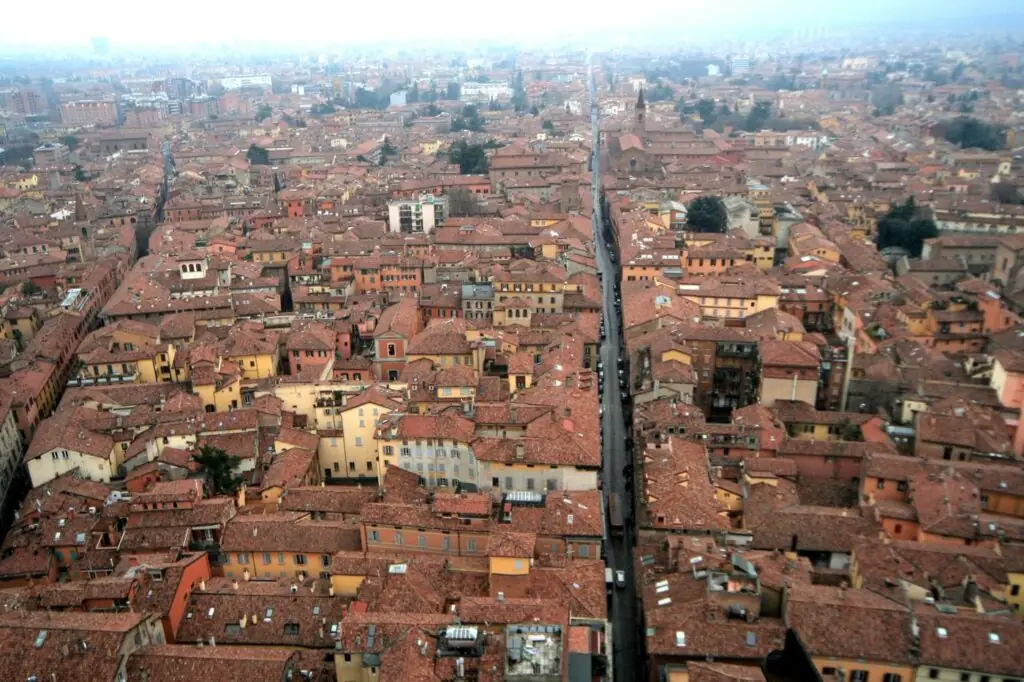
La Rossa refers both to the terracotta skyline and the city’s politics. Bologna has a long, entrenched post-war history as a stronghold of the Italian left. That political identity is woven into the fabric of the city, showing up in the cooperative nature of some local businesses and the frequent, vocal student demonstrations that gather in the main squares.
The Squares and the Towers
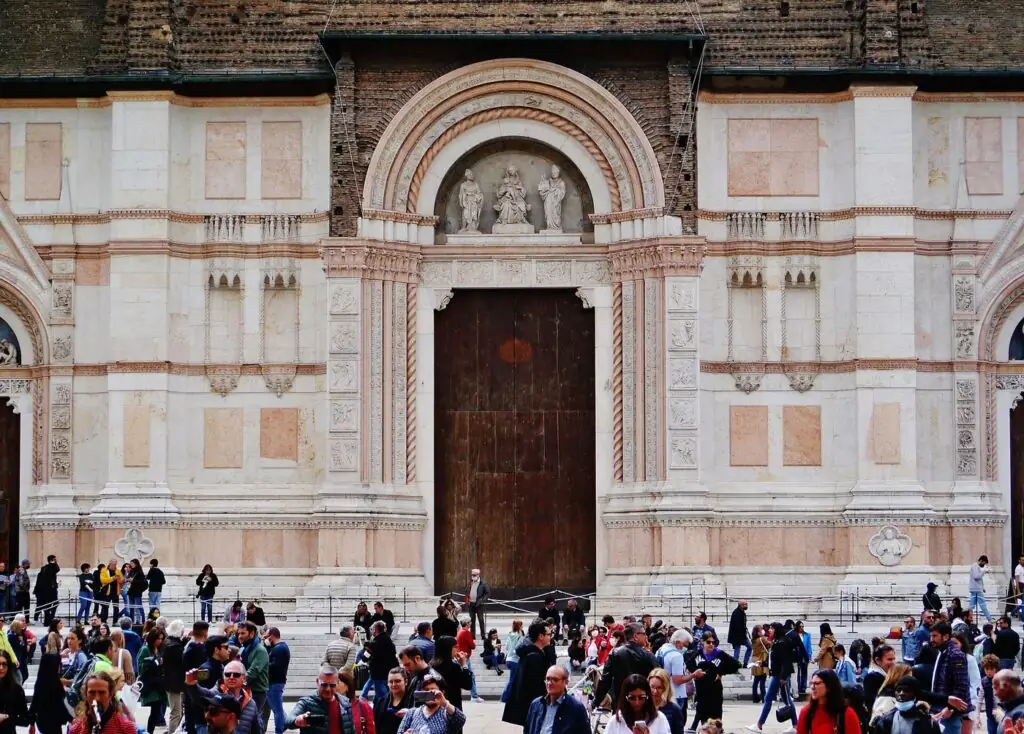
At the very centre of the city sits Piazza Maggiore, dominated by the Fountain of Neptune and the massive Basilica di San Petronio, which stays visually striking for its abrupt, half-finished brick and marble façade — a project halted centuries ago when the funding was diverted.
Just a short walk away are the city’s medieval icons, the Two Towers (Asinelli and Garisenda). Check their current status before you plan a visit, though: the shorter, dramatically leaning Garisenda has been fenced off over serious stability concerns, and the taller Asinelli — normally the one you climb — has been closed as a precaution. Both have been shut since 2023, with no confirmed reopening date, so don’t build a trip around the view from the top.
The reality of Bologna is best found away from the main squares. My clearest memory is walking down a narrow side street at dusk, catching the heavy, rich scent of meat roasting from the kitchen exhaust of a quiet, working trattoria, while a group of students spilled out from a nearby portico, deep in a loud, animated argument.
US, UK, and EU visitors currently get visa-free short stays in the Schengen area, though the EU’s ETIAS pre-authorisation system is being phased in. Entry rules change, so check current requirements before you book.
FAQ
How do I get from Bologna airport into the city?
The Marconi Express monorail runs directly from the airport to Bologna Centrale railway station. The journey covers the roughly six-kilometre distance in about seven minutes.
What should I actually eat in Bologna?
Focus on the regional traditions: tagliatelle al ragù, tortellini in brodo, and platters of high-quality local cured meats, particularly mortadella and prosciutto crudo.
Are the Two Towers open to climb?
Not at the moment. Both towers have been closed since 2023: the leaning Garisenda is under emergency stabilisation work, and the taller Asinelli — normally the one open to climb — is shut as a precaution, with no confirmed reopening date. Check the local tourist board’s latest updates before your trip.
When is the best time to visit Bologna?
Spring (April to May) and autumn (September to October) offer the most comfortable weather. The summer months can be oppressively hot, and the city empties out in August when locals leave for the coast.


