
The Birthplace of Jazz
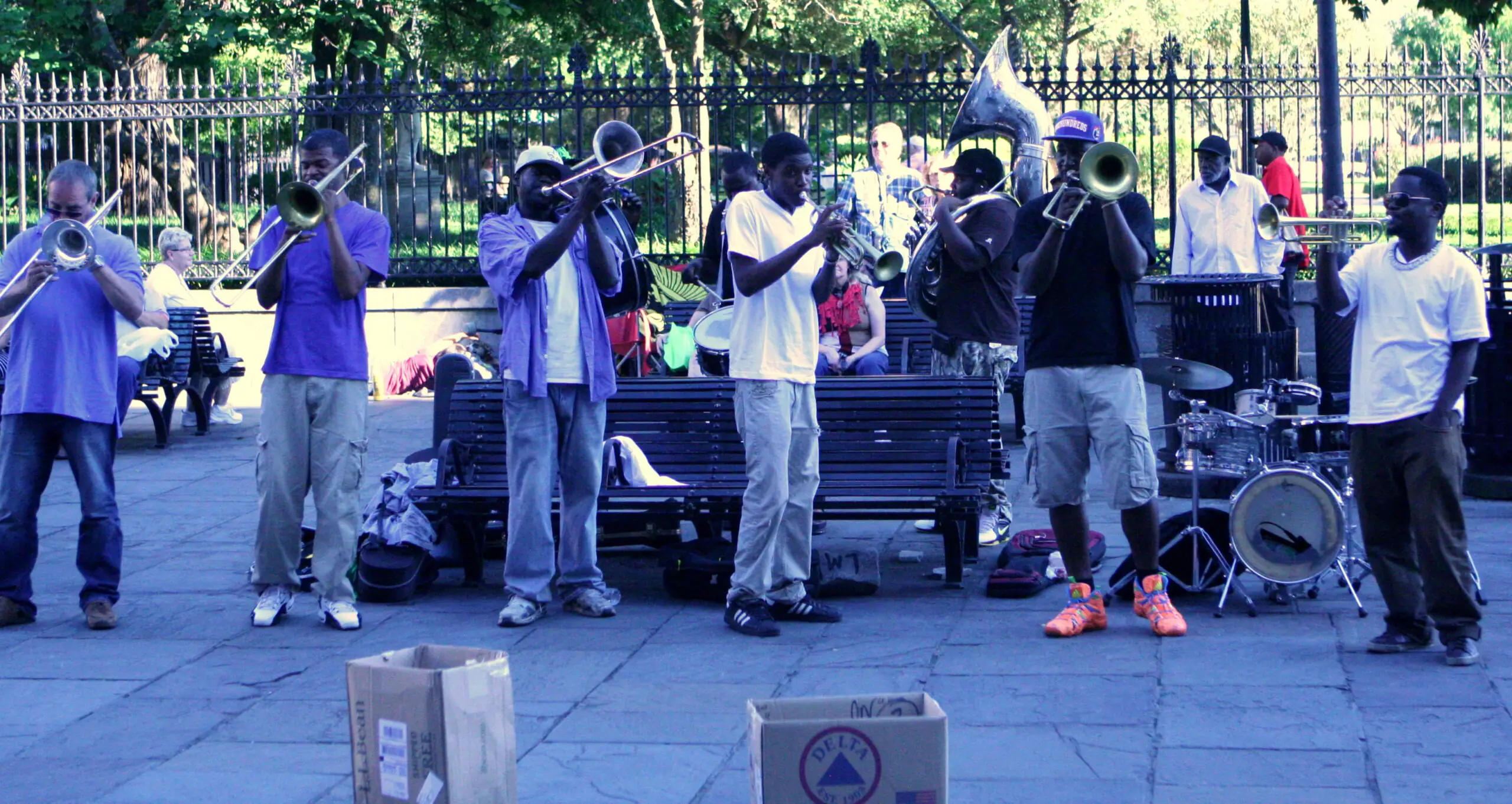
There is a strong, accepted historical consensus that New Orleans is the birthplace of jazz. It is a music that grew organically from a profound mix of roots: the African rhythms kept alive in Congo Square, the military brass bands, and the deep, driving emotion of the blues. The legacy of local giant Louis Armstrong is felt everywhere, but jazz here is not a museum piece.
To find the living scene today, skip Bourbon Street and head to Frenchmen Street, or seek out the smaller, intensely local clubs spread across the city. Here, the music is played with a raw, brilliant energy by musicians who treat the tradition as a living language rather than a historical re-enactment.
Creole, Cajun, and the Wrought-Iron Myth
Understanding the city requires unpicking its labels. “Creole” and “Cajun” are often conflated by visitors, but they describe distinct cultures. Broadly speaking, Creole refers to the city’s urban culture, born of a complex mix of European, African, and Caribbean heritage. Cajun culture has rural roots, tracing back to the Acadian descendants who settled in the surrounding swamplands.
This distinction shows up on the plate. The city’s extraordinary cuisine—gumbo, jambalaya, and overstuffed po’boy sandwiches—reflects its layered history. You will inevitably want to try the famous powdered beignets, though be prepared for the reality of the well-known cafés: they involve long queues, tour buses, and a heavy coating of icing sugar over everything.
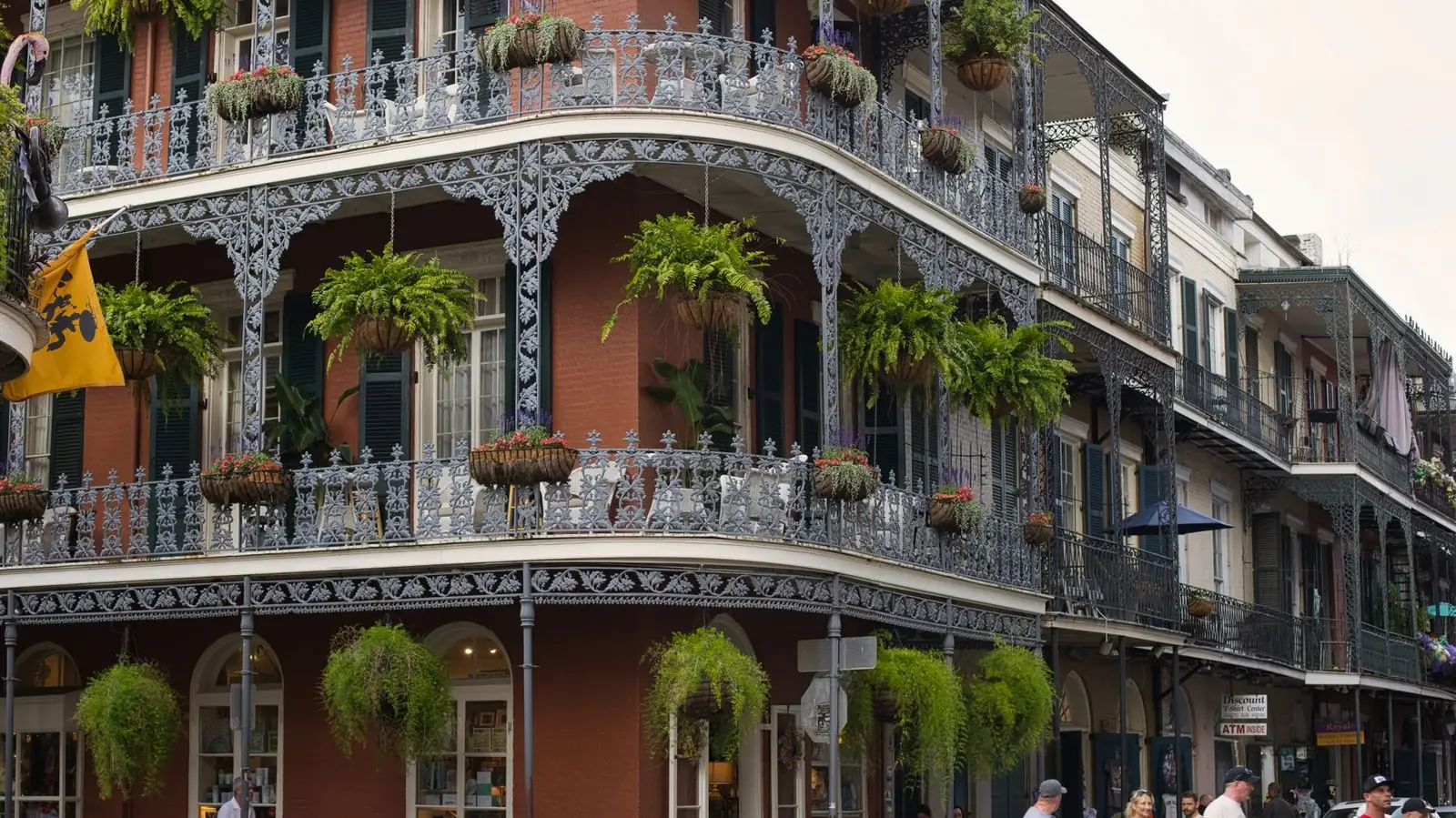
The architecture, too, defies simple assumptions. The famous Vieux Carré is known as the French Quarter, but after devastating fires in the late 18th century, it was largely rebuilt under Spanish rule. Those iconic, trailing wrought-iron balconies are actually a Spanish-era legacy. For a sense of the living, residential city, walk just beyond the Quarter into the historic neighbourhoods of Tremé and the Marigny.
Voodoo, Legends, and the Cities of the Dead
New Orleans is heavily mythologised, particularly regarding “voodoo.” The kitsch sold in many tourist shops is pure marketing. Genuine Louisiana Vodou is a deeply rooted African diasporic religion that deserves respect, not caricature. Similarly, the famous 19th-century practitioner Marie Laveau was a real, influential historical figure, though her life is now so heavily wrapped in local folklore and legend that it is difficult to separate the woman from the myth.
This entanglement of history and practicality is visible in the famous “cities of the dead.” The city’s elaborate, above-ground cemeteries exist because the high water table made traditional burials impossible. Note that for preservation and security, some of the most famous sites—such as St. Louis Cemetery No. 1—are now accessible only via official guided tours.
Resilience and Celebration
New Orleans is defined by its ability to carry its history—both joyful and painful. The scars of Hurricane Katrina are part of the city’s fabric, carried with a quiet, enduring resilience rather than ignored or dwelled upon. It is a city that understands survival, which is perhaps why it celebrates so fiercely. Mardi Gras is far more than the plastic beads of the tourist centre; it is deeply rooted in local communities, driven by the intricate traditions of the neighbourhood krewes and the spectacular Black Masking culture.
My own sharpest memory of the city came on a quiet Tuesday afternoon. A sudden, torrential rainstorm flooded the street outside a small coffee shop in the Lower Garden District. Rather than complaining, the barista simply propped the door open, turned up a crackling rhythm-and-blues record, and handed out free chicory coffee to the soaked pedestrians sheltering on the porch. It was a small moment, but it perfectly captured a city that always finds a way to let the music play over the rising water.
For international visitors, entering the United States usually requires an approved ESTA under the Visa Waiver Program for most Western passports. However, border rules can shift, so always check current requirements carefully before you travel.
FAQ
When is the best time to visit New Orleans?
Spring (February to May) offers the best weather and the height of the festival season, including Mardi Gras and Jazz Fest. The summer months are brutally hot, highly humid, and carry the risk of hurricanes.
Where can I hear real jazz in New Orleans?
Skip the tourist-heavy venues on Bourbon Street and head to Frenchmen Street in the Marigny, or look for historic neighbourhood clubs in Tremé for authentic, live brass and jazz.
What is the difference between Creole and Cajun food?
Gumbo and jambalaya exist in both traditions, but Creole food is the complex, refined, and often tomato-based cuisine of the city, while Cajun food is the robust, country-style cooking of the rural Acadian swamplands.
Is it safe to visit the cemeteries?
Yes, but many of the historic above-ground cemeteries, including St. Louis No. 1, now require you to be on an official, licensed guided tour to enter. It is always best to visit any cemetery during daylight hours.
Images: Infrogmation of New Orleans / CC BY-SA 4.0; robbiesaurus / CC BY-SA 2.0. Source: Wikimedia Commons.
Read also
- Discover Dallas: A Vibrant City of History, Culture, and Adventure
- Columbus: Discover Ohio’s Dynamic Capital
- Cheap Flights to Canada: Best Booking Window and Route Strategy


