

No other European capital displays its wounds this deliberately. In Berlin, memory does not live exclusively behind museum glass; it is kept firmly underfoot, a constant, daily civic habit.
The Two Cities in One Body
For a generation (1961–1989), the Wall physically split the city. Even today, the seam where East and West met remains highly legible in the architecture, the different designs of the streetlights, and the tram networks that abruptly stop exactly where the East ended. You can stand at the Brandenburg Gate—once stranded completely in the barren, fortified death strip—and see how the geography of a divided city has inverted itself to become the modern tourist centre of gravity.
Memory as Civic Practice
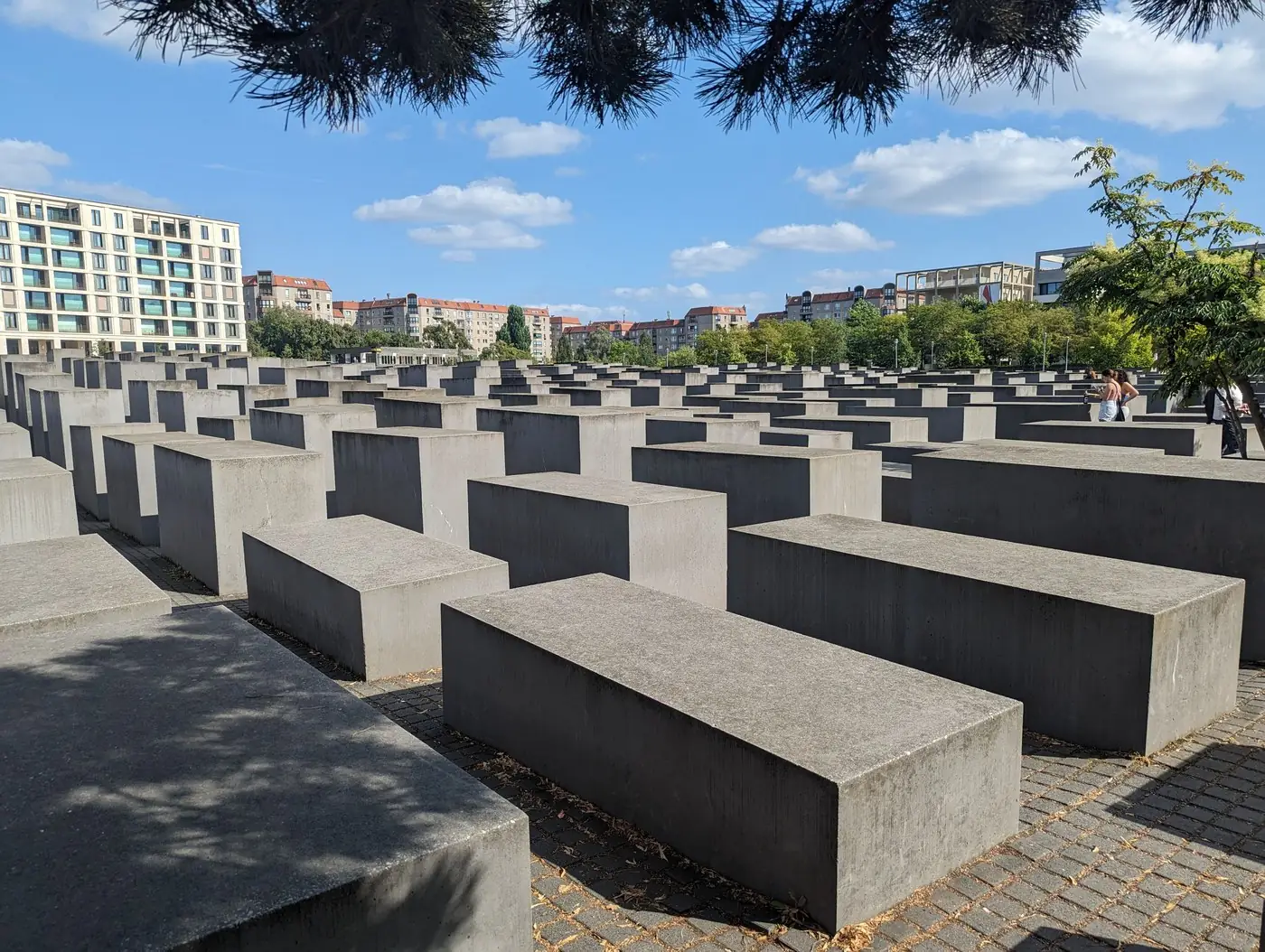
Just steps away from the Brandenburg Gate sits the Memorial to the Murdered Jews of Europe. It is an undulating, disorientating field of concrete stelae that you walk down into, where the noise of the city abruptly vanishes. It is a profound, solemn space, demanding respectful conduct—it is a memorial to genocide, not a backdrop for a photo set.
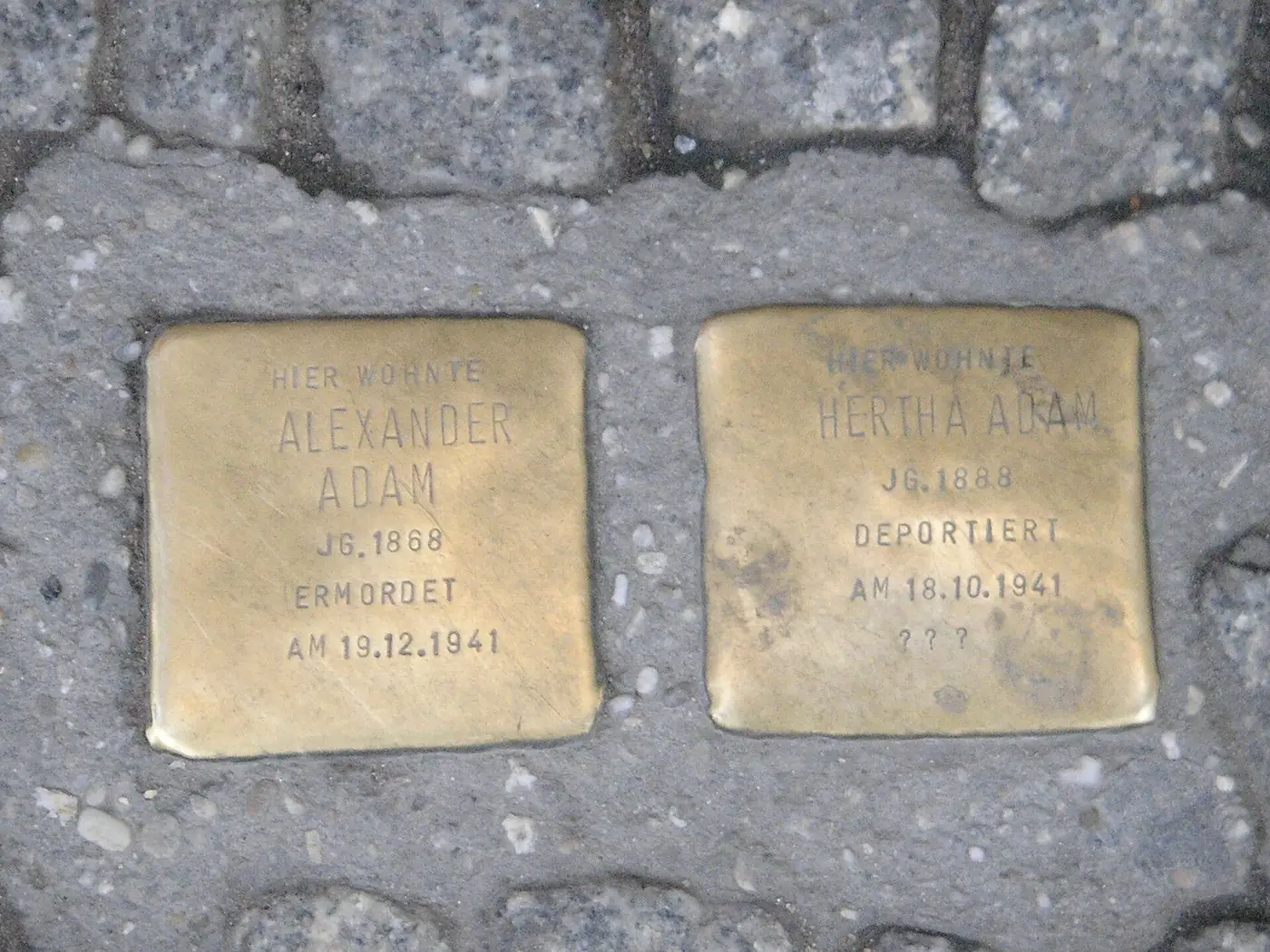
The Stolpersteine project serves as its domestic counterpoint. Rather than a central monument, there are around a hundred thousand of these individual brass stones distributed across Europe, forcing the scale of the history into the quiet, everyday doorways of the city.
The Reality of the Museum Island
Berlin holds immense cultural wealth on Museumsinsel (Museum Island), a complex of five monumental institutions listed by UNESCO in 1999. However, any visit requires clear expectation management: the Pergamon Museum’s main building—home to the famous altar hall—is currently closed for long-term renovation. Do not plan a day specifically around seeing it. (A separate exhibition opposite the island, built around a 360-degree panorama, displays Pergamon originals in the meantime.) The rest of the island, including the Neues Museum (housing the bust of Nefertiti) and the Alte Nationalgalerie, remains very much open; simply check exactly what is accessible before you go.
The Wall’s Afterlife
The physical remnants of the Wall have taken on their own distinct afterlife. The East Side Gallery is the longest surviving stretch—roughly 1.3 kilometres running along the Spree river—painted by international artists in 1990 and preserved as an open-air gallery.
The most striking inversion of the border geography happens at Mauerpark on a Sunday. Once a stretch of the heavily fortified death strip, it now hosts a sprawling flea market and massive outdoor karaoke sessions, turning the former militarized zone into the city’s most cheerful, chaotic lawn.
The Living City
Modern Berlin runs on its own specific institutions. The Späti (late-night corner shop) is the social anchor of any neighbourhood. The street food is defined by currywurst and the döner kebab (the latter popularised by Turkish guest workers in West Berlin in the 1970s, though the exact origin remains heavily contested).
The famous club culture was officially recognised as cultural heritage in Germany, and it operates by its own strict logic. The notorious door policies—where rejection is common and seemingly arbitrary—are part of the ecosystem designed to protect the vibe inside, not a personal verdict on your worth. Take a refusal gracefully and move on.
Germany is a Schengen member, and many visitors (including US, UK, and Canadian citizens) currently enter visa-free for short tourist stays. A new electronic pre-travel authorization (ETIAS) is scheduled to begin rolling out for visa-exempt visitors in late 2026, so always check current requirements before you book.
To fully understand how Berlin treats its past, end your day at Tempelhofer Feld. It is a massive pre-war airport that closed to flights in 2008. Instead of selling it to developers, the city turned it into a vast public park. At dusk, you can watch locals kite-surfing down the centreline of the old runway and grilling food on the concrete aprons—the perfect image of a city that keeps its history in plain sight, and lets people picnic right on top of it.

FAQ
Is the Pergamon Museum open?
The main building of the Pergamon Museum is closed for long-term renovation. However, the rest of Museum Island, including the Neues Museum and the Alte Nationalgalerie, is open. Always check current access before planning your visit.
Where can I still see the Berlin Wall?
The longest stretch is the East Side Gallery along the river. The most historically contextualized section is the Berlin Wall Memorial on Bernauer Straße. You will also see the double line of cobblestones marking the Wall’s former path throughout the city centre.
How many days do I need in Berlin?
More than you think. Berlin is not a single dense centre; it is polycentric, sprawling, and huge. Four days is a sensible minimum just to grasp the scale of the different neighbourhoods and the major historical sites.
When is the best time to visit?
May through September is ideal, as Berlin transforms into an entirely outdoor city with parks, lakes, and open-air cafés. Winter is deeply cold and dark, but the museums and the legendary club scene operate heavily regardless of the weather.

