
The Lanna Kingdom
In 1296, King Mangrai founded Chiang Mai (literally, “new city”) as the capital of Lan Na—the “kingdom of a million rice fields.” This was a distinct sovereign state with its own powerful dynasty, its own alphabet, and a specific, heavily ornamented Buddhist tradition.
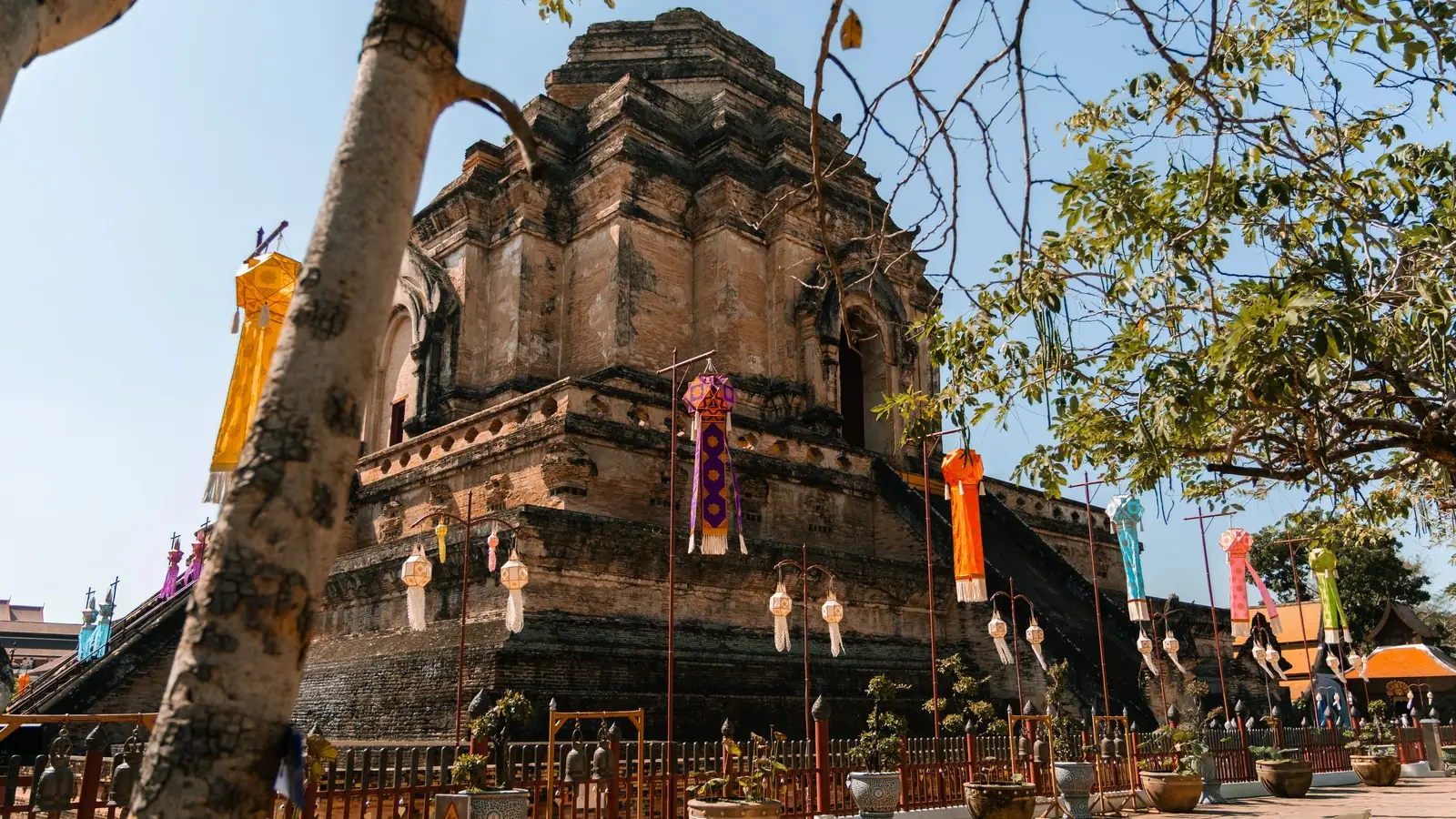
You can read that separate history in the city’s greatest temples. Wat Phra Singh anchors the western edge of the old city with classic Lanna sweeping roofs, while the centre is dominated by Wat Chedi Luang. The massive brick stupa of Chedi Luang once housed the famous Emerald Buddha before it lost its top in the sixteenth century—often attributed to a severe earthquake, though the exact cause remains debated.
The Burmese and Siamese Layers
Lan Na did not last forever. The kingdom fell under Burmese rule for roughly two centuries between the sixteenth and eighteenth centuries, before eventually being pulled into the Siamese orbit. Even then, full administrative integration into Siam (modern Thailand) only occurred in the late nineteenth and early twentieth centuries. The distinction matters: the intricate temples, the dialect (kham mueang), and the rich, complex food are fundamentally Lanna, not Bangkok. Chiang Mai, often nicknamed the “Rose of the North,” is not simply a smaller, quieter version of the Thai capital.
That distinct religious history extends up the mountain to Wat Phra That Doi Suthep. According to legend, the site for the golden chedi was chosen when a white elephant carrying a sacred relic climbed the mountain, trumpeted three times, and died. Today, the winding road and the steep naga (serpent) staircase lead up to a terrace offering sweeping views over the city below.

Three Honest Truths
Modern Chiang Mai requires total honesty about three major issues that the brochures usually skip.
The Smoke: From roughly February to April, intense agricultural burning across the north of Thailand and neighbouring countries gives Chiang Mai some of the worst air quality in the world. The smoke reaches hazardous levels, viewpoints vanish into thick smog, and flights are occasionally grounded. Stated plainly: if you have the choice, do not visit during the burning season. November to January provides the cool, clear window.
The Elephants: Elephant riding is now widely acknowledged as unethical, but the word “sanctuary” is entirely unregulated, allowing many camps to simply rebrand without changing their practices. The test for an ethical experience is strict: there should be no riding, no unnatural shows or tricks, tightly limited group sizes, and a focus on observation rather than forced interaction (even bathing with elephants is now heavily debated by conservationists). Genuinely ethical, observation-only camps do exist and absolutely deserve your support.

The Boom: The old city and the Nimman district have become a massive global hub for remote workers. Co-working spaces and condo towers proliferate, driving local prices out of step with local wages, while the famous Sunday Walking Street routinely becomes a crushing bottleneck of tourists. The reader is part of this boom, but the impact can be mitigated by spreading out: visit the weekday markets, see the temples at dawn, and explore the outer artisan villages.
Many nationalities currently enter Thailand visa-free for short tourist stays, though rules and durations have shifted recently. Entry requirements change frequently, so always check the current allowances before you book.
To understand what the city really is, sit down for a bowl of khao soi—a rich coconut-curry noodle soup that defines Lanna cooking—and walk back to the moat at dusk. The identity of the separate kingdom is still entirely legible, provided you step one block off the modern tourist grid.

FAQ
How do I get to Chiang Mai?
You can fly directly into Chiang Mai International Airport (CNX), which is about four kilometres from the old city. The classic, highly popular alternative is to take the overnight sleeper train from Bangkok; tickets sell out quickly, so book well in advance.
When is the best time to visit Chiang Mai?
The cool season from November to January is by far the best time to visit, with clear skies and comfortable temperatures. November also brings the spectacular Yi Peng and Loy Krathong lantern festivals. Avoid the burning season (roughly February to April) due to hazardous air pollution.
How do I choose an ethical elephant experience?
Look for strict observation-based models. A genuinely ethical sanctuary will prohibit riding, forbid unnatural performances or tricks, limit the number of daily visitors, and allow the elephants to forage and bathe naturally without forced human interaction.
What should I see in Chiang Mai?
Inside the moat, visit Wat Phra Singh and the ruined stupa of Wat Chedi Luang. Take a taxi up the mountain to Doi Suthep for the temple and the view. Explore the night markets, keeping in mind that the famous Sunday Walking Street gets intensely crowded.


