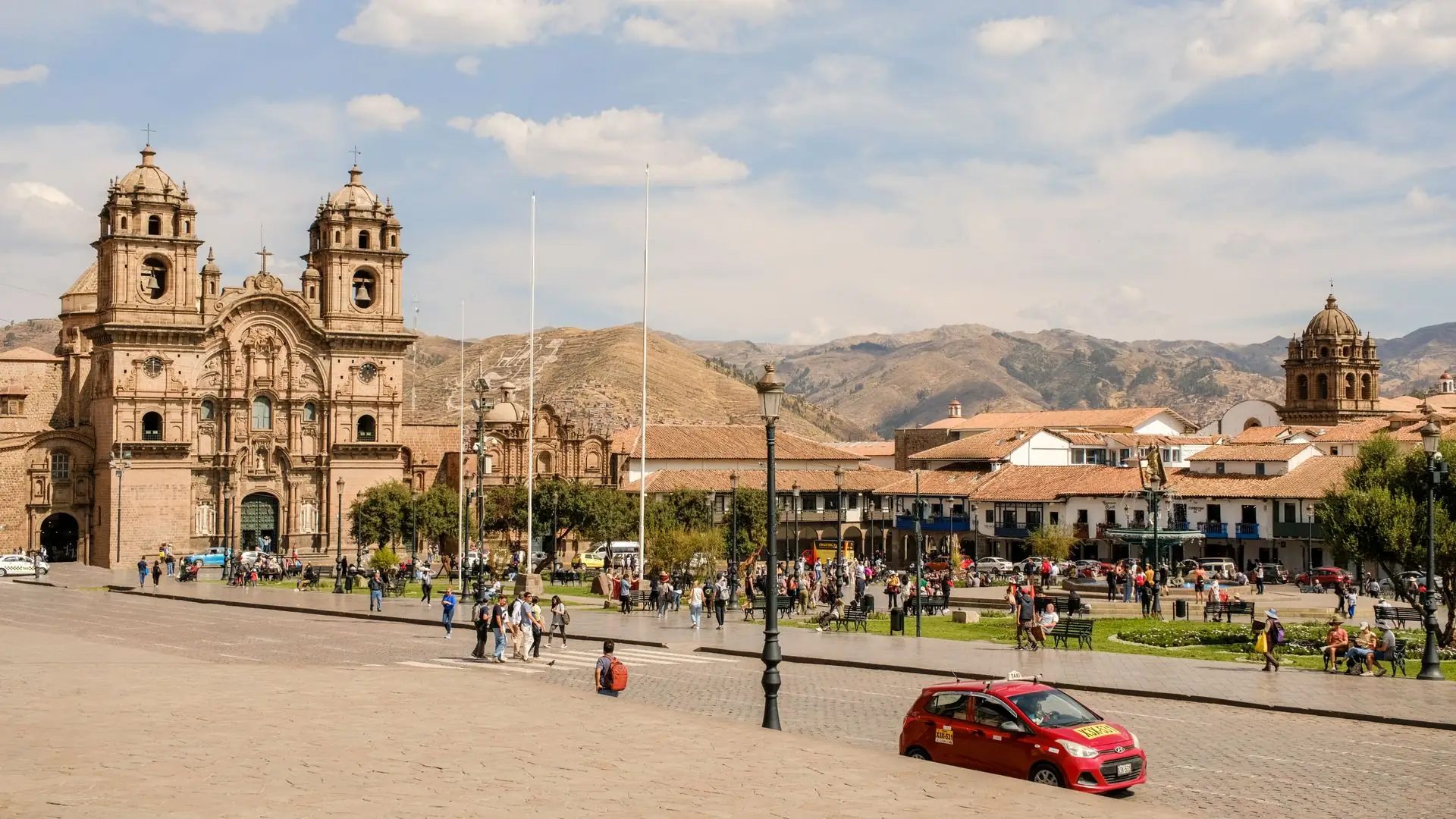


The Temple Beneath the Church
The clearest example is Qorikancha. Once the Inca Temple of the Sun, its walls were stripped of their gold by the conquerors, who then built the Church and Convent of Santo Domingo on top of it. It remains open to visit today, and stands as the thesis of the city in one building: colonial dominance literally resting on indigenous engineering.

The Walls and the Ticket System
The famous polygonal masonry is visible simply by walking. The twelve-angled stone sits in the open on Calle Hatunrumiyoc, surrounded by a permanent, predictable tout economy. Above the city sits the massive zigzagging fortress of Sacsayhuamán, which is accessible through the city’s combined ticket system.
That system is the boleto turístico, which covers 16 major archaeological sites and museums. It is crucial to know what it does not cover: Qorikancha and the cathedral both require separate admission, and it absolutely does not include Machu Picchu. The revenue maintains the sites, and the system’s quirks are simply a reality worth understanding before you queue.
The Machu Picchu Pressure
Cusco is the staging town for Machu Picchu, and by day the plaza is heavily shaped by agency touts. The current entry system for the citadel is strict and continually evolving: tickets are timed with daily caps, and you must commit to one of three fixed circuits (such as the Panoramic or the Classic route). Advance booking on the government portal is critical in high season. But the pressure is temporary—by evening, the day-trippers leave, and the town empties.
The Altitude Reality
Cusco sits at roughly 3,400 metres. Acclimatisation is a physical reality, not a suggestion. Your first day should be slow, with plenty of hydration, light meals, and perhaps the local custom of coca tea. Because of the elevation, many travellers deliberately choose to sleep lower in the Sacred Valley for their first few nights before moving up to the city.

The Living City
Walk uphill to San Blas, the artisan quarter defined by workshops, steep cobbled lanes, and excellent balcony views. Down below, the San Pedro market operates as a real-economy counterweight to the plaza, anchoring the city in daily Andean life rather than just tourism.
The Honest Calendar
The dry season runs from May to September, bringing the peak crowds and distinctly cold nights. The wet season, from November to March, is much greener and quieter, though marked by heavy afternoon downpours. Note carefully that the Inca Trail closes entirely for maintenance every February, while the major Inti Raymi festival on June 24 fills the city completely.
The Practical Frame
Flights arrive at Alejandro Velasco Astete Airport (CUZ), with almost all connections routing through Lima. The long-delayed Chinchero airport project in the Sacred Valley remains under construction, with completion now officially targeted for late 2027. For connections, read our Lima flights guide.
Entry is straightforward: US and UK passports receive visa-free entry for tourism, typically granting an authorised stay of up to 90 days. Always check current requirements before you book.
Spend a night on a San Blas balcony. Look at the plaza lit below, the cathedral floating on its invisible Inca platform. Under every lamplit colonial wall is the older wall holding it up—the conquered city still doing all the load-bearing work.
FAQ
Is Cusco worth visiting beyond Machu Picchu?
Yes. The city’s architecture—Spanish colonial structures built directly onto mortarless Inca masonry—is historically fascinating. It is a complex, deeply layered city that repays exploration long after you have seen the famous citadel.
How high is Cusco and is altitude sickness a problem?
Cusco sits at approximately 3,400 metres (11,150 feet). Altitude sickness is a common, real risk. You must take your first few days slowly, stay hydrated, and consider acclimatising in the lower-elevation Sacred Valley first.
What is the boleto turístico?
It is a combined tourist ticket required to enter 16 major archaeological sites and museums around Cusco and the Sacred Valley. It does not cover Machu Picchu, and often excludes specific sites like Qorikancha and the main cathedral.
When is the best time to visit Cusco?
The dry season from May to September offers the best trekking conditions, but with the largest crowds and freezing nights. The wet season (November–March) is quieter and greener, but brings afternoon rain.


