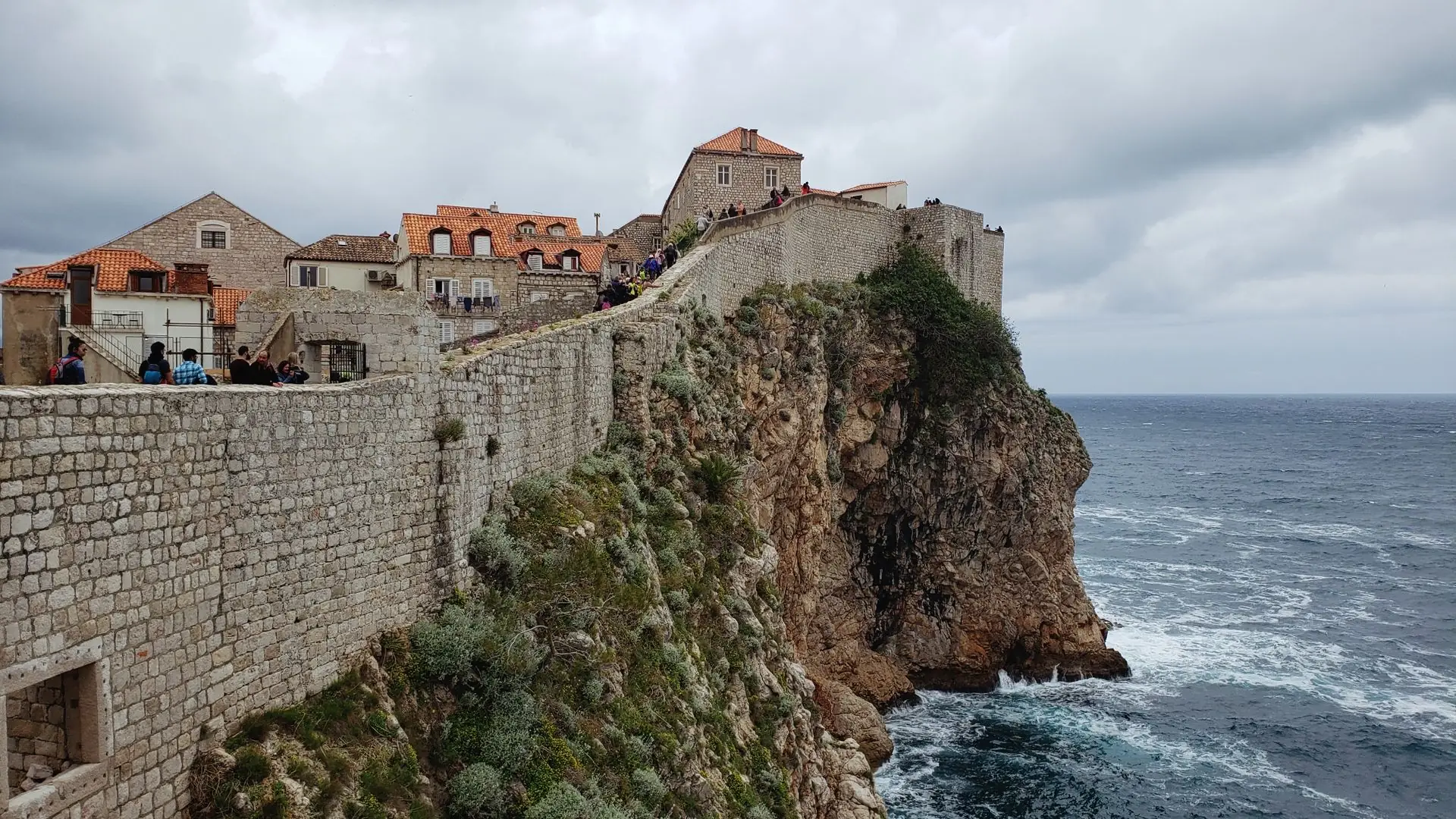

What strikes you, before any of the history does, is how self-assured the place is. That is not an accident of architecture. This city spent four and a half centuries as its own country, and it stayed that way by being cleverer than everyone around it.
The small republic that out-thought the big ones
Dubrovnik spent most of its history under its own name, Ragusa, as an independent merchant republic. It became properly self-governing in 1358, when the Treaty of Zadar rearranged the Adriatic, and it stayed that way until the Napoleonic era swept the old city-states away in 1808. Four and a half centuries — with Venice on one side, the Ottoman Empire on the other, and the Habsburgs over the hill.
It managed this with diplomacy and cargo rather than cavalry. Ragusa kept ambassadors where it mattered, signed treaties with everyone including rivals who would not sign with each other, and ran a merchant fleet big enough that its goodwill was worth more to an empire than its conquest. The city’s whole political strategy was to be more useful alive than annexed.
Carved over the gate of Lovrijenac, the fortress on the rock outside the western wall, is the line it chose for itself: Non bene pro toto libertas venditur auro. The city walls’ own site translates it “not for all the gold is freedom sold”. You will see the word Libertas on flags all over town in summer, and it is not decoration — it is the republic’s actual banner, still flying over its actual fortress.
Three good ideas, all still working
You can see the republic’s turn of mind in three things you can walk into today.
In the Franciscan monastery on the Stradun there is a pharmacy that has been dispensing since 1317. The city’s tourist board words the claim with pleasing care — the third oldest in Europe, working without interruption since 1317, and “judged only from the viewpoint of continuity, perhaps the oldest on the Old Continent”. Tallinn and Florence argue their own corners. It still sells creams made to the friars’ recipes, and the cloister it sits in is one of the loveliest quiet rooms in the city.
In 1377 the Great Council wrote down a rule that arrivals from places with plague had to wait out a fixed period on an offshore islet or at Cavtat down the coast before entering the city. It is conventionally credited as the first quarantine put into law anywhere — the thirty-day period here, later stretched to forty days elsewhere, is where the word comes from. A trading republic worked out, roughly five centuries before anyone could explain why, that a person could be carrying something while looking perfectly well. The purpose-built quarantine buildings you can see at Ploče came along much later; the idea came first.
And then the water. In the 1430s the city hired a Neapolitan engineer, Onofrio della Cava, who brought a spring twelve kilometres over the hills on gravity alone and finished the job with a fountain at each end of the main street. The big one by the Pile Gate is a sixteen-sided drum with a carved face on every side, and every face still gives cold drinking water. Fill your bottle there. It is the oldest piece of municipal infrastructure you will ever drink from, and it is free.
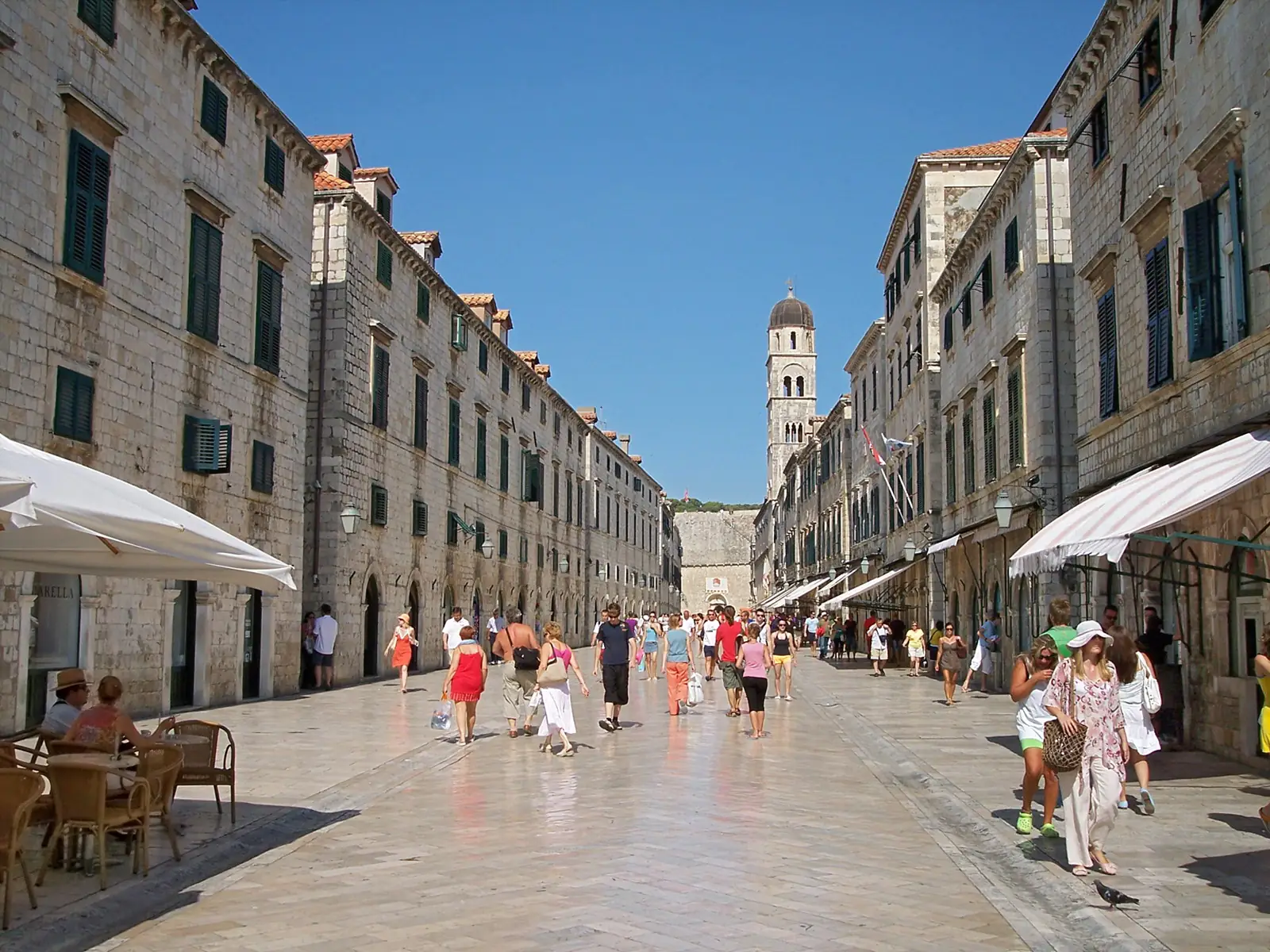
One more thing to know while you are standing on it: the Stradun’s uniform baroque frontages, all matching heights and those arched shop doorways, are a rebuilding after the earthquake of 1667. That is why the street reads as a single elegant composition instead of a medieval jumble — it was replanned, quickly and beautifully, by people who knew exactly what they wanted.
King’s Landing, with a straight face
From its second season onwards, Game of Thrones used Dubrovnik as King’s Landing, and the city has cheerfully leaned in ever since. Lovrijenac was the Red Keep. The baroque Jesuit staircase off Gundulić Square is the flight of steps everyone recognises. Minčeta’s round tower on the walls did service as the House of the Undying. The gardens up the coast at Trsteno were the Red Keep’s own.
There is a whole walking-tour industry built on this, and here is the useful thing about it: the locations are simply the city’s best corners under different names. Someone selecting camera positions for a fantasy capital picked the fortress on the rock, the highest tower on the walls, the finest staircase and a Renaissance garden over the sea. Follow the list and you have accidentally designed the perfect walking route. You do not need to have watched a single episode for it to work.
The walls, at the right hour
The circuit is 1,940 metres, according to the Society of Friends of Dubrovnik Antiquity, which looks after it — most people round it to two kilometres. It is one-way, it is a lot of steps, and it delivers the single best hour in the city: the sea on one side, the roofs on the other, Minčeta at the top for the view down over the whole terracotta lot of it.
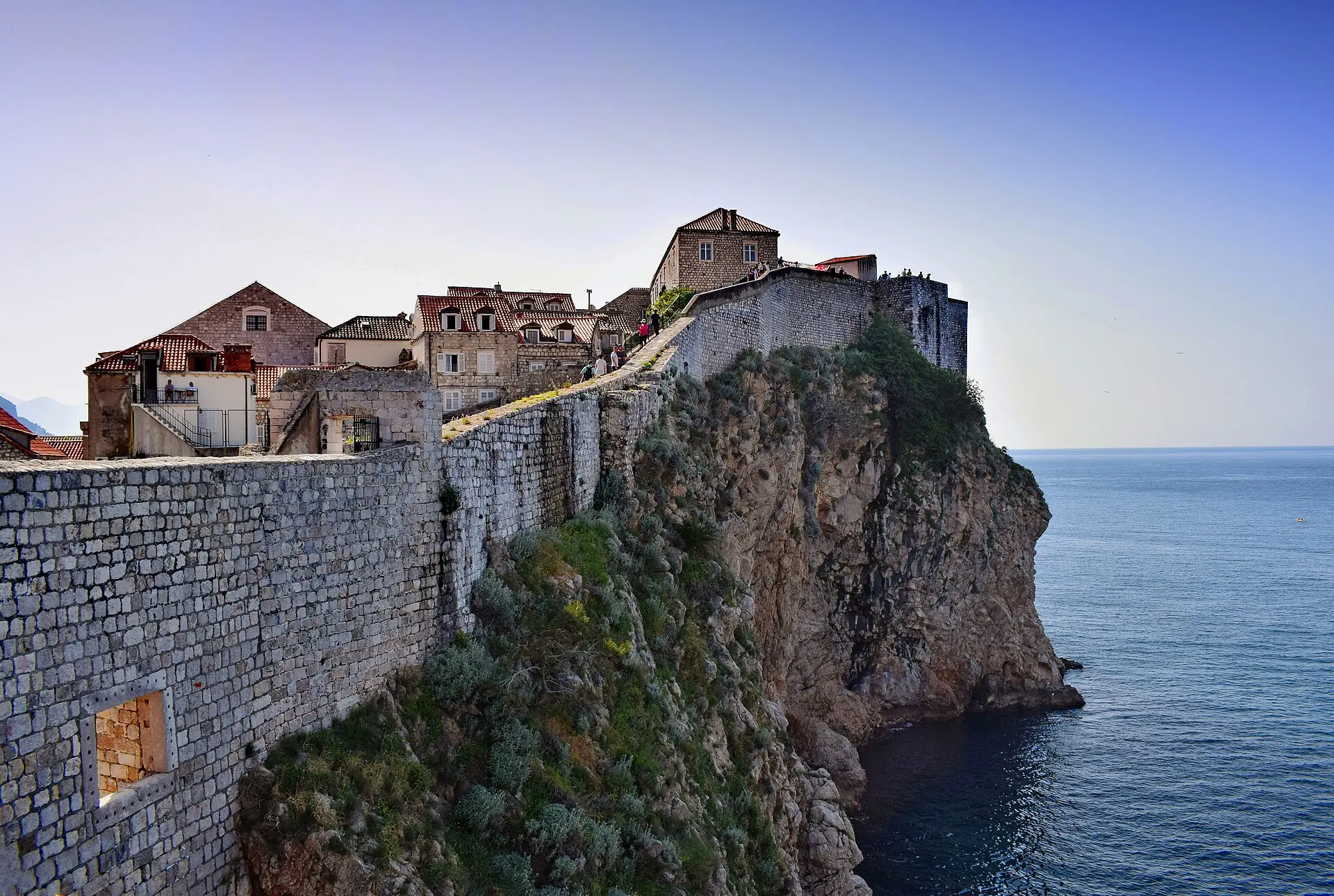
Go at the first entry of the morning, or in the last admission window of the afternoon when the stone turns gold and the heat lets go. In between it is a queue with a view, and you deserve better. The standard walls ticket also covers Lovrijenac and stays valid for it for a few days, so you can save the fortress for a separate evening.
Which you may want to do anyway, because Lovrijenac has the best theatre terrace in the Adriatic. Since 1952 the Dubrovnik Summer Festival has staged Hamlet in its courtyard, with the sea below the walls doing the work of a set — Derek Jacobi and Daniel Day-Lewis have both played the part up there. Tickets go early and they go fast.
The crowd clock, which is solvable
Dubrovnik’s fame is real, and so is the day’s rhythm: the old town fills through the mid-morning and thins out again by early evening, because a great many of the people in it arrived by sea and have a boat to catch.
The city manages this more actively than most visitors realise. Under a framework it calls Respect the City, agreed with the cruise industry’s own association, arrivals are held to two ships a day and roughly four thousand disembarking passengers — and, cleverly, ships are given a minimum length of call rather than a maximum — at least eight hours. A ship whose passengers have four hours produces a stampede; one whose passengers have eight produces a trickle. The port authority publishes its berthing rules well in advance and turns ships away when a date is full.
All of which hands you a simple piece of arithmetic. The old town before nine and after six belongs to the people staying the night. That is the entire argument for staying the night.
Where the city actually lives
Around the harbour at Gruž is the market that Dubrovnik shops at: fish landed that morning, tomatoes and figs and herbs off the hills behind, flowers, oil, cheese. It is a morning business — the good stuff is gone by eight and the stalls are folding by ten — and it is worth setting an alarm for, not because it is a sight but because it is a pleasure.
West of it, Lapad is where a lot of people here actually live: apartment blocks under pines, a bay with a promenade around it, swimming coves at the end of ordinary streets. The beaches are pebble and rock rather than sand, which is honest and which is also why the water is that colour — it comes up clean and cold and improbably clear, and you can be in it fifteen minutes after breakfast.
Then in the evening, back inside the walls, the Stradun does the thing it was built for. Residents walk it end to end and back, greeting people, stopping, turning round — the local version of the passeggiata, and the reason that limestone is polished in the first place. Take a table, order something cold, and watch a street do its second shift.
Ten minutes of blue
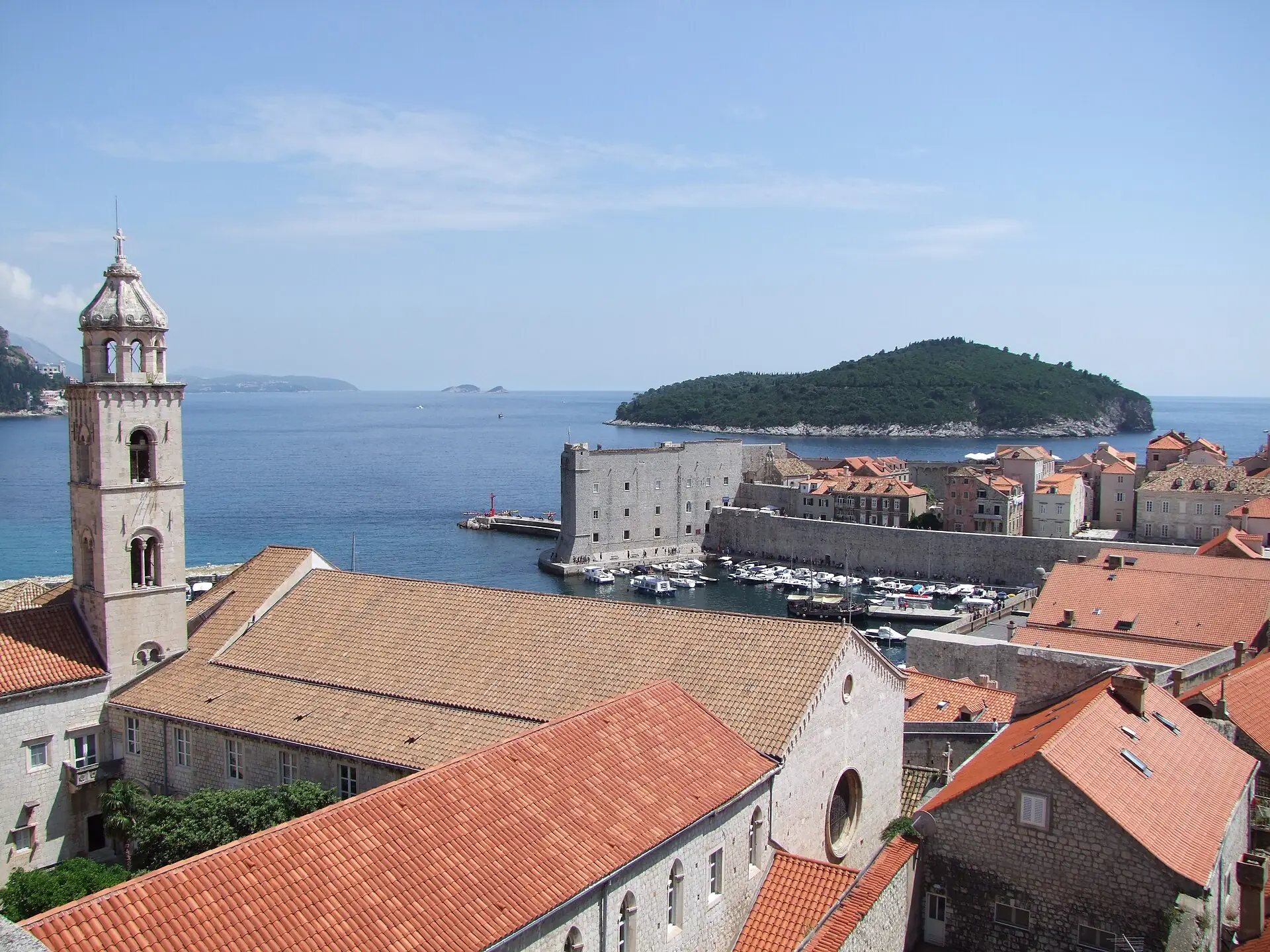
From the old port, small boats run across to Lokrum in ten to fifteen minutes, every half hour or so through the season. The island is a nature reserve: a ruined Benedictine monastery with a garden growing through it, a small saltwater lake warm enough to swim in all afternoon, flat rocks over deep water, and peacocks descended from birds a Habsburg archduke released here in the nineteenth century, who now run the place with total confidence. Nobody stays overnight — everyone leaves on the last boat — so the island empties every evening and resets.
Further up the coast, Trsteno is a nobleman’s estate laid out from 1494, with what is generally reckoned the oldest Renaissance garden on this coast: two plane trees of ridiculous size, an aqueduct still feeding a Neptune fountain, and terraces looking out over the sea towards the islands. It is also, yes, where the Red Keep’s gardens were filmed. It was a remarkable garden for five hundred years before that.
When to come
July and August give you hot stone, warm sea, full streets and the Dubrovnik Summer Festival, which runs from 10 July to 25 August and has done every year since 1950 — theatre and concerts staged inside the forts, on the squares and out on Lokrum, with the Libertas flag raised to open it.
Winter is quiet, mild by northern European standards, and mostly the locals’ own city, with a fair number of places closed. The exception is 3 February, the feast of St Blaise, the city’s patron and its own festival — on the UNESCO list of intangible cultural heritage since 2009 — when parish banners come in from the villages, doves go up outside the church, and the whole town is out in the street.
If you want my honest booking advice: May and June, or September into October. The sea is warm, everything is open, the walls are walkable at noon rather than survivable, and the daily crowd peak is shorter and thinner at both ends of it.
On entry: Croatia has been in the Schengen area since 1 January 2023, so US and UK passport holders visit without a visa for up to 90 days in any 180, with passports now recorded in the EU’s biometric Entry/Exit System rather than stamped — check current requirements before you book. Getting here is its own small puzzle, and our guide to the airport behind the mountain handles that end of it.
Last boat
Take the late boat back from Lokrum, when the light has gone long and the walls turn the colour of a good apricot. The old port is full of people getting off boats and deciding where to eat. Behind them the town is emptying of everyone who has to leave.
Walk up through the gate afterwards and the Stradun will be starting its second shift: lamps on, limestone throwing the light back up, tables filling, somebody’s grandmother making her way down the middle of it at the speed of a woman who has nowhere to be. Four and a half centuries of clever diplomacy bought this street the right to be exactly this ordinary in the evening. Staying the night is how you get to see it.
FAQ
Is Dubrovnik worth visiting despite the crowds?
Yes — and the crowds are more solvable than their reputation suggests, because they run to a timetable. The old town fills from mid-morning and thins by early evening, so the trick is simply to be here at the hours the day-trippers aren’t: walls at opening or in the last admission window, dinner at eight rather than one, the Stradun before nine. Stay overnight and you get a genuinely quiet city twice a day, at both ends of it.
Where was Game of Thrones filmed in Dubrovnik?
The old town played King’s Landing from the second season onwards. Fort Lovrijenac, on its rock outside the western wall, was the Red Keep; the Jesuit staircase off Gundulić Square is the famous flight of steps; the exterior of Minčeta Tower, the high point of the walls, stood in for the House of the Undying; and the Red Keep’s gardens were shot at Trsteno Arboretum, about twenty kilometres up the coast. Handily, they are also four of the best things to look at here under any name, so the fan route doubles as an excellent walking route.
When is the best time to visit Dubrovnik?
May and June, or September into October — warm sea, everything open, and a shorter daily crowd peak. July and August bring the heat, the fullest streets and the Summer Festival, which is a real draw if you want theatre in a fortress courtyard. Winter is quiet and mild, with a number of closures, and 3 February is its highlight: the feast of St Blaise, when the whole city turns out.
What is Lokrum island?
A small wooded nature reserve ten to fifteen minutes by boat from the old port, with boats roughly every half hour in season. There is a ruined Benedictine monastery and its gardens, a saltwater lake you can swim in, rocks over deep clear water, and a large and entirely unbothered population of peacocks. No one stays overnight — everybody leaves on the last boat — so it is a half-day trip, and one of the easiest good decisions you can make here.
Photos: Diego Delso (CC BY-SA 3.0), László Szalai (public domain), Jocelyn Erskine-Kellie (CC BY 2.0), Andrzej Harassek (CC BY-SA 3.0), via Wikimedia Commons.


