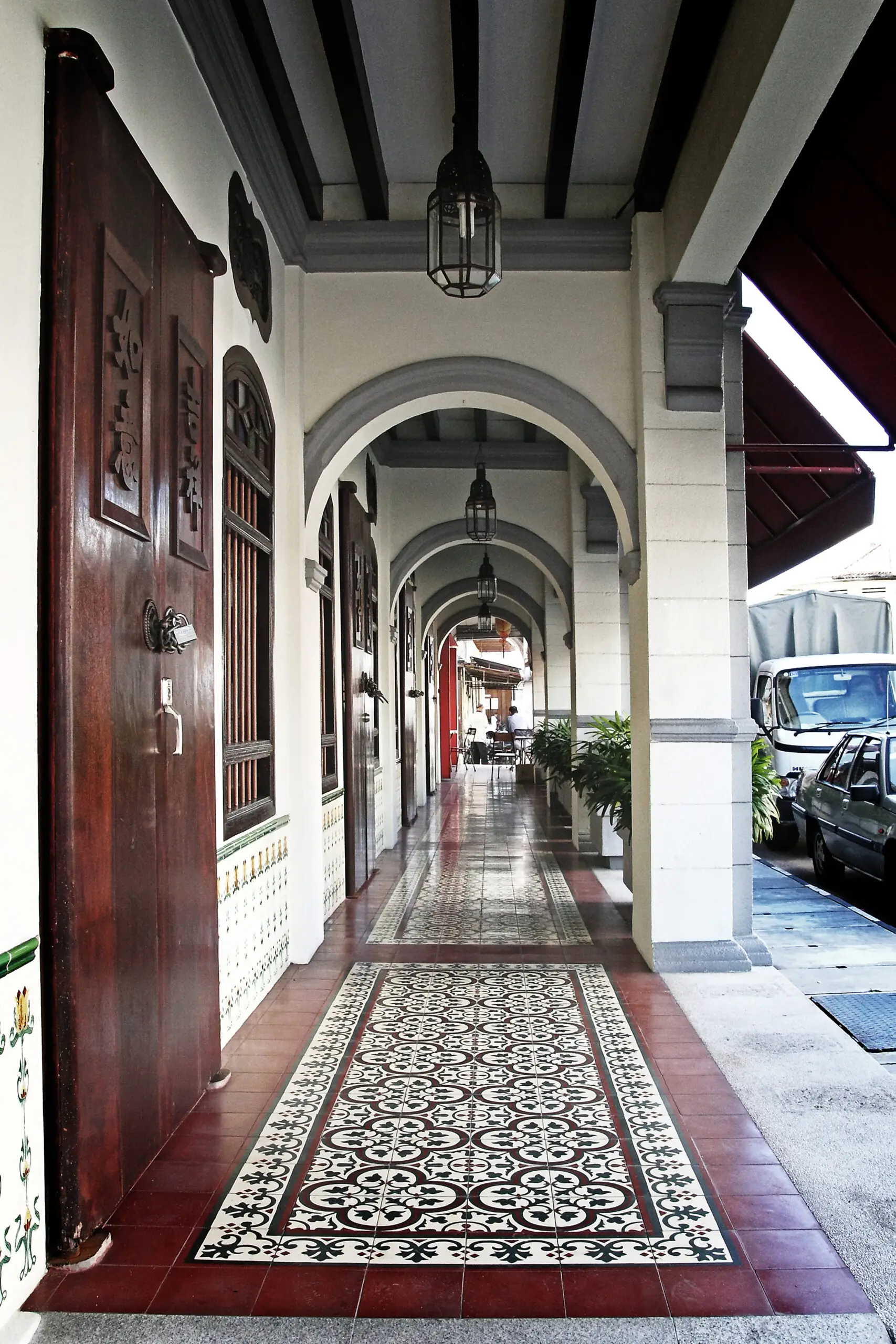

The Layered Port
This intense proximity is the defining characteristic of George Town. Built as a vital trading post on the Straits of Malacca, the city is a dense physical record of migration and trade. But it is crucial to flag the “harmonious melting pot” branding often used in tourist brochures as a vast simplification.
The reality is that these cultures are stacked tightly together rather than seamlessly blended. You will find ornate Chinese clan houses (kongsi), the vivid streets of Little India, Malay kampung (village) areas, and a rigid British colonial grid sitting within a few streets of one another. Proximity is not fusion. The exception is the Peranakan, or Baba-Nyonya, culture—the Straits-born Chinese community who developed their own distinct, deeply layered traditions over centuries, standing as a primary culture in its own right rather than a historical footnote.

The Hawker Labour
If there is a genuine civic glue in Penang, it is the food. The city is rightly famous as a street-food capital, but this reputation relies on intense physical labour. The hawker culture is the backbone of the city: carts turning out fiercely hot plates of char kway teow, the sour tang of assam laksa, the late-night Indian-Muslim mamak stalls, and the complex, labour-intensive Nyonya kitchen. This is not just a menu for visitors to tick off; it is the living culture of the city, driven by ageing hawkers who tie decades of refined recipes to a single stall.
The Heritage Trade-off
The reality of modern George Town is deeply tied to its 2008 UNESCO World Heritage listing. The designation undeniably saved the historic core’s beautiful, decaying shophouses from being demolished and redeveloped. However, the listing was a double-edged sword. As preservation rules came in, the old rent controls were lifted. Rents climbed rapidly, and many of the traditional trades, craftspeople, and long-term residents who actually made the town what it was were quietly priced out to make way for boutique hotels and polished cafés. It is necessary to name this trade-off plainly: the listing preserved the physical buildings while hollowing out a significant part of the life inside them. Calling George Town a “frozen heritage town” is a legend that ignores this ongoing displacement.

Murals and the Working Town
This tension is most visible in the city’s street art. What began with Ernest Zacharevic’s thoughtful murals has transformed the narrow lanes into a crowded, heavily queued photo trail. There is a distinct gap between this circuit of visitors hunting for photo opportunities and the working reality of the town happening just behind them, though both now coexist in the same space.
Yet the living religious and community life stubbornly persists. The famous clan jetties—wooden stilt villages built out over the water—remain inhabited residential spaces, not just heritage exhibits. The grand Khoo Kongsi clan house, the mosques, and the temples are all fully functioning places of worship and community gathering.
My sharpest memory of the city came late at night on Chulia Street. I watched a hawker, exhausted after hours over a roaring wok, sit down on a plastic stool to count a thick stack of small ringgit notes. Above him, the gleaming, restored shutter of a newly opened heritage hotel was securely bolted shut against the noise of the street.
If you are planning to travel, note that most Western visitors enter Malaysia visa-free for short stays (up to 90 days), though a digital arrival card (MDAC) is now required to be filled out online before arrival. You should always check current entry requirements before booking.
FAQ
Is George Town worth visiting?
Yes, it is a profoundly layered port city with some of the best street food in Southeast Asia. However, it requires looking past the polished heritage facades to appreciate the working reality of the town.
What food is Penang famous for?
The city is known for its intense, complex flavours. Key dishes include char kway teow (stir-fried rice noodles), assam laksa (a sour, fish-based noodle soup), and the rich, slow-cooked curries of the local Nyonya and mamak kitchens.
How many days do you need in George Town?
Three to four days will allow you to explore the distinct historical quarters, visit the clan jetties, and eat widely across the different hawker markets without rushing in the heavy tropical heat.
What’s the best time to visit Penang?
The period between December and March is generally the driest and clearest. The monsoon season peaks around September and October, bringing heavy, sudden downpours that can disrupt outdoor plans.
Images: LeonardKong / CC BY 2.0; Alpha from Melbourne, Australia / CC BY-SA 2.0; Slleong / CC0. Source: Wikimedia Commons.
Read also
- Cheap flights to Jordan: the Jordan Pass, the two airports, and getting to Petra
- Rental housing in Goa for every taste
- Cheap flights to Singapore: Changi, the stopover trick, and getting into the city

