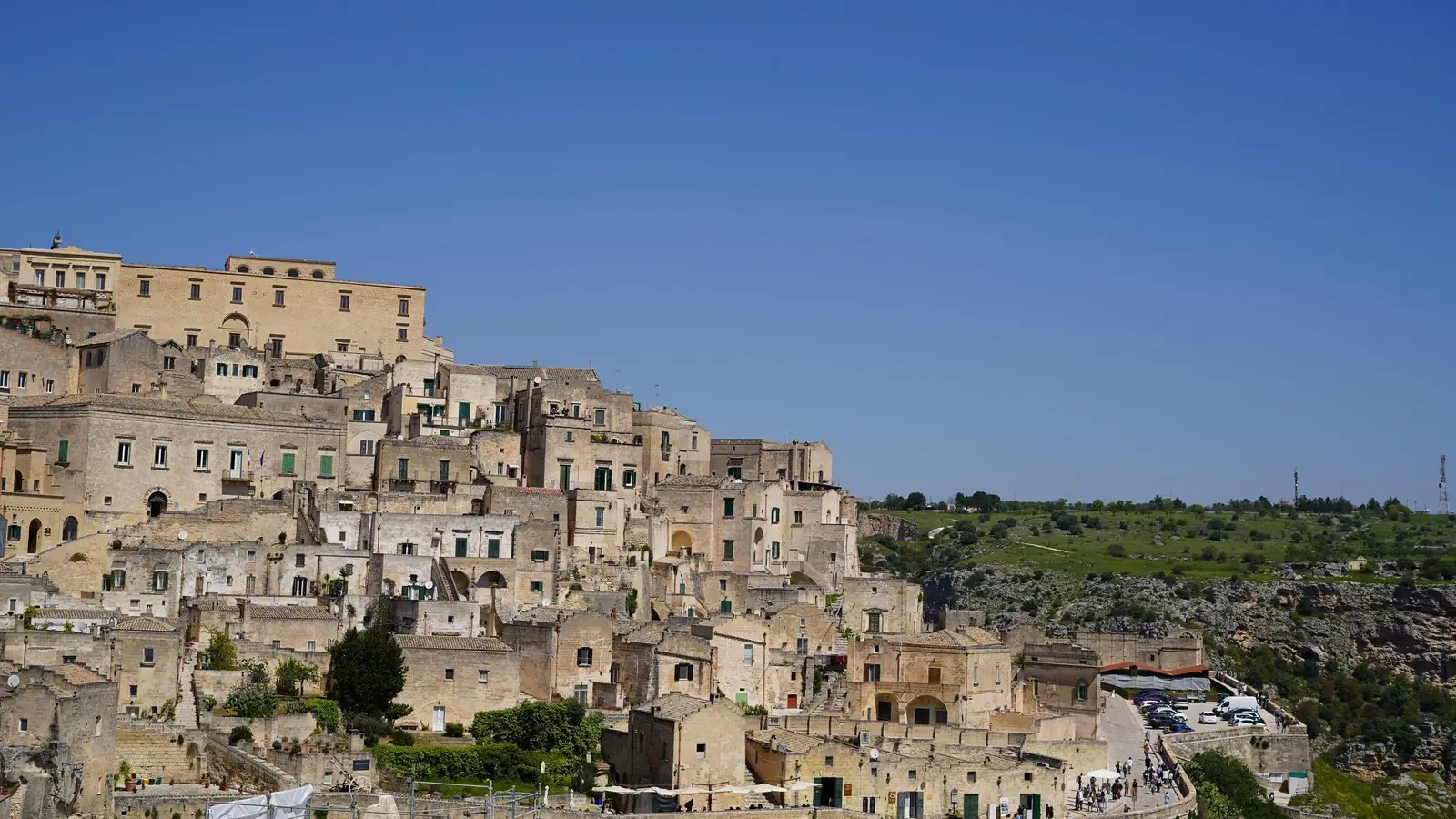

The deep layer
The scale of the history here is almost impossible to grasp. Matera is considered one of the oldest continuously inhabited settlements on Earth, with evidence of cave dwellings dating back to the Neolithic period. Over millennia, the residents carved an incredibly ingenious system of cisterns and water channels into the porous rock to survive the harsh, dry summers, while monastic communities left behind rock-hewn churches painted with delicate Byzantine frescoes. The caves were not a curiosity or a temporary shelter; they were the permanent housing stock of an entire working city.
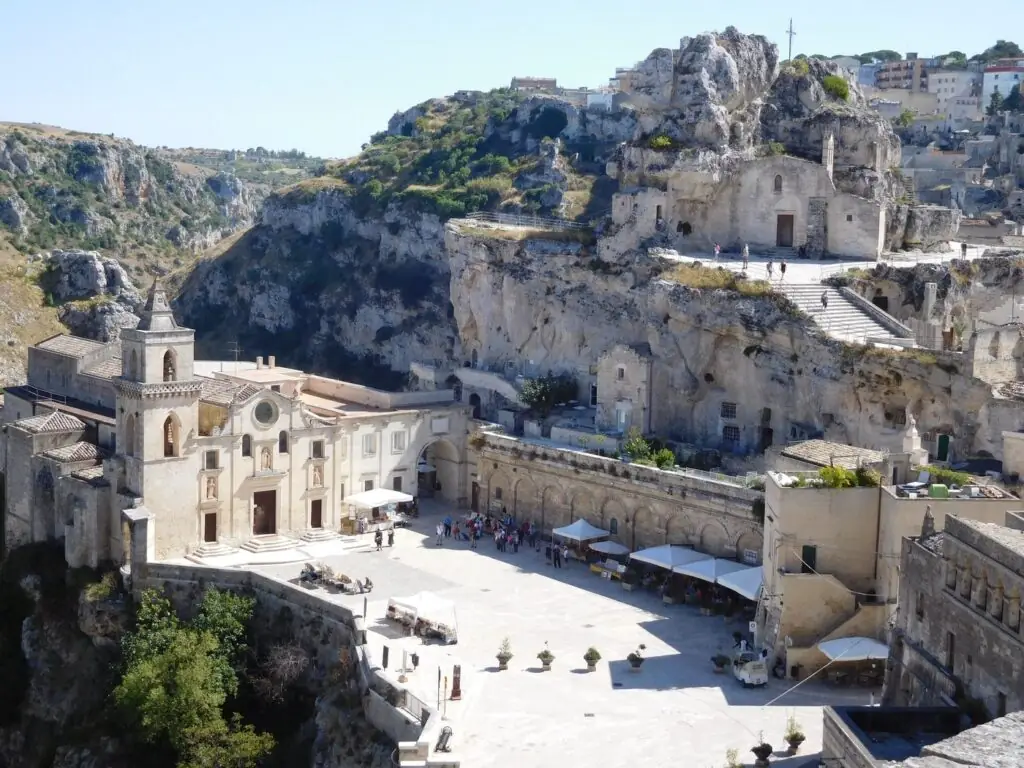
The evacuation
By the mid-twentieth century, however, that housing stock was failing violently. In 1945, the political exile Carlo Levi published his memoir, Christ Stopped at Eboli, describing the staggering cave poverty of the Basilicata region. He wrote of children dying of malaria and massive families sharing single, unventilated grottoes with their livestock. The book shocked postwar Italy.
Matera was publicly branded “la vergogna nazionale” — the national shame. Rather than modernise the caves, the state took drastic action. In the early 1950s, the government ordered the Sassi to be entirely evacuated. Roughly 15,000 to 17,000 people were forcibly moved into newly built, modern housing blocks on the plateau above, and the ancient, labyrinthine quarters were left to rot. A whole city was emptied by decree.

The slow reversal
For decades, the Sassi sat abandoned, haunted by squatters and the sheer scale of the dereliction. The slow reversal began with artists and restorers who saw the architectural value in the ruins. In 1993, the Sassi secured a UNESCO World Heritage listing — the first in southern Italy.
The film industry soon realised that the empty ravines offered a ready-made, highly convincing stand-in for ancient Jerusalem. Pier Paolo Pasolini filmed The Gospel According to St. Matthew here in 1964, Mel Gibson shot The Passion of the Christ in the caves in 2004, and the city later featured as the high-octane opening drop in the James Bond film No Time to Die. The official redemption arc was sealed when Matera served as the European Capital of Culture in 2019.
The honest layer
What filled the caves back up, however, was tourism. The Sassi today have far fewer actual residents than they did before the evacuation. Instead, the caves are packed with boutique hotels, bed-and-breakfasts, and high-end restaurants. There is a very real, very sharp critique to be made here: a lived tragedy of grinding poverty has been successfully repackaged as a cave-hotel experience where you can book a spa night.
Yet, there is a counter-current. A small number of families and artisan workshops have genuinely moved back into the Sassi, fighting to keep it a living district rather than just a set. Meanwhile, the ordinary, modern Italian town continues to run its daily life on the piano (the flat plateau) directly above the caves, largely disconnected from the tourist churn below.
Italy is within the Schengen area, meaning citizens of many countries (including the US, UK, Canada, and Australia) currently receive short visa-free stays. The EU’s ETIAS pre-authorisation system is legislated but not yet in force. Entry rules change, so check current requirements before you book.
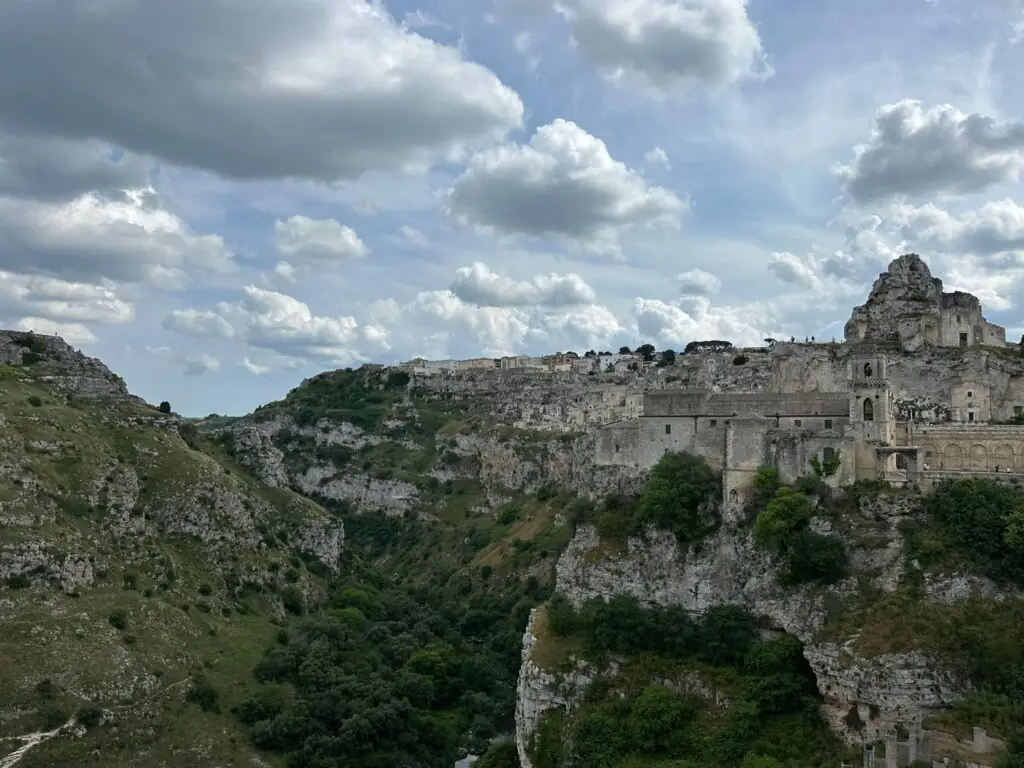
To understand Matera, drive out to the Murgia Timone belvedere at dusk and look back across the deep gorge. As the lights begin to flicker on inside the caves — caves that the state condemned and emptied seventy years ago — you can see the full, uncomfortable arc of a city that was forced to die so it could become a showcase.
FAQ
How do I get to Matera?
Matera does not have its own airport. The gateway is Bari (BRI), roughly sixty kilometres away in neighbouring Puglia. From Bari airport, you can take a direct shuttle bus or use the regional Ferrovie Appulo Lucane (FAL) train line from Bari central station. The journey takes between an hour and an hour and a half.
What are the Sassi?
The Sassi are the two ancient, historic districts of Matera (Sasso Caveoso and Sasso Barisano), consisting of thousands of dwellings, churches, and cisterns carved directly into the limestone rock of a steep ravine.
Can you stay inside the Sassi?
Yes. Following the massive restorations of recent decades, hundreds of the former cave dwellings have been converted into boutique hotels and B&Bs. It is a highly atmospheric experience, provided you understand the heavy history of the poverty and evacuation that made those spaces available.
When is the best time to visit?
Spring and autumn are by far the best times. High summer in Matera involves brutal heat radiating off the bare stone, making the steep stairs punishing. Winter is very quiet and cold, but offers the clearest, most solitary sense of the city’s history.


