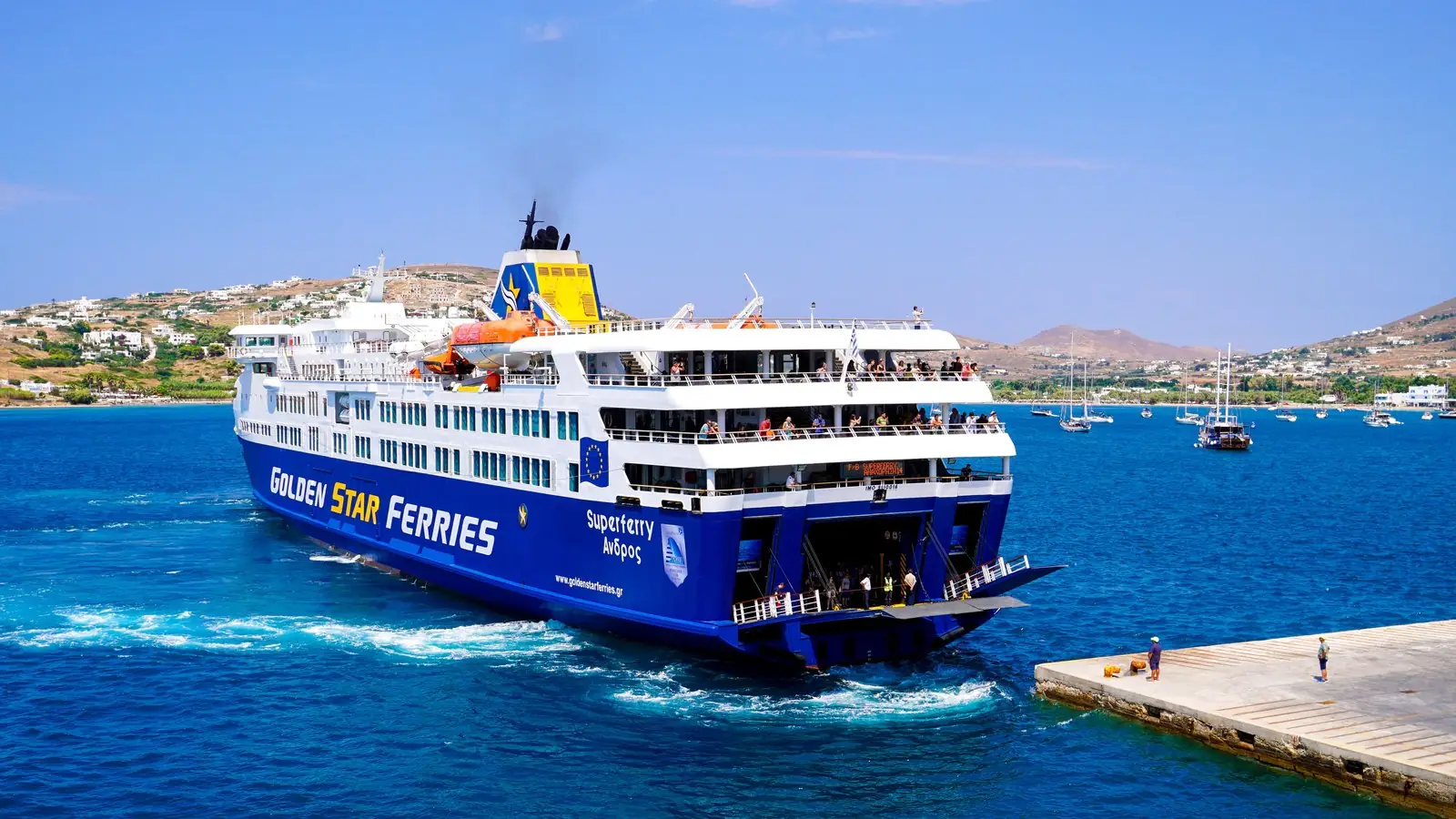

For most travelers heading to the Greek islands, booking cheap flights to Athens is only the first step of a two-leg journey. Because the capital serves primarily as a transit station before boarding a ferry or domestic flight to the Cyclades, Crete, or the Ionian islands, your second leg is where your travel plans can easily break.
The Two-Port Trap: Piraeus vs. Rafina
Athens Airport (ATH), officially Eleftherios Venizelos, is located about thirty-three kilometers east of the city center. When connecting to a ferry, you must locate the correct port before booking your boat ticket:
- Piraeus: Located southwest of the city. This is the main port of Athens, handling the vast majority of ferry departures to the Cyclades, Crete, and the Dodecanese. Reaching Piraeus from the airport requires crossing the entire metropolitan area.
- Rafina: A smaller port located on the eastern coast. Rafina is located much closer to the airport, making it a faster and simpler transfer. If you are heading to Mykonos, Tinos, or Andros, checking for departures from Rafina can save you significant transit time.

Airport Transfers to the City and Ports
ATH is well-connected to the city and harbors, though travel times are substantial:
- Metro Line 3 (Blue Line): Runs directly from the airport terminal to central stations like Syntagma and Monastiraki, where you can transfer to Line 1 for Piraeus. The train ride to the center takes about forty minutes.
- Suburban Railway: Offers direct rail connections from the airport to Piraeus, though departures are less frequent than the metro.
- Express Buses: The X95 bus runs directly to Syntagma Square in the center, while the X96 bus runs twenty-four hours a day directly from the airport to Piraeus harbor.
- Rafina Buses: Local regional buses (KTEL) run regularly from the airport arrivals area directly to Rafina port, offering a much faster transfer than traveling to Piraeus.
- Taxis: Official yellow taxis operate on government-set flat rates to the city center, with separate daytime and nighttime tariffs.

Fly or Ferry to the Islands?
When heading to popular destinations like Santorini, Mykonos, or Crete, you must choose between a domestic flight or a ferry:
- Domestic Flights: Regional carriers like Aegean Airlines, Olympic Air, and Sky Express run frequent, short flights from ATH. Flying is the faster option, avoids seasickness during summer winds, and is often the only reliable connection in winter.
- Ferries: High-speed catamarans and slower car ferries are the classic choice. Ferries are generally cheaper, allow for generous luggage limits, land you directly in the island town center, and offer scenic views from the decks. During the peak summer season, booking your ferry tickets online in advance is essential.
Layovers and the Acropolis
Athens Airport is compact and efficient, making a short layover trip into the city center feasible. If you have a layover of at least five to six hours, you can take Metro Line 3 straight to Monastiraki station for a view of the Acropolis. Be sure to budget forty minutes for the train ride each way, plus sufficient time to clear airport security upon your return.
Weather and the Meltemi Winds
Greece experiences a classic Mediterranean climate, with tourist demand heavily concentrated in the summer:
- High Season: July and August bring the highest prices and heavy crowds. During these months, strong northern winds known as the meltemi can cause delays or cancellations for high-speed catamaran ferries, while larger car ferries remain more stable.
- Shoulder Season: June and September are the ideal months to visit, offering warm weather, fewer crowds, and cheaper flights.
- Off-Peak: Winter is the cheapest season for flights, but many island hotels close and ferry schedules are significantly reduced.
Entry Requirements
Greece is a member of the EU and the Schengen Area. Visitors from the US, UK, Canada, and Australia can enter visa-free for tourist stays of up to 90 days within any 180-day period. A new electronic pre-travel authorization (ETIAS) is scheduled to begin rolling out for visa-exempt visitors in late 2026. Entry rules can change; verify current requirements before booking your flight.
FAQ
How do I get from Athens airport to the city or to Piraeus?
You can take Metro Line 3 directly to central Athens, or transfer to the suburban railway for Piraeus. The X95 express bus runs to the center, while the X96 bus runs directly to Piraeus port twenty-four hours a day.
Which port do ferries to the islands leave from?
Most ferries depart from Piraeus, the main harbor southwest of the city. However, Rafina is located much closer to the airport on the eastern coast and is often the faster departure point for ferries to Mykonos, Tinos, and Andros.
Should I fly or take the ferry to Santorini or Mykonos?
Flying takes under an hour and avoids seasickness from summer winds. Ferries are cheaper, offer generous luggage limits, and land you directly in the island ports, but they require a longer transit time.
When is the cheapest time to fly to Athens?
Flights are generally cheapest during the winter months from November to March, when island tourism shuts down and demand is at its lowest.


