

The rock above the city
The Acropolis demands your attention. The monuments crowning it date largely to the 5th century BCE — the golden age of Pericles. The sheer scale of the Parthenon and the delicate caryatids of the Erechtheion stir a genuine, quiet awe that cuts through the crowds. At the foot of the hill, the Acropolis Museum supplies the context, holding the surviving treasures in a light-filled space built directly over an excavated ancient neighbourhood. One practical note: the summer heat and the visitor numbers are both punishing, so climb the rock either as the gates open or in the late afternoon.
Neighbourhoods and layers
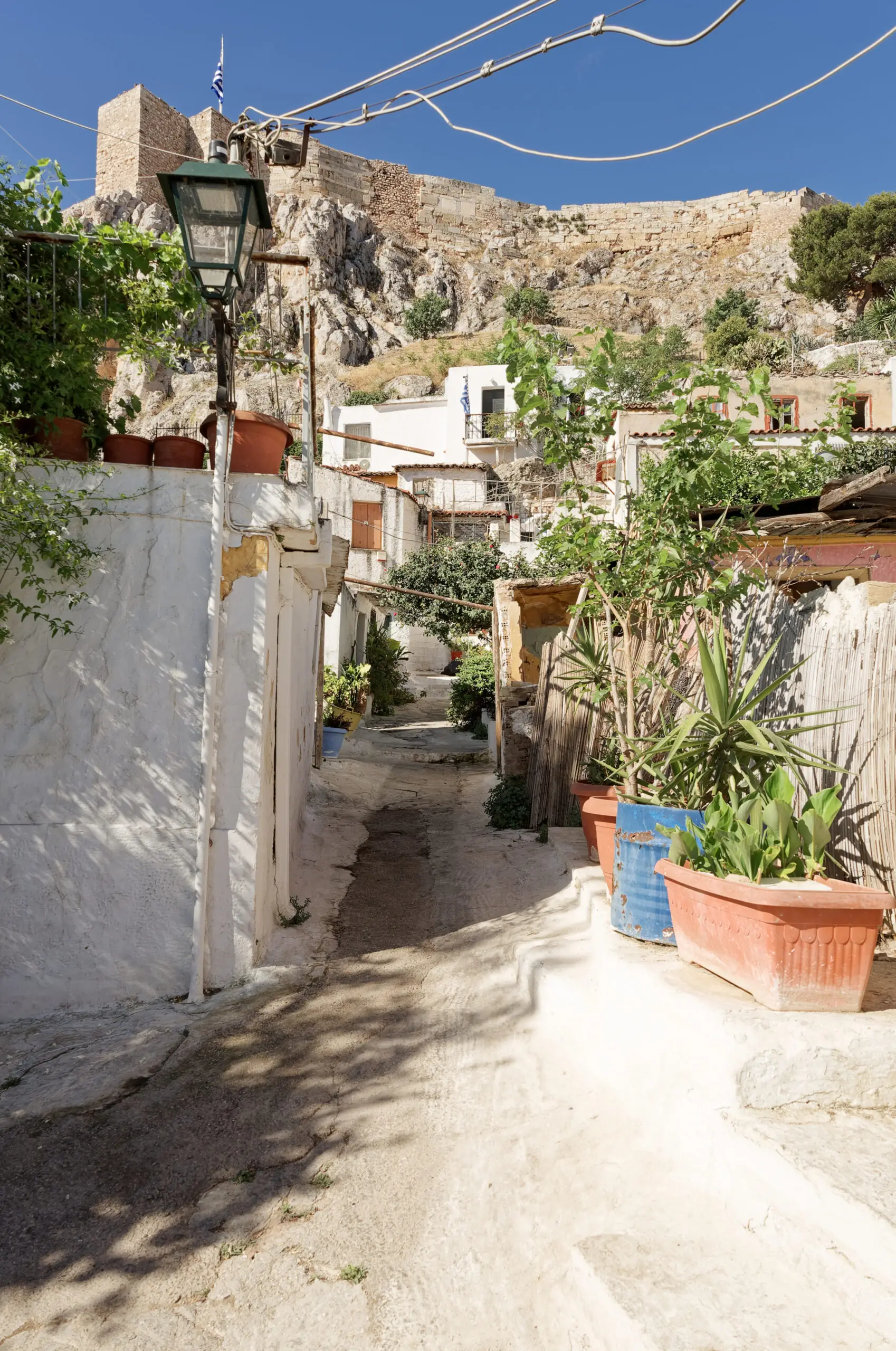
To understand Athens, walk its stacked neighbourhoods. Immediately beneath the Acropolis winds Plaka, the city’s oldest quarter, which climbs into Anafiotika — a tiny enclave that looks exactly like a Cycladic island village, all whitewashed walls and blue doors. The popular story is that it was built in the 19th century by homesick stonemasons from the island of Anafi who missed the sea; a lovely tale, and whether it was nostalgia or simply practical housing, the result is charmingly out of place.
A short walk away, Monastiraki Square is a masterclass in the city’s layering. From one spot you can take in the ruins of the Roman Agora, a former Ottoman mosque and a Byzantine church, all ringed by a sprawling flea market. A few streets over is Psyrri, a formerly industrial district now defined by gritty energy, heavy street art and brilliant nightlife.
The rhythm of the day
The pace here is governed by the heat. The day is punctuated by visits to the kafeneío (coffeehouse) for a violently strong Greek coffee, or the modern essential — an iced freddo espresso or frappé. As the temperature finally drops in the evening, the city takes its vólta: a slow, sociable stroll through the streets.
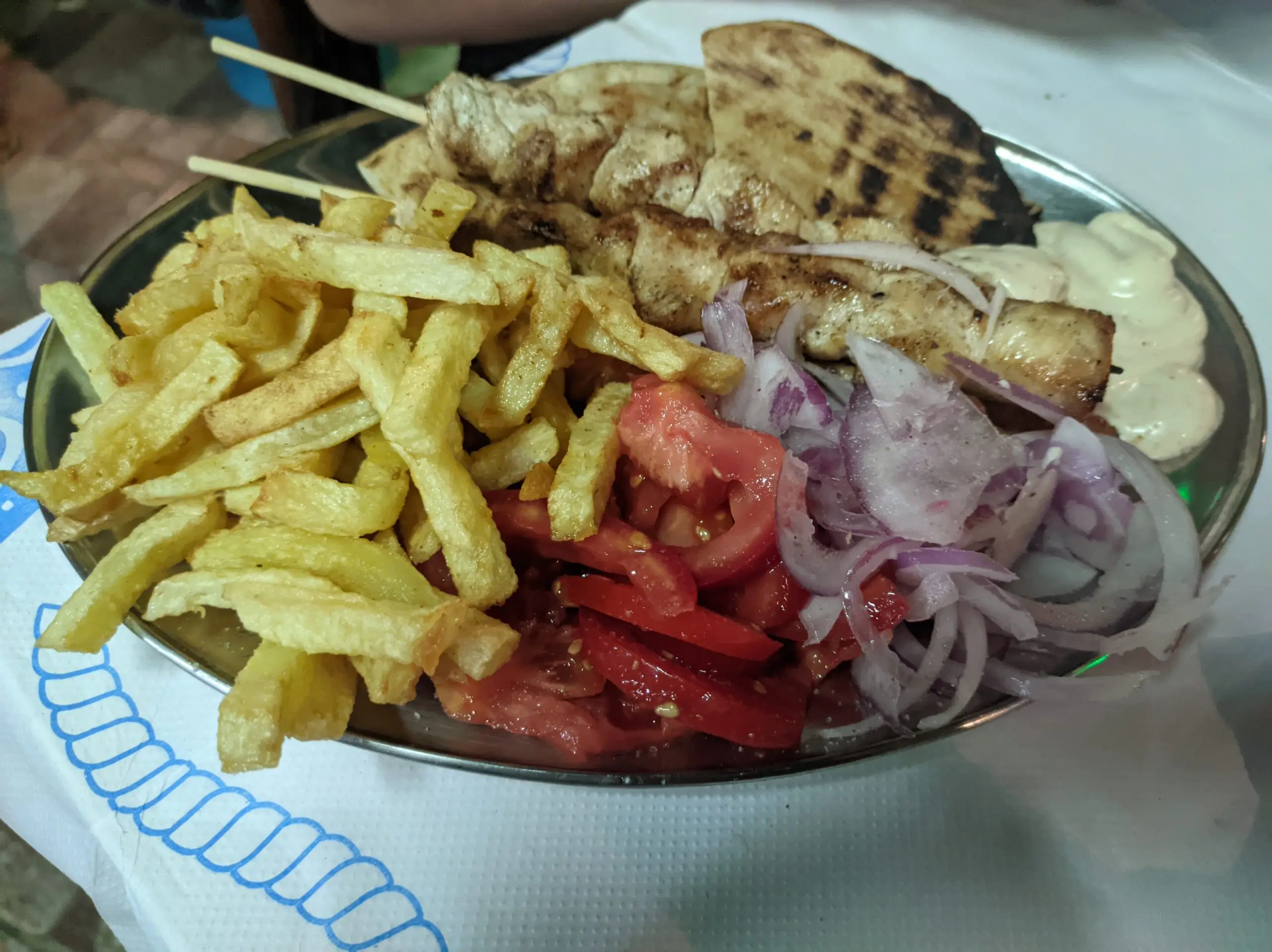
That rhythm is why Athenians eat so late. A taverna will barely have a table filled before 9pm. When dinner does start, it’s a long, communal affair of meze — small plates to share, the tzatziki, the feta, the grilled octopus. For faster fuel there’s souvlaki: skewers of grilled meat, or gyros wrapped in warm pita with tomato, onion and chips.
My own sharpest memory of Athens came late one night in Psyrri. A small group of musicians had set up at a corner table in a packed taverna, playing rebetiko — the blues-like urban folk music of Greece. It was loud, chaotic and entirely unpolished: the waiter had to shout over the bouzouki to take my order, the walls were covered in tags, and the energy was electric. It was the perfect distillation of a city that embraces its scruffy, intensely alive present as fiercely as its ancient past.
One practical note: Greece is in the Schengen Area, and the EU’s ETIAS authorisation is being phased in for visa-exempt visitors — so check the current entry requirements before you travel.
FAQ
Is Athens worth visiting?
Absolutely. Beyond the essential classical sites, it’s one of Europe’s most vivid and affordable capitals, with extraordinary food and a nightlife that runs until dawn.
How many days do you need?
Three days is ideal — enough for the Acropolis and its museum, the central neighbourhoods, and a chance to settle into the late-night dining.
When is the best time to go?
Spring (April–June) and autumn (September–October). The mid-summer heat of July and August can be draining, especially on the archaeological sites.
Is one day enough for the Acropolis?
Half a day covers the Acropolis hill itself, but give another few hours to the Acropolis Museum to make sense of what you’ve just seen.
Images: Stymphal / CC BY-SA 4.0; Jakub Hałun / CC BY 4.0; Leeturtle / CC BY-SA 4.0. Source: Wikimedia Commons.
Read also
- Lucerne: The Heart of Switzerland, Where History Meets Nature
- Geneva: Where the heart of Europe beats to the rhythm of nature and diplomacy
- Holding Oktoberfest


