

The layered stones
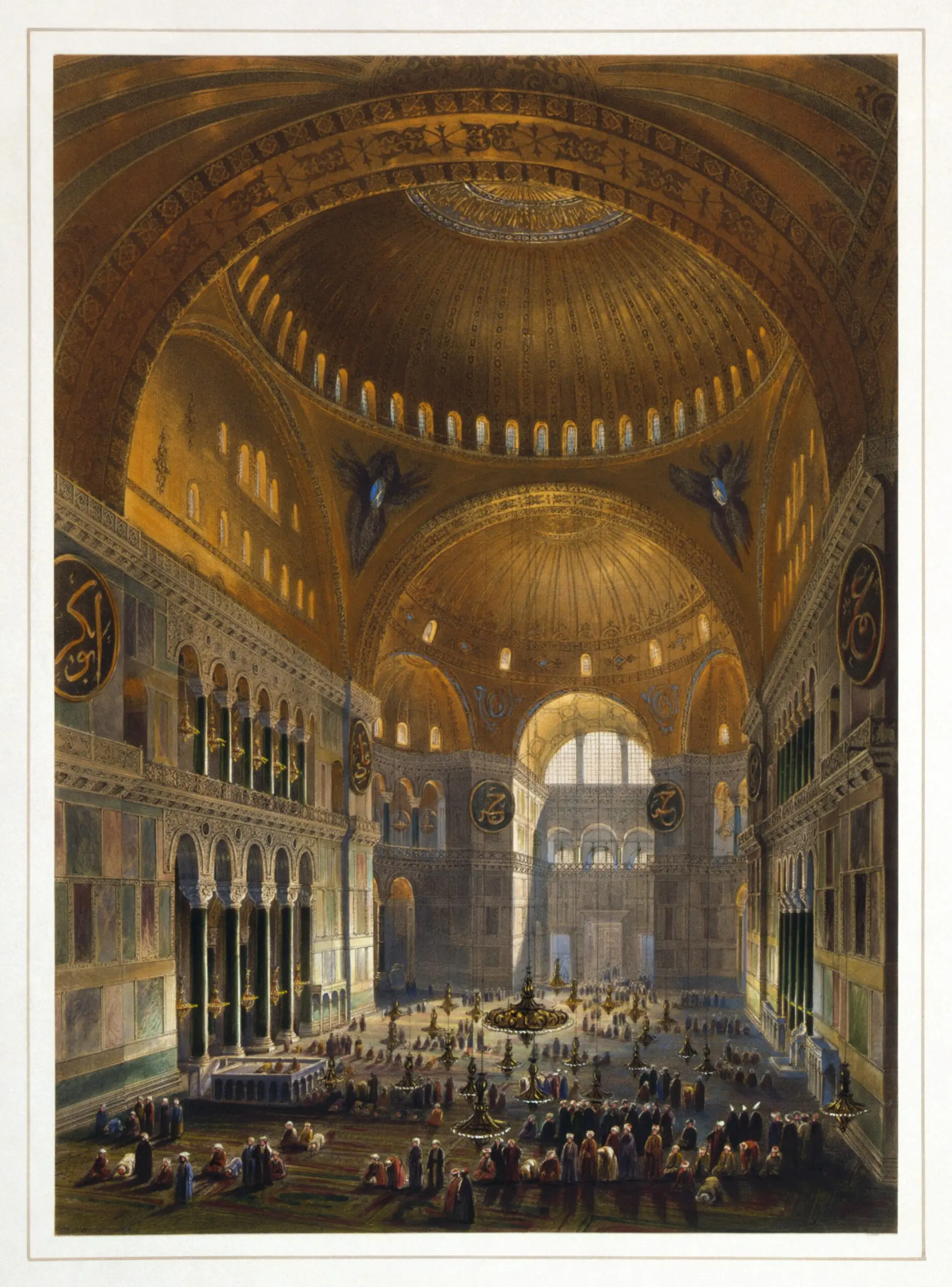
Istanbul doesn’t merely display its history; it stacks it. The clearest proof is Hagia Sophia. Its story is profound and complex: built as a colossal Byzantine cathedral in the 6th century, it served as an Ottoman mosque for nearly 500 years, functioned as a museum through most of the 20th century, and returned to being a working mosque in 2020. Entry means modest dress and avoiding prayer times, but standing beneath its immense, seemingly floating dome is staggering — a space where Christian mosaics and vast Islamic calligraphic roundels share the same walls.
Facing it across the gardens is the Blue Mosque (Sultan Ahmed), equally magnificent, while nearby the Topkapı Palace offers a sprawling, intimate look into the secluded lives of the Ottoman sultans. But perhaps the most atmospheric history lies underground. The Basilica Cistern is a vast sunken cavern held up by 336 ancient columns, some recycled from older Roman temples. Walking its raised platforms in the damp gloom feels like trespassing in a forgotten world.
The bazaars and the art of çay
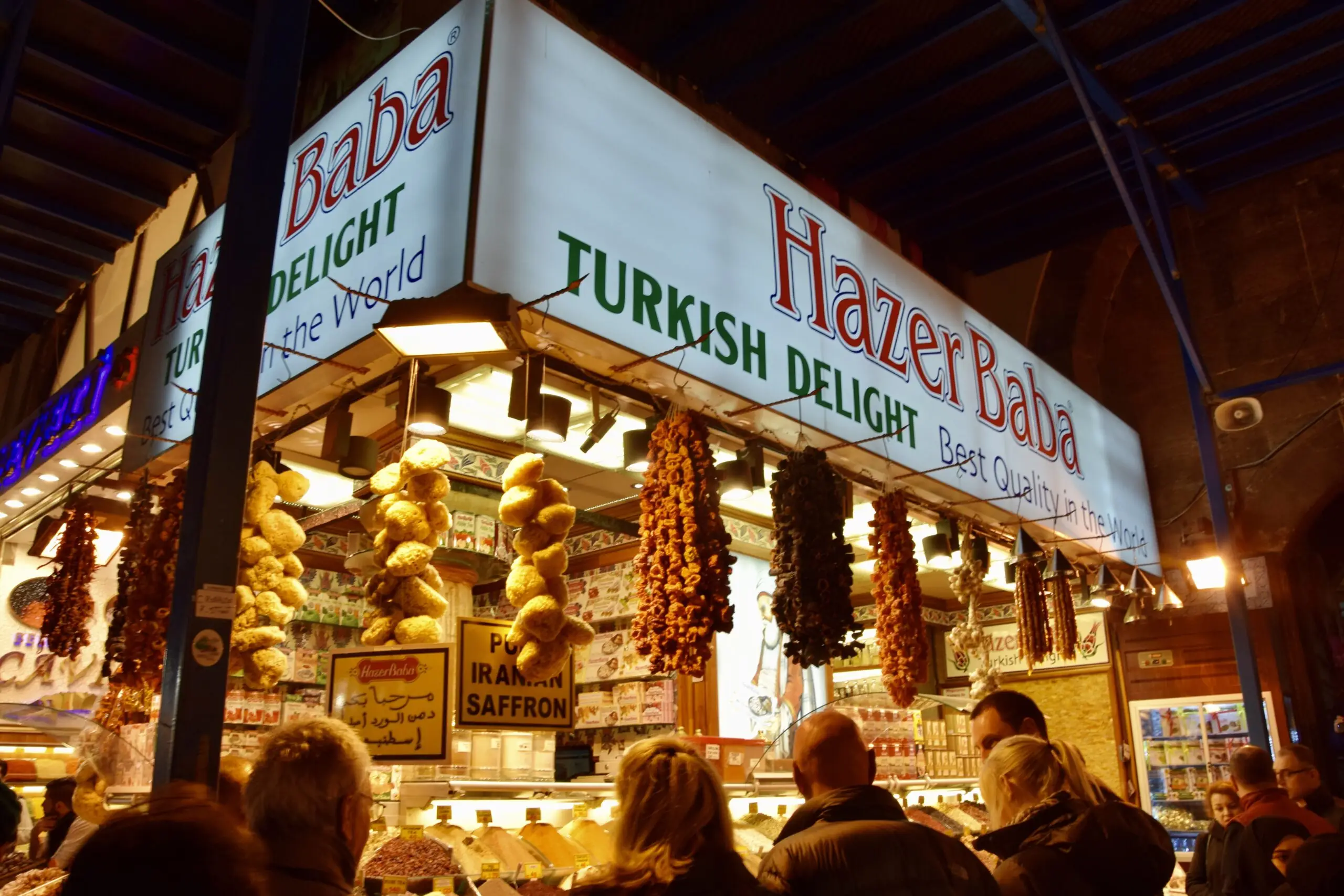
Above ground, the rhythm of the old city is trade. The Grand Bazaar is a covered labyrinth of over four thousand shops; the nearby Spice Bazaar hits you with the heavy scent of saffron, sumac and dried roses. The scale is overwhelming at first, and the patter of the vendors is relentless.
But getting pleasantly lost is part of it. Haggling here is a social necessity, invariably lubricated by endless tulip-shaped glasses of hot çay (black tea). Treat the negotiation as a polite, unhurried game: accept the tea, smile, hold your ground respectfully, and the transaction shifts from a tourist hustle into a brief, genuine connection.
Crossing continents
To really feel the shape of Istanbul, get on the water. The cheap public ferry is one of the great transit experiences anywhere — for a handful of lira you cross from the European side to the Asian districts of Kadıköy or Üsküdar. Off the Üsküdar shore sits the Maiden’s Tower (Kız Kulesi). A popular legend says a sultan built it to keep his daughter safe from a prophecy of a fatal snakebite — and the snake, of course, arrived hidden in a basket of fruit. A lovely story, though historically the tower worked more practically as a watchtower and toll point. Most visitors skip the Asian shore entirely, but it’s calmer and more residential: the cafés are full of locals, the pace eases, and the waterfront gives you an unobstructed view back over the minarets of the old city as the sun goes down.
The ritual of the hamam and the table
Renewal in Istanbul comes through the hamam, the Turkish bath. The centuries-old bathhouses are still in use, offering a rigorous ritual: steaming on a heated marble slab, then a vigorous scrub and a mountain of soap suds. You come out feeling scoured clean of the city’s dust.
The table has its own rituals. A traditional Turkish breakfast is a sprawling, leisurely spread of olives, cheeses, honey, cucumber and eggs. On the street there’s simit, the sesame-crusted bread ring made for early mornings, and balık ekmek, the simple, brilliant grilled-fish sandwich sold from boats bobbing at the quay. Unpretentious, deeply satisfying food. Afterwards, the UNESCO-listed tradition of Turkish coffee — thick, unfiltered, intensely strong — is all but compulsory, though çay remains the drink of every hour.
My own sharpest memory of the city came on one of those ferries. I was watching the skyline slip past when a smartly dressed man beside me wordlessly snapped his simit in half and handed me a piece. We shared no language, but we spent the next ten minutes breaking off crumbs and throwing them to the gulls trailing the boat’s wake. A tiny moment of absolute grace.
One practical note: most Western passports enter Turkey visa-free for short stays, though some nationalities need a simple e-Visa — always check the current requirements before you travel.
FAQ
Is Istanbul worth visiting?
Without question. It’s a city of staggering historical depth, spectacular architecture and unmatched geography, sitting astride two continents.
How many days do you need?
Four days is a solid minimum to see the major monuments of Sultanahmet, explore the bazaars, take a ferry across the Bosphorus and walk the neighbourhoods without rushing.
Can you visit Hagia Sophia?
Yes. It’s a working mosque, so the prayer hall remains a place of worship; tourists now visit the upper gallery via a separate ticketed route. Either way, dress modestly (shoulders and knees covered; women cover their hair), and expect access to be restricted around prayer times.
Is it easy to get between the European and Asian sides?
Very. The public ferries are cheap, frequent and scenic, and the Marmaray rail tunnel links the two continents under the Bosphorus in minutes.
Images: mehmet bilgin / CC BY-SA 2.0; Gaspare Fossati (artist, 1809-1883) Louis Haghe (lithographer, 1806-1885) Adam Cuerden (restoration) / Public domain; Ank Kumar / CC BY-SA 4.0. Source: Wikimedia Commons.
Read also
- Shanghai is one of the main tourist cities in China
- Azerbaijan. With warmth about the Land of Fires
- Historic Building in Istanbul: Traces of Three Empires and a Republic


