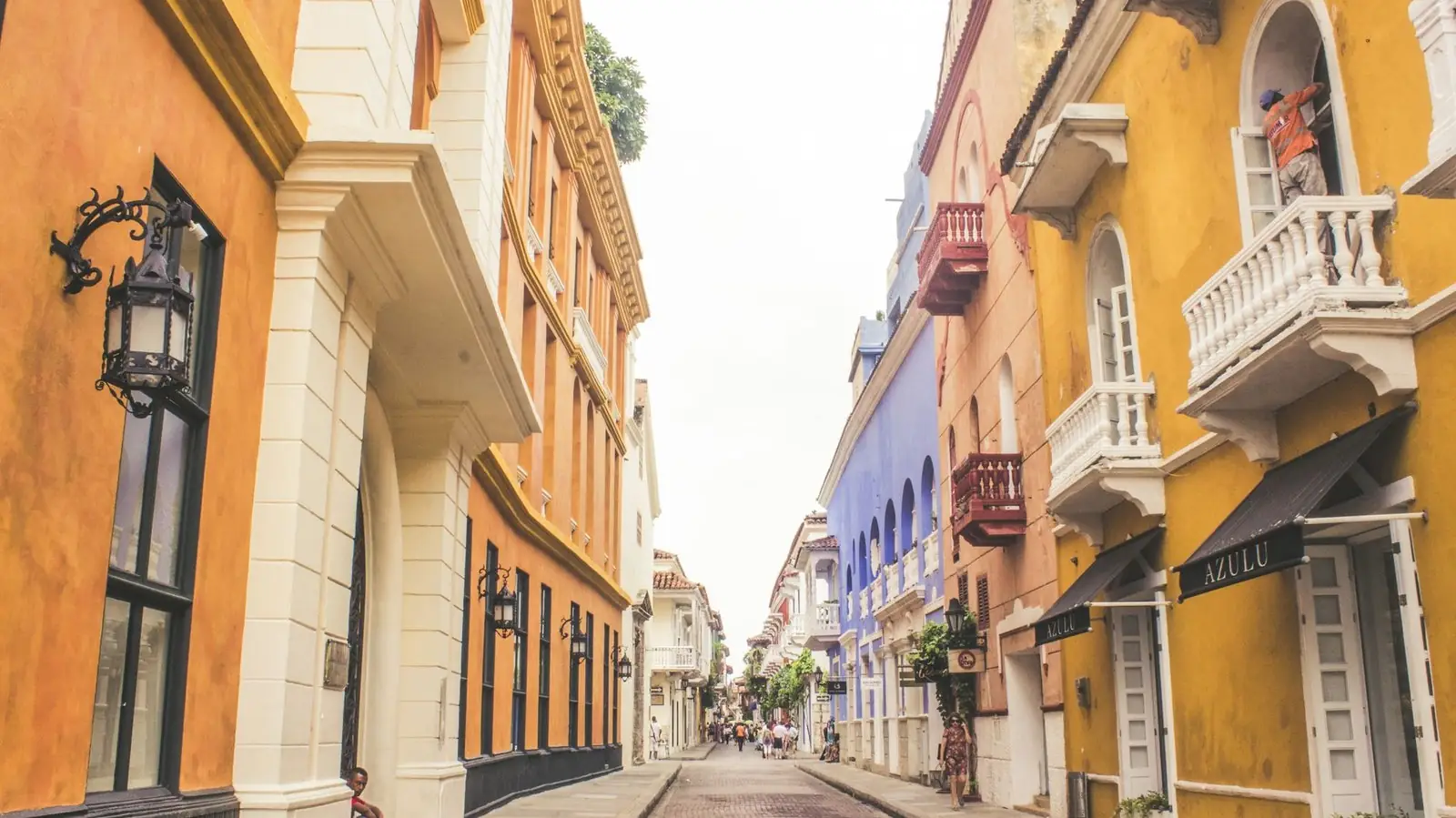

The Fortress City
The walled city (Ciudad Amurallada) is not just decorative; it was built out of brutal necessity. During the colonial era, Cartagena was the primary port for Spain’s gold and silver treasure fleets, making it a prime target for pirates. After Sir Francis Drake successfully sacked the city in 1586, the Spanish crown responded by turning it into an impenetrable fortress. The UNESCO-listed ramparts and the towering, hilltop Castillo San Felipe de Barajas were built to protect immense wealth with overwhelming military force.

A Painful History
However, that wealth was built on a profoundly painful foundation. Cartagena was one of the largest slave-trading ports in the Americas. This history must be approached with plain respect, without glossing over the reality or treating it as a spectacle. You can see traces of this past in the sanctuary of Pedro Claver, the Jesuit priest who dedicated his life to ministering to enslaved Africans. It is essential to remember the human reality that paid for the pretty colonial facades.
That Afro-Caribbean heritage is the beating heart of the city’s culture today. It is felt in the heavy rhythm of champeta music in the streets, and it is rooted deeply in places like the nearby San Basilio de Palenque, founded by escaped enslaved people and widely considered the first free Black town in the Americas. You will also see it in the famous palenquera fruit sellers in their bright dresses—though visitors should be honest with themselves that photographing them is now a paid, semi-staged tourist transaction rather than a spontaneous local interaction.

Magic, Realism, and Gentrification
The city is also famously tied to Gabriel García Márquez, who lived, worked, and set novels like Of Love and Other Demons here. Today, the city heavily leans into this “magical realism” branding for literary tourism. But Cartagena is a real, working city, not a novel.
Nowhere is the friction of modern Cartagena more visible than in the contrast between the polished, highly expensive, and intensely touristy walled Centro, and the neighbouring barrio of Getsemaní. Once a fiercely working-class district, Getsemaní is now rapidly gentrifying. It is vibrant, filled with striking street art, incredible nightlife, and a genuine, lived-in energy. But it is also displacing the very locals who gave it that character.
You must lean into the rhythm of the city. The heat is punishing, so the days are slow, fuelled by fresh fruit, sharp ceviche, and hot arepas. My own sharpest memory of Cartagena is sitting in a small, sweltering square in Getsemaní late at night, watching two old men play an aggressive, wordless game of dominoes under a flickering streetlamp, completely ignoring the backpackers and boutique hotels closing in around them.
If you are planning to travel, entry is relatively straightforward. Colombia is currently visa-free for tourist stays (commonly up to 90 days) for most Western passports. However, border rules can change, so you must always check current requirements before you fly.
FAQ
When is the best time to visit Cartagena?
The dry season, from December to April, offers the best weather, though the city is hot and humid year-round. This is also peak tourist season, so expect higher prices and larger crowds.
Should I stay in Getsemaní or the walled city?
The walled city (Centro/San Diego) is polished, safe, and expensive, ideal for those who want luxury. Getsemaní is more vibrant, slightly rougher around the edges, and better for nightlife and street culture, though gentrification is rapidly bridging the gap between the two.
Is Cartagena’s walled city worth it?
Absolutely. The architecture and history are genuinely world-class. However, to understand Cartagena, you must venture outside the walls to experience the real, modern life of the city.
Do I need a visa for Colombia?
For short tourist stays, most Western passport holders do not require a visa to enter Colombia. Always verify the latest requirements with the official Colombian immigration authorities before your trip.
Images: Bernard Gagnon / CC BY-SA 4.0; Jorge Láscar from Australia / CC BY 2.0; Joe Ross from Lansing, Michigan / CC BY-SA 2.0. Source: Wikimedia Commons.
Read also
- Cheap flights to Lima: the gateway to Machu Picchu, the Cusco connection, and the altitude
- Best holiday in Cuba
- Currency of Cuba


