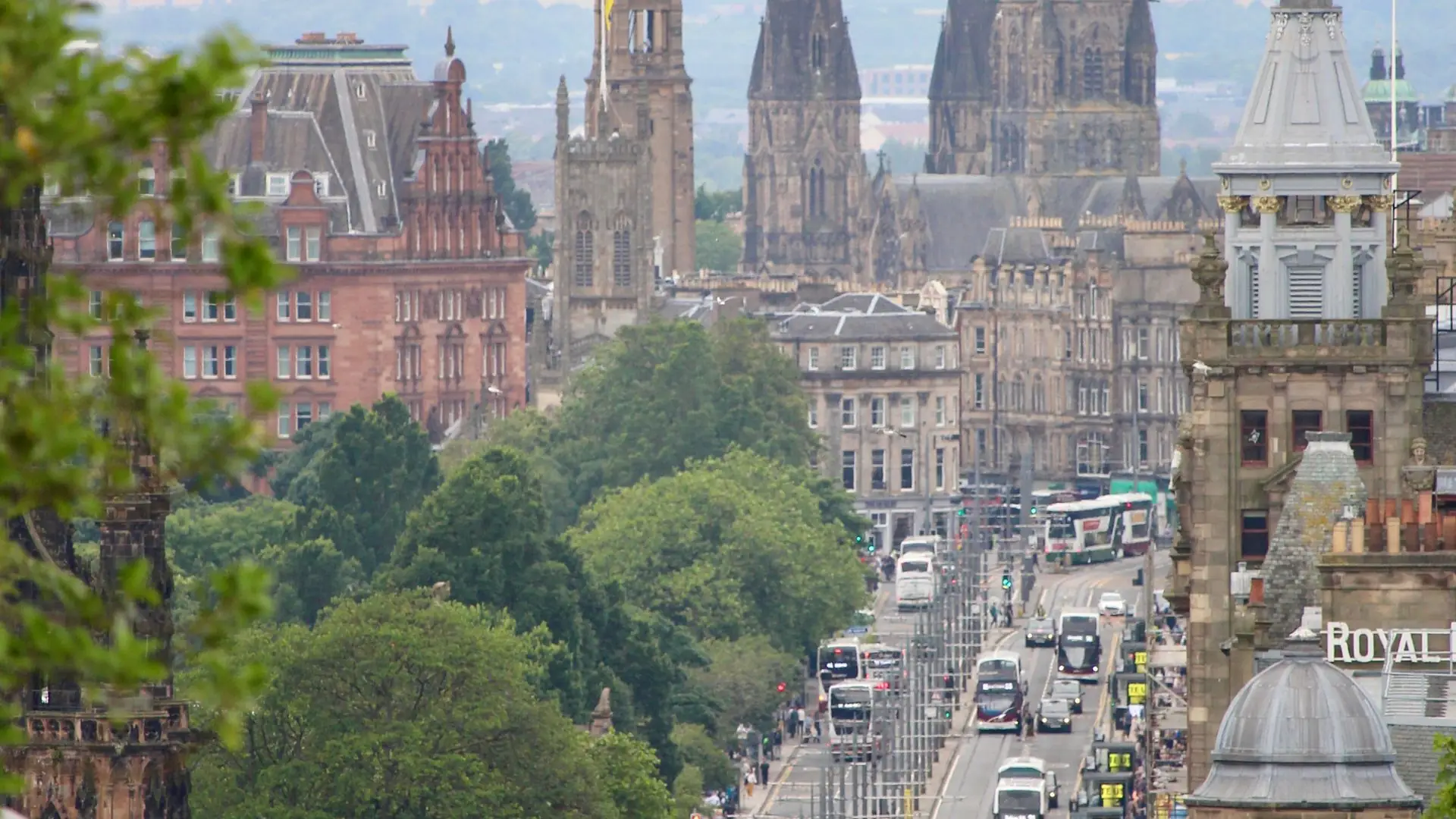

A City of Two Halves
Edinburgh’s entire character is defined by a physical and historical split. To the south sits the medieval Old Town, a tangled, vertical labyrinth of tall tenements, wynds, and closes clinging to the spine of a volcanic ridge. To the north lies the Georgian New Town, an orderly, rational grid of wide streets and elegant crescents born of the Scottish Enlightenment. Both are UNESCO-listed, and understanding the city means understanding the friction between the two.
The Old Town is anchored by Edinburgh Castle, which sits on an extinct volcanic crag, with the Royal Mile running downhill to the Palace of Holyroodhouse. Beneath these streets lie buried, subterranean layers like Mary King’s Close. While heavily marketed today with theatrical ghost tours, the real history of these underground streets—defined by severe overcrowding, poverty, and plague—is far more grim and compelling than any gift-shop thrill.

Dark History and the Enlightenment
That tension between darkness and progress defines the city. Edinburgh was the “Athens of the North,” a crucible of the Scottish Enlightenment that produced thinkers like David Hume and Adam Smith, and established a world-renowned medical establishment. Yet, it is also the city of Burke and Hare, the infamous 1820s murderers who supplied fresh corpses to those very same anatomy schools.
The city is also deeply fond of its own sentimental myths. The most famous is Greyfriars Bobby, the story of a fiercely loyal Skye Terrier who supposedly guarded his master’s grave in Greyfriars Kirkyard for fourteen years. It is a lovely, deeply entrenched local legend, though modern historians quietly point out it was likely an embellishment encouraged by Victorian business owners to drive tourism.

The August Crush and Scottish Identity
Edinburgh is proudly Scottish, operating with a distinct national identity separate from England. This is a city of robust, peaty whiskies and traditional haggis—which, to be clear, is a heavily spiced, deeply savoury pudding of sheep’s offal and oatmeal, and is genuinely delicious when properly made.
If you visit in August, you must be prepared for the crush. The Edinburgh Festival Fringe and the International Festival completely take over the city. The transformation is extraordinary, but the crowds and prices spike dramatically; it is overwhelming, and you must book months in advance. The city throws a similarly massive, chaotic street party for Hogmanay (New Year).
My own sharpest memory of Edinburgh is taking the steep, muddy walk up Arthur’s Seat—the other extinct volcano right in the city centre—on a freezing, wind-whipped morning. Looking down over the grey slate roofs, the orderly New Town, and the dark spire of the Scott Monument, the city looked exactly as it is: imposing, complicated, and utterly uncompromising.
If you are planning a visit, remember that the UK is not part of the Schengen Area and operates its own border rules. Many international visitors now require a UK ETA (Electronic Travel Authorisation) arranged prior to travel. These systems are being rolled out globally, so you must carefully check current entry requirements before you book.
FAQ
When is the best time to visit Edinburgh?
May and September offer the best balance of decent weather and manageable crowds. August is only recommended if you are specifically attending the Festival; otherwise, the sheer volume of visitors makes exploring the city difficult.
What is Edinburgh’s Old Town?
It is the oldest part of the city, characterised by a medieval street plan. It sits on a volcanic ridge running from Edinburgh Castle down to Holyrood Palace, filled with narrow alleyways (closes) and tall historical tenements.
Do I need a UK ETA to visit Edinburgh?
Yes, the UK is increasingly requiring visa-exempt visitors to hold an Electronic Travel Authorisation (ETA) before flying. Always check the official UK government website to confirm the rules for your specific passport.
Is Edinburgh worth visiting during the Festival?
It is one of the greatest arts festivals in the world, but it entirely consumes the city. If you want to see comedy and theatre, it is unparalleled. If you simply want to see Edinburgh’s historic sites, avoid August entirely.
Images: Sarah Stierch / CC BY 2.0; Alan Murray-Rust / CC BY-SA 2.0; Kitjank / CC0. Source: Wikimedia Commons.
Read also
- Mykonos: Where the Sun Meets the Party
- Lofoten Islands: Where nature meets tradition
- Geneva: Where the heart of Europe beats to the rhythm of nature and diplomacy


