

The Working Medina
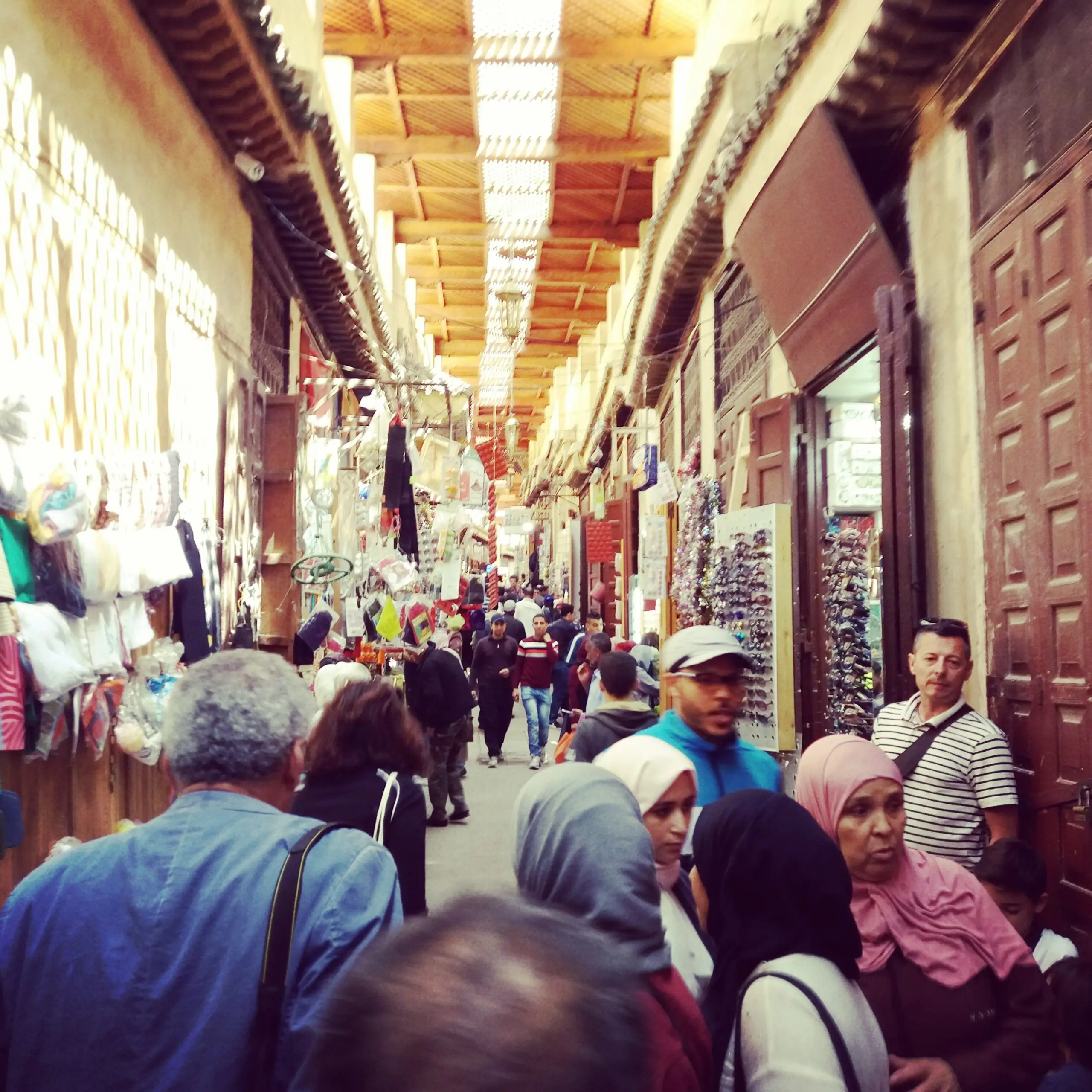
Fez el-Bali is one of the world’s largest car-free urban areas, a vast, complex web of alleys housing tens of thousands of residents. Travel brochures constantly market the medina as a place “unchanged for a thousand years” or entirely “frozen in time.” It is necessary to flag that as the romantic legend it is. The physical shape of the streets may be ancient, but this is a modern, struggling, working economy where satellite dishes crowd the roofs and deliveries are hauled by hand or hoof simply out of geographic necessity.
The immense pressure of tourism sits uneasily here. While tourist money part-funds the restoration of crumbling palaces, the sheer volume of visitors strains the infrastructure, and many locals are quietly drifting out to the wider streets of the modern ville nouvelle. As a visitor, you will face persistent touts and unofficial guides; acknowledging this pressure plainly is part of understanding the modern city.
The Tanneries and the Labour
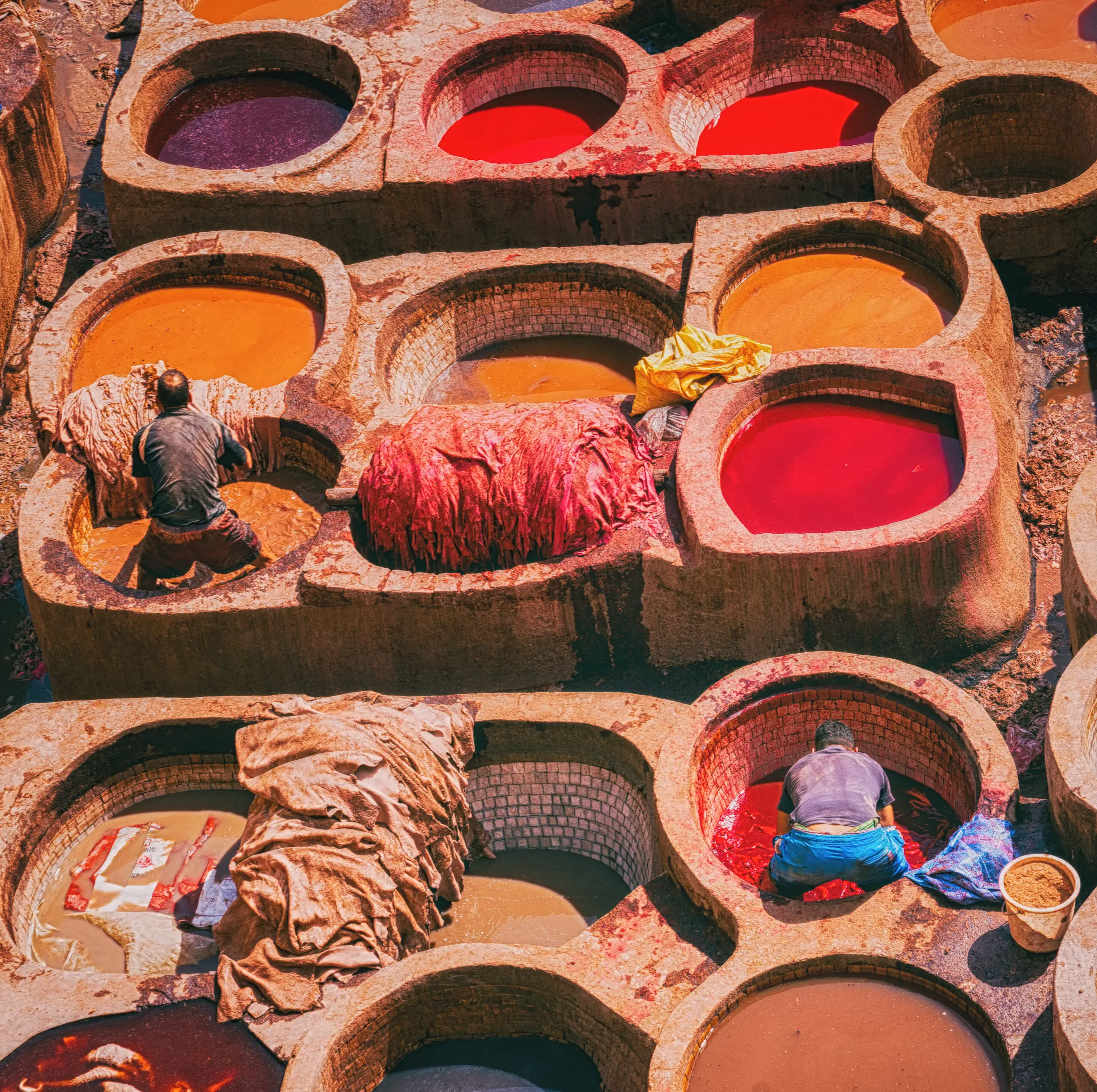
The most famous image of Fez is the Chouara tannery. Visitors are routinely led up to the high balconies of surrounding leather shops, handed a sprig of fresh mint to mask the overpowering smell, and invited to photograph the honeycomb of stone dye vats below.
It is a striking view, but it must be viewed honestly. The balcony is essentially a carefully managed sales funnel into the shop, and the work happening in the pits below is brutal, punishing manual labour. The men stand in the harsh liquids under a baking sun to treat and dye the hides. To treat this solely as a colourful photo opportunity is a disservice; it demands profound respect for the graft required.
The Craft Economy and Al-Qarawiyyin
That same intense labour underpins the entire medina. The souqs are strictly organised by trade—coppersmiths hammering in one quarter, dyers and weavers in another. There is a fierce, hard-bargaining culture here, and a wide, sobering gap between what the artisan earns for a day’s heavy work and the final price paid in a polished tourist boutique.
At the intellectual heart of this working city sits Al-Qarawiyyin. Founded in 859 CE by Fatima al-Fihri, it is frequently cited as the oldest continuously operating degree-granting university in the world. However, visitors should manage their expectations: it remains an active, working mosque and university, meaning the vast majority of the interior is strictly closed to non-Muslims. You can only catch a fleeting glimpse of its tiled courtyards through the open heavy wooden doors.
My own sharpest memory of Fez was sitting on a low stool near the brass-workers’ quarter. A young apprentice was methodically polishing a massive brass tray with absolute, repetitive focus, completely ignoring a loud argument between two shopkeepers over a spilled crate of oranges just inches from his feet.
If you are planning to travel, entry is generally straightforward. Most Western passport holders can enter Morocco visa-free for short tourist stays (usually around 90 days), but you must always check current requirements before you book your flight.
FAQ
Is Fez worth visiting?
Yes, it offers one of the most intense and genuinely historic urban experiences in North Africa. It is heavier and less polished than Marrakech, demanding more patience but rewarding you with a deeper look at a working craft economy.
Can you visit the Fez tanneries?
Yes, the Chouara tannery is the largest and most famous. Viewing is almost exclusively done from the surrounding leather shops, which offer the high vantage point in exchange for an expected tip or the pressure to browse their goods.
Do you need a guide in the Fez medina?
It is entirely possible to explore independently if you accept that you will get lost—which is part of the experience. However, a licensed official guide can provide valuable historical context and keep the aggressive unofficial touts at bay.
What’s the best time to visit Fez?
Spring (April to May) and autumn (September to October) are ideal. High summer is dangerously hot in the narrow, airless alleys, while winter nights can be surprisingly bitter and damp.
Images: Mrinal Mohit / CC BY-SA 4.0; Petar Milošević / CC BY-SA 4.0; Mathew Koshy / CC BY-SA 4.0. Source: Wikimedia Commons.
Read also
- 10 Little-Known Facts About the Great Sphinx of Giza, Egypt
- The highest mountain in Africa
- Tourists in Seychelles


