
The Walled City
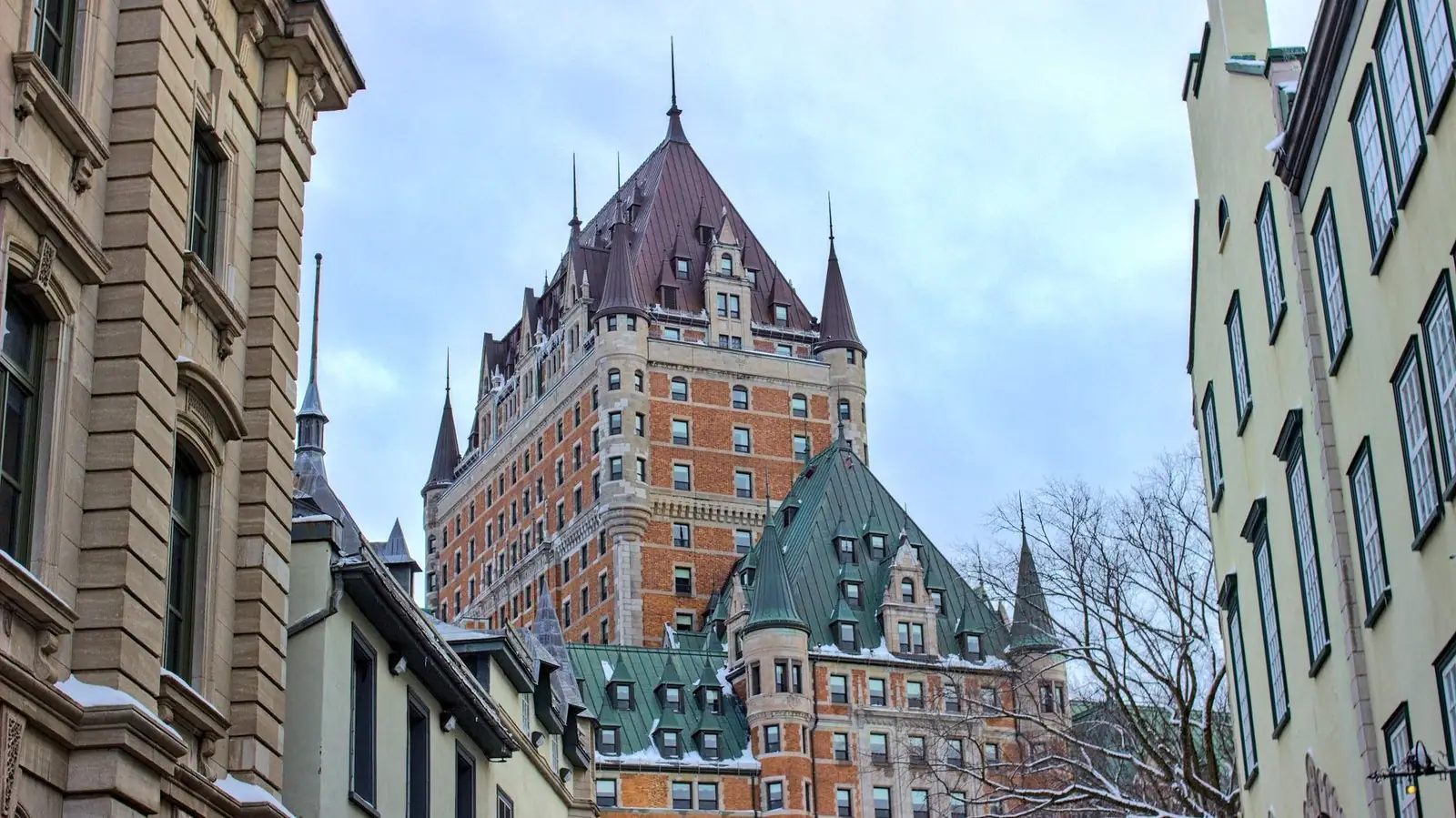
Quebec City holds a unique geographical and historical position: it is the only remaining fortified city north of Mexico. The intact 17th- and 19th-century ramparts encircle the UNESCO-listed Old Quebec (Vieux-Québec), which physically splits the city in two. The Upper Town sits solidly on the Cap Diamant cliff, projecting authority, while the Lower Town huddles by the edge of the St. Lawrence River, originally the domain of merchants and sailors.
Towering over all of this is the Château Frontenac. The iconic, green-roofed building dominates the skyline and is often mistaken by visitors for an ancient European castle. It is necessary to puncture that myth plainly: the building is not a medieval fortress, but rather a grand railway hotel constructed in the 1890s. It is a masterpiece of Victorian romance rather than feudal history.

The Weight of 1759
The actual military history of the city is far more grounded. In 1759, on the Plains of Abraham, a brief, brutal battle between French and British forces resulted in the British conquest of New France. It was a single afternoon that permanently shaped the trajectory of Canada. Today, you can walk that battlefield as a sprawling urban park, and visit the star-shaped Citadelle, which remains an active military installation rather than just a museum piece.
Despite that conquest, the city remained resolutely Francophone. Founded by Samuel de Champlain in 1608, Quebec City is the heartland of a fiercely guarded Québécois identity. It is a culture protected by strict language laws and shaped by centuries of isolation; it is not, and does not want to be, a copy of Paris.
Winter and Joie de Vivre
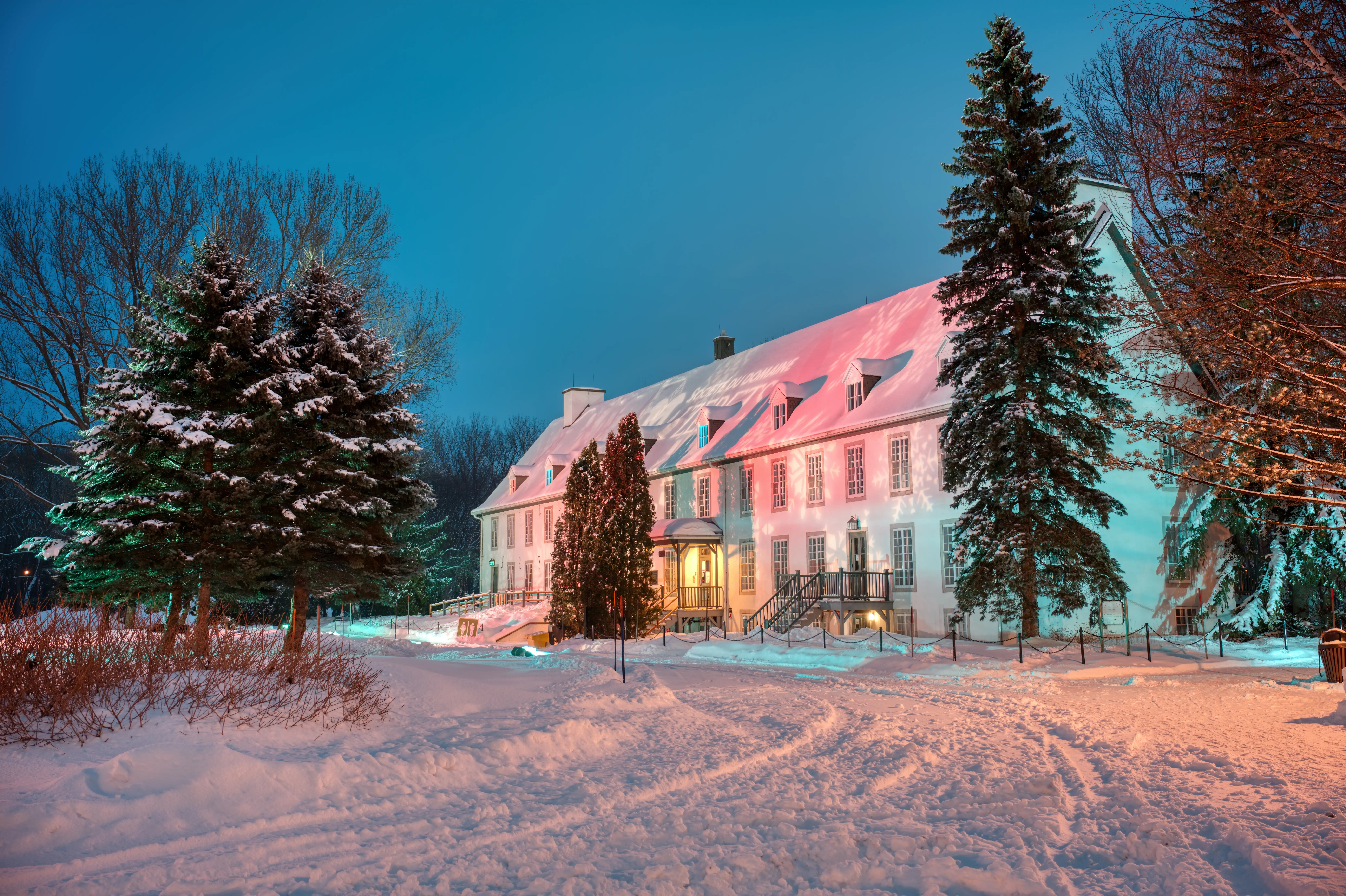
The truest expression of the Québécois character is found in winter. The cold here is brutal, but it is never treated as a drawback; it is the city’s defining characteristic. Quebec City leans into the freeze with absolute joie de vivre. This is the season of the sprawling Carnaval de Québec (presided over by the famous Bonhomme mascot), the terrifyingly fast wooden toboggan run beside the Château, and the intricate, seasonal ice hotel built outside the city limits—a purely winter-only attraction that melts away each spring.
That defiance of the cold extends to the dining table. This is the home of heavy, sustaining, joyful food. You will find poutine, of course—though you must look past the overpriced tourist-trap versions to find the genuine, squeaky-cheese-curd everyday staple. You must also seek out a classic meat pie (tourtière) and experience the hyper-seasonal sugar shack (cabane à sucre) tradition, where maple syrup is poured directly onto clean snow to harden into taffy.
My own sharpest memory of Quebec City was watching a group of locals cross a steep, sheet-ice pavement in the Upper Town. While visitors were clinging desperately to the stone walls, the locals simply marched straight up the hill, completely unbothered, wearing heavy boots and carrying their groceries. It is a city that does not merely survive its environment; it owns it entirely.
If you are planning to fly in, be aware of Canada’s entry rules. Most visa-exempt international visitors flying into Canada require an Electronic Travel Authorization (eTA) linked to their passport before boarding. The rules are strict, so you must carefully check current entry requirements before you travel.
FAQ
When is the best time to visit Quebec City?
Late summer and early autumn (September to October) offer spectacular fall foliage. However, to truly understand the city’s character, you should visit in the deep cold of late January or February for the winter Carnaval.
Do they speak English in Quebec City?
French is the official language and the absolute heart of the local identity. While almost everyone working in the tourism and hospitality sectors speaks excellent English, it is both polite and appreciated to learn a few basic French phrases.
Do I need a visa or eTA for Canada?
While many Western passports are visa-exempt for short tourist stays, most travellers arriving by air must apply for an Electronic Travel Authorization (eTA) in advance. Always check the official Canadian government portal for current rules.
Is Quebec City worth visiting in winter?
Absolutely. Winter is when the city is most itself. Pack heavy, high-quality winter gear (proper boots, thermal layers, and a heavy coat), and you will find a city that celebrates the cold rather than hiding from it.
Images: Wilfredor / CC BY-SA 4.0; Óðinn / CC BY-SA 2.5 ca; Wilfredor / CC0. Source: Wikimedia Commons.
Read also
- Cheap flights to Toronto: Pearson vs Billy Bishop, the UP Express, and when to book
- Denver: Your Ultimate Travel Guide to the Mile-High City
- Houston: A Friendly Tourist Guide to the Heart of Texas


