
The Working Shorefront
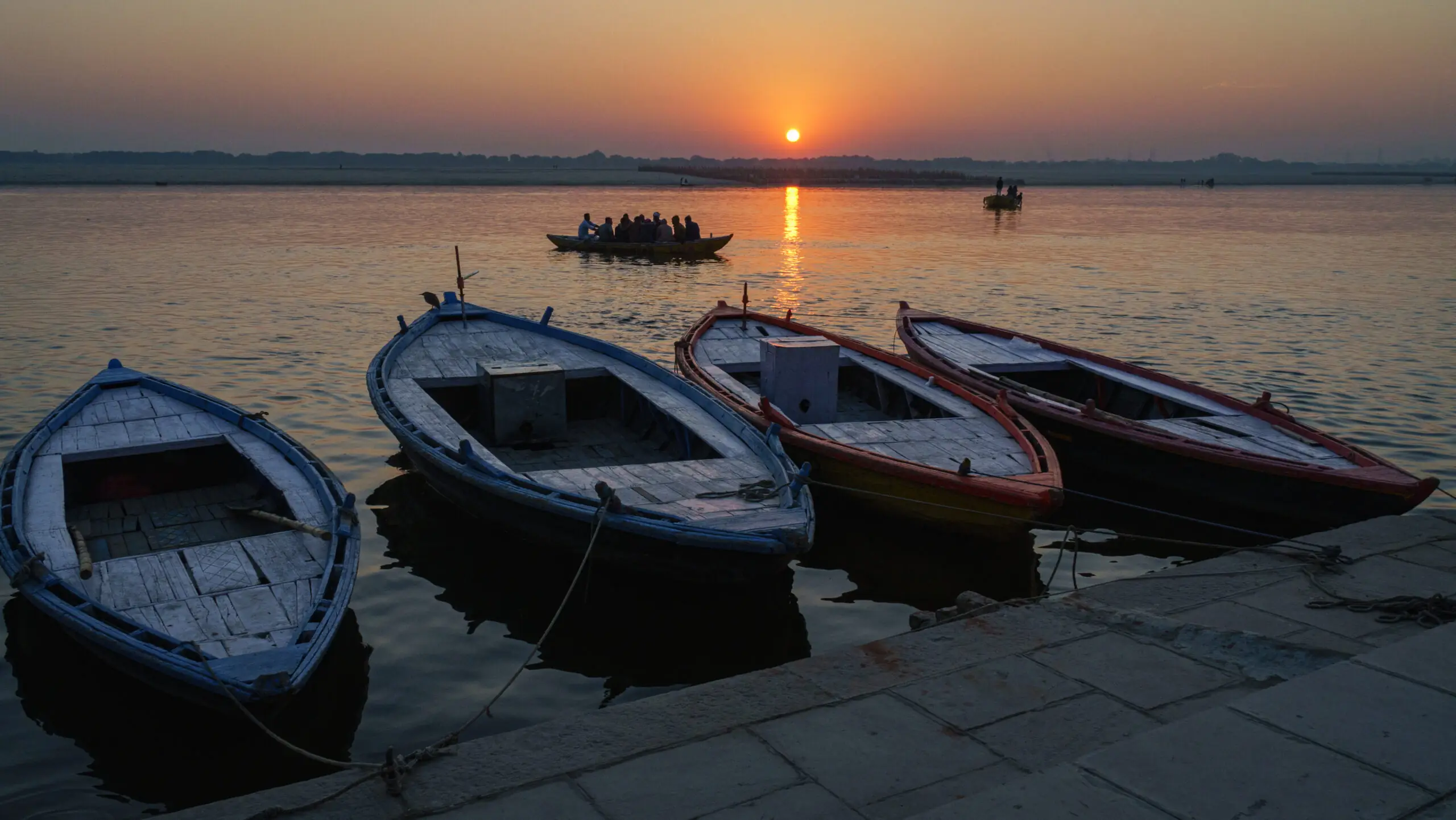
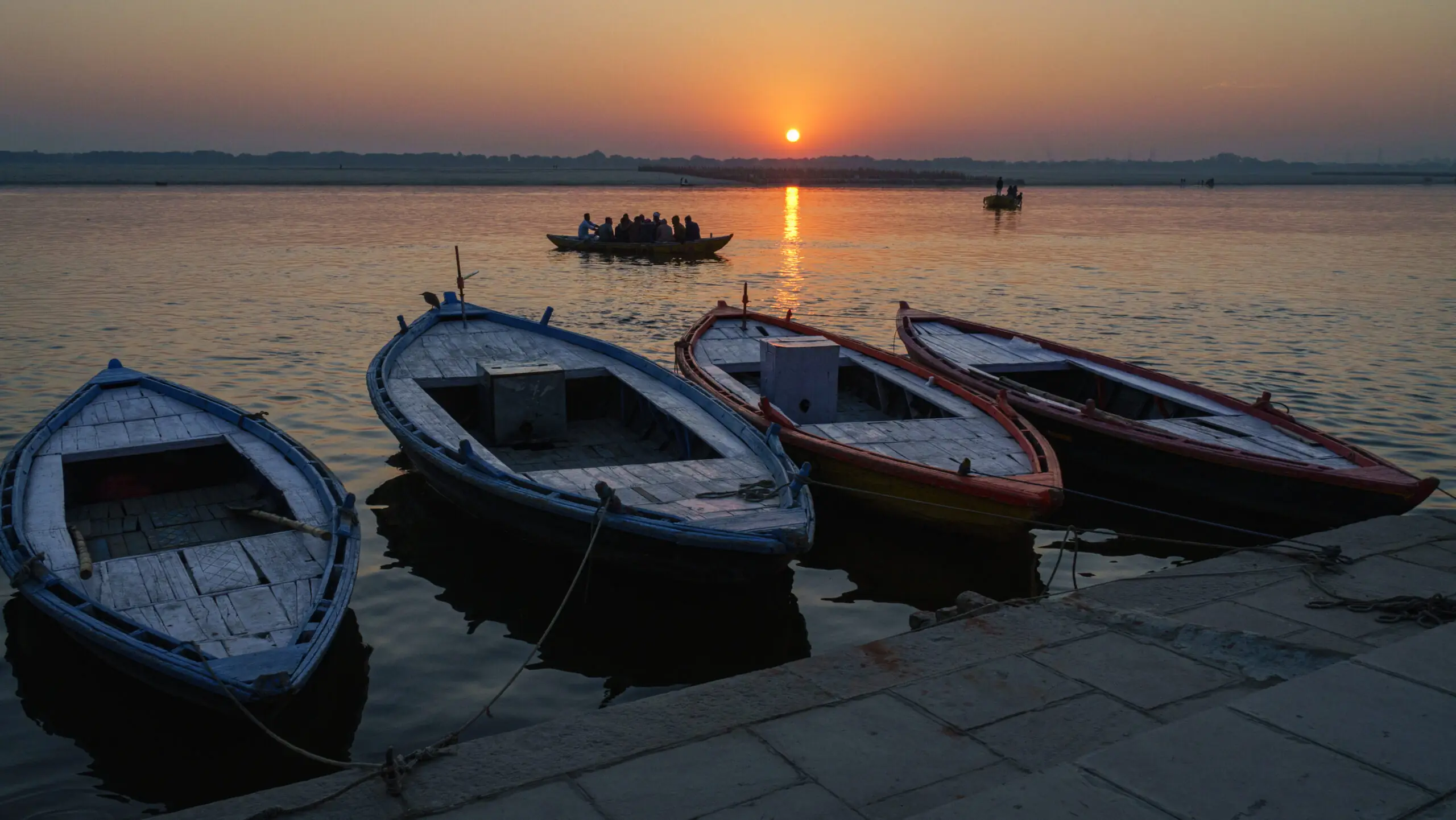
The long curve of the Ganges is lined with ghats, flights of broad stone steps leading down to the water. Varanasi is frequently claimed to be one of the oldest continuously inhabited cities in the world. Whether that sweeping legend is strictly true or not, the waterfront feels immensely old because it is an entirely functional, working space. You will see pilgrims bathing to wash away sins within yards of families scrubbing laundry, boys learning scripture, and men hauling heavy loads of timber. The intensity of this shared, unsegregated space is precisely the point of the city, not a flaw in its design.
The Reality of the Cremation Ghats
That public reality extends to death. At Manikarnika and Harishchandra, the city’s open cremation ghats, fires burn continuously. Many Hindus hold the deep belief that dying and being cremated here brings moksha—the spiritual release from the cycle of rebirth. While visitors often treat this promise as a fascinating philosophical idea, it is a lived, practical reality for the mourning families bringing their relatives to the river.
If you walk near the burning ghats, do so with sober respect. You are a guest at something profoundly private that is simultaneously treated as an utterly ordinary, everyday occurrence. Taking photographs of the pyres is strictly forbidden and deeply disrespectful. Visitors should also be plainly warned to politely ignore the persistent “donation” or “wood-cost” hustle, where unofficial guides lead tourists to the pyres and demand money for the families’ wood.
The Spiritual Tourism Gap
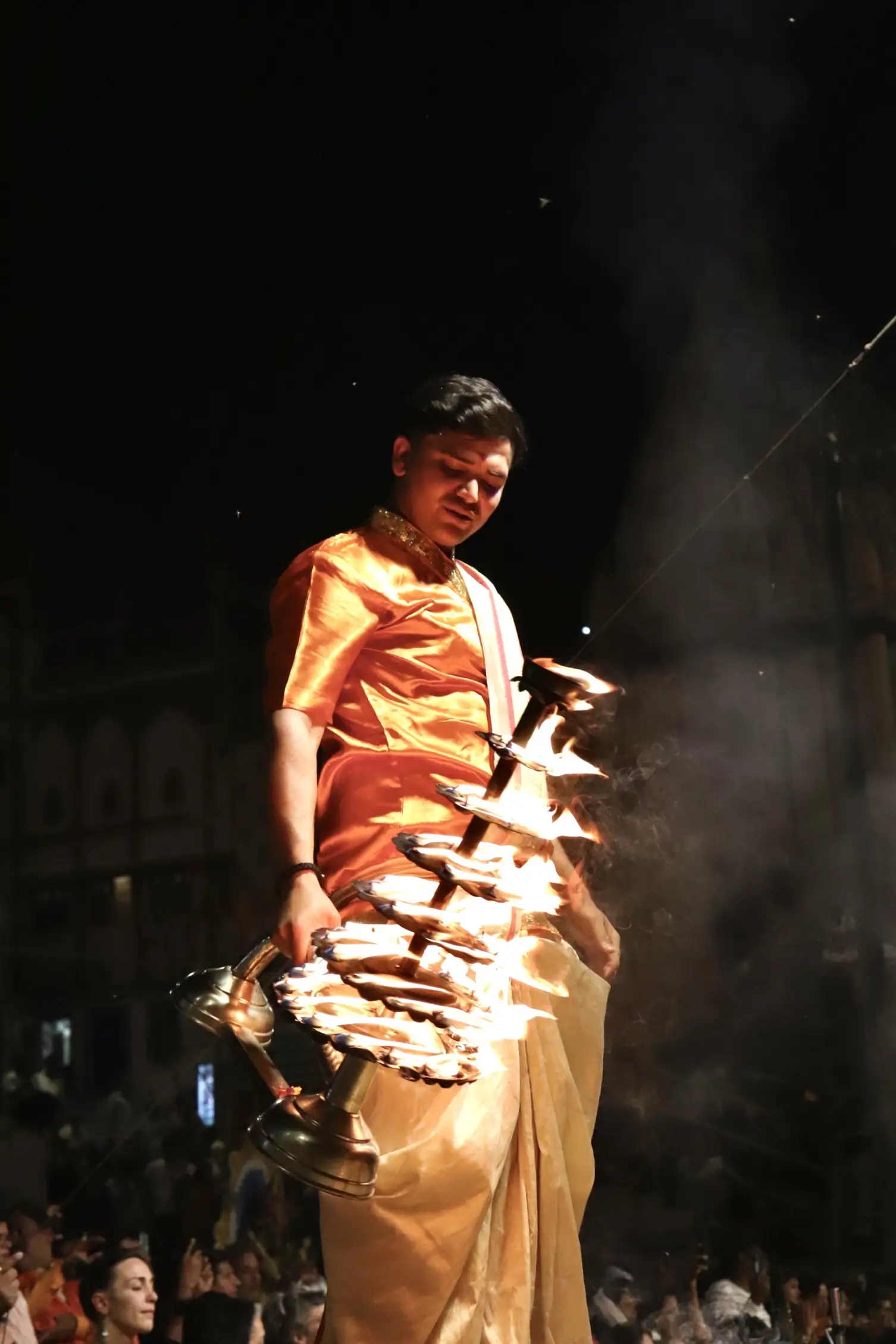
This points to the uneasy gap between the packaging of Varanasi and its reality. There is a vast spiritual tourism machine that aggressively sells a fast, photogenic narrative of moksha alongside marigolds and incense. As a visitor, you will face relentless touts, aggressive boat-price haggling, and the “free blessing” from a riverside ascetic that abruptly comes with a heavy bill. It is important not to sneer at this—it is an economic survival tactic in a difficult city—but you must not pretend it isn’t there.
The Living City and the Modern Trade-off
Behind the river lies a dense labyrinth of old-town lanes, or galis, where you are practically guaranteed to get lost. Here, the Banarasi silk-weaving trade operates, driven by intense, repetitive manual labour to produce the famous saris. You will see riverside akhara wrestlers training in the dirt, and stalls selling the city’s famous paan. If the intensity becomes too much, nearby Sarnath—where the Buddha is said to have given his first sermon—offers a calm, quiet counterweight.
Varanasi is also dealing with heavy modern pressures. The deep pollution of the Ganges is the subject of long-running government clean-up promises, though the visible improvements on the water remain fiercely debated. Recently, the massive Kashi Vishwanath corridor redevelopment cleared a swathe of ancient, dense lanes and homes to open a grand, polished pathway directly to the river. It is a stark trade-off: improved access and modern infrastructure at the severe cost of the old, tightly knit urban fabric.
My own sharpest memory of the city came late at night, far from the main ceremonies. I watched a young boy expertly skip stones across the dark, heavy surface of the Ganges, completely ignoring a wandering cow that had paused to methodically chew through a discarded garland of marigolds on the steps behind him.
If you are planning to travel, note that most visitors require an India e-Visa, which must be arranged online before your trip. Always check current entry requirements before booking.
FAQ
Is Varanasi worth visiting?
Yes, but it is not a relaxing destination. It is an overwhelming, demanding city that requires patience and deep respect. It rewards those willing to look past the spiritual clichés to see a heavy, working reality.
Can you watch the cremations in Varanasi?
Yes, you can observe quietly from a respectful distance at Manikarnika or Harishchandra ghats. However, taking photographs is strictly prohibited, and you should be wary of guides asking for mandatory “wood donations.”
How do I avoid scams at the ghats?
Be firm but polite. Agree on boat prices clearly before stepping aboard, ignore unsolicited tours of the cremation areas, and remember that any “free” blessing or service usually comes with an expected financial contribution.
What’s the best time to visit Varanasi?
Winter (November to February) is the best time, offering cool, dry weather. High summer is brutally hot, and the monsoon season (July to September) causes the river to swell, often submerging the lower steps of the ghats entirely.
Images: Schwiki / CC BY-SA 4.0; Chetanbtc / CC BY-SA 4.0. Source: Wikimedia Commons.
Read also
- Shanghai is one of the main tourist cities in China
- Dubai: From desert dunes to modern wonder
- Tokyo Guide: From Temples to Neon Lights


